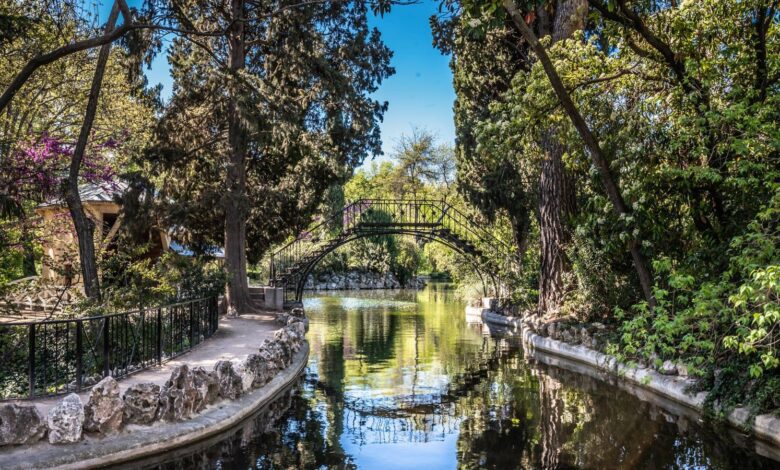
In the northeastern part of Madrid lies one of Spain’s most unusual gardens — El Capricho. Its history is full of mysteries, unexpected twists, and dramatic events that have turned this spot into more than just a park, but a true monument of its era.
In the late 1970s, when the garden was nearly abandoned, a young Alfredo Cobo first slipped past its gates. At that time, El Capricho was a neglected place with overgrown paths and silent buildings, frozen as if time had stopped. Later, when the garden became city property, Cobo became a regular visitor, watching its restoration and the changes that returned its historical appearance.
As he photographed these changes, Cobo became interested in the garden’s past. His fascination turned into serious research: he studied old documents, worked in archives, and collected maps and photographs to reconstruct the full story of El Capricho’s life. Among his finds were unique blueprints made by the military during the Civil War and rare plans preserved in state archives.
El Capricho Garden was founded in 1779 by the Duchess of Osuna. Its original layout followed French traditions, but over time, elements of English and exotic styles were introduced. Over two and a half centuries, the garden witnessed key events in Spanish history. During the War of Independence, it was occupied by Napoleonic troops, and during the Civil War, it housed the headquarters of the Republican Army. To this day, a bunker remains in the garden, open to visitors on weekends.
At various times, there were proposals to turn El Capricho into a shelter, an orphanage, or even an exclusive resort with restaurants and swimming pools. However, none of these plans were realized, which helped preserve its historical atmosphere. Since 1987, after the municipality acquired the garden, extensive restoration works began. Students from craft schools worked on restoring the architectural and landscape elements, and the first director was the well-known artist Peridis.
The garden’s founder, the Duchess of Osuna, holds a special place in its history. She was not only a patron of the arts but also actively engaged in social initiatives, supported artists and musicians, and promoted education for women. Thanks to her efforts, El Capricho became a center of cultural life, attracting prominent figures of her era.
On the grounds of the garden are so-called “caprices” — architectural and landscape features designed to amaze visitors: pavilions, a labyrinth, a small fortress, an old apiary, a cottage styled as a rural hut, and other structures. Many of these have survived to this day, although some sculptures and decorative elements have been lost or ended up in private collections.
As a result of many years of work, Alfredo Cobo compiled a book collecting archival materials, plans, inventory lists, and rare photographs. The publication not only traces the fate of the garden, but also serves as a detailed guide for anyone interested in the history of Madrid and Spanish culture. The book features biographies of key figures, descriptions of all the architectural sites, and appendices with unique documents.
Today, El Capricho remains one of the few surviving Romantic-era gardens in Spain. Its history demonstrates how cultural heritage can be saved from oblivion and once again become part of city life. The garden is open to visitors on weekends, and its unique atmosphere and rich past continue to attract both locals and guests of Madrid.