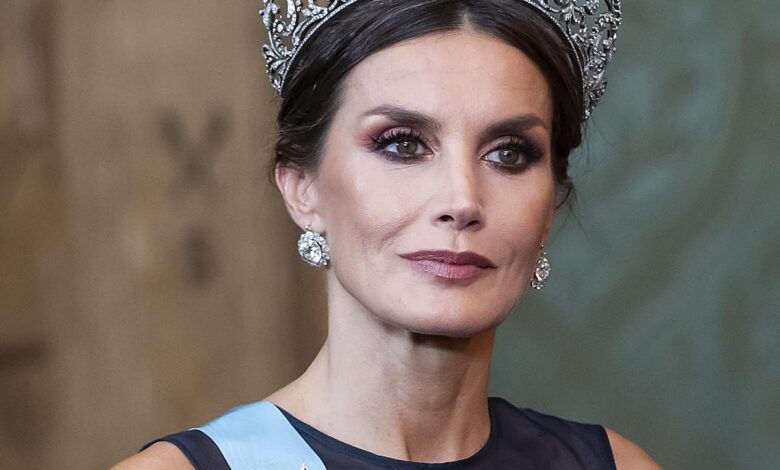
The Fleur-de-Lis tiara, or “Lily Flower,” available to Queen Letizia since her accession to the throne, has been worn by her only six times. It is the most significant and powerful piece in the treasury of the Spanish monarchy. At present, this unique piece has temporarily left the royal collection and is the centerpiece of an exhibition at the Royal Palace dedicated to King Felipe VI’s great-grandmother, Queen Victoria Eugenia. The exhibition will be open to visitors until April.
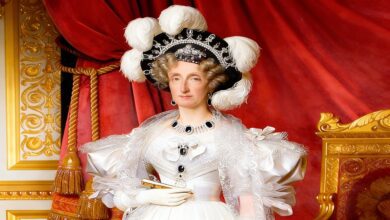
This jewel is inextricably linked to the memory of Queen Victoria Eugenia. The diadem was a wedding gift from her fiancé, King Alfonso XIII. Princess Victoria Eugenie of Battenberg wore it when she walked down the aisle on May 31, 1906. At that time, in keeping with the fashion of the era, the tiara was designed as a high crown symbolizing her union with the Spanish people.
Queen Victoria Eugenia was regarded as a style icon, and many European courts tried to imitate the Fleur-de-Lis tiara. However, none of the replicas matched the splendor and brilliance of the Spanish original. The Ansorena jewelry house, a favorite of the royal family, created this masterpiece in the year of the monarchs’ wedding. Its creation required 450 diamonds of the highest quality and clarity, set in platinum. The composition features three heraldic lilies framed by botanical motifs and scrolls. Owing to its incredible value, the royal family affectionately dubbed the tiara “la buena”—”the good one.”
Queen Letizia wore this iconic piece of jewelry for the first time nearly three years after her accession to the throne. Her debut took place on February 22, 2017, at a gala dinner honoring Argentine President Mauricio Macri. For the occasion, the queen chose a sleek black dress by Felipe Varela, allowing the tiara to be the focal point of her look. Since then, she has followed Queen Sofía’s tradition of wearing the diadem only for exceptional occasions, such as official receptions for foreign leaders or state visits abroad.
Later in 2017, in July, Letizia once again dazzled in the tiara at a reception hosted by Queen Elizabeth II in the United Kingdom. In 2019, she wore it at the enthronement ceremony of Japanese Emperor Naruhito, and in 2020 posed in it for an official portrait. The tiara later appeared on visits to Sweden in 2021 and to Denmark in November 2023, where the Fleur-de-Lis tiara adorned the queen at a farewell state dinner hosted by Queen Margrethe II.
Since its creation in the early 20th century, the tiara has undergone only minor changes, mostly to accentuate the central motif—a lily flower. After the death of Victoria Eugenie, the jewel was inherited by María de las Mercedes Bourbon-Sicily, Countess of Barcelona. She, in turn, passed it on to her daughter-in-law, the future Queen Sofía. Queen Sofía received the tiara from her mother-in-law’s hands and cherished the tradition, wearing it only for the most formal occasions. The last time she appeared in it was at a dinner shortly before King Juan Carlos abdicated in 2014.
Incidentally, before marrying the heir to the throne, Felipe, Letizia Ortiz Rocasolano was a well-known journalist and television presenter. She became Spain’s first-ever queen without royal lineage. After their wedding in 2004, she was given the title Princess of Asturias, and in 2014, following Juan Carlos I’s abdication, she became the queen consort of Spain. Queen Letizia is renowned for her impeccable style and active involvement in public life. She serves as patron to numerous organizations in the fields of education, healthcare, and culture.