For Spain, December 15, 1960, was a national event. Thousands of families bought televisions or gathered at their neighbors’ homes to witness the wedding of their compatriot, the aristocrat Fabiola de Mora y Aragón, to King Baudouin of Belgium. The ceremony at Brussels’ Cathedral of Saints Michael and Gudula, where the bride shone in a Balenciaga gown, was broadcast live and marked the country’s first experience connecting to the Eurovision network. The authorities used this marriage as a showcase, presenting Fabiola as the ideal embodiment of Spanish values: noble heritage, deep religiosity, and impeccable manners. It was a triumph for the regime, which managed to “give” the monarch a wife found precisely in Spain.
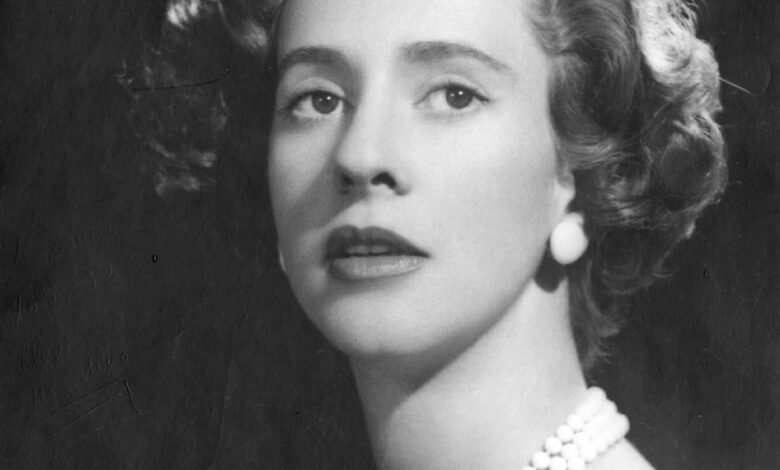
Fabiola Fernanda María de las Victorias Antonia Adelaida de Mora y Aragón was born on June 11, 1928, in her family’s palace in Madrid. She was the sixth of seven children of the Marquises de Casa Riera. Her godmother was Queen Victoria Eugenie. Fabiola received an excellent education: she studied painting and music, spoke several European languages fluently, and later learned Dutch. After earning a nursing diploma, she dedicated herself to charity work and caring for her nieces and nephews. Those around her noted her exceptional piety—Fabiola even seriously considered taking religious vows. With the advent of the Republic in 1931, her family was forced to leave Spain, finding refuge first in France and then in Lausanne, Switzerland.
The de Mora y Aragón family, like most of the aristocracy, unreservedly supported the Francoist coup, rejecting republican ideals and advocating for the restoration of the monarchy. Fabiola’s older brother, Gonzalo, volunteered for the Nationalist army at the age of 17. This chapter in the family’s biography later caused significant difficulties for the Belgian government. When the engagement was announced, Belgium’s prime minister had to reassure colleagues that the bride’s family had not been directly involved in the civil war, as sympathies in Brussels leaned toward the Republicans.
Despite her new status, Fabiola never severed ties with her homeland. The newlyweds spent their honeymoon in Andalucía, settling in a secluded estate in the province of Córdoba, seeking spiritual solitude. The royal couple often visited her relatives in Zarauz, in the Basque Country, and later purchased their own villa in Motril, on the Granada coast. Baudouin grew as fond of Spain as his wife, with Ávila becoming his favorite city.
It was on the terrace of their home in Motril, named “Villa Astrida,” that the life of 62-year-old King Baudouin ended on July 31, 1993. He died of a heart attack while admiring the Mediterranean Sea. Today, the house—filled with personal belongings, photographs, and even the armchair in which the monarch passed away—serves as a memorial to his memory. The couple also had a summer residence in the Navarre town of Elío.
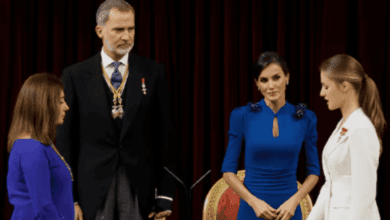
Fabiola maintained warm relations with the Spanish royal family. She fondly recalled teaching the future King Felipe VI to play tennis during one of her visits to Granada. One of her closest friends was the Duchess of Alba, Cayetana Fitz-James Stuart—they were nearly the same age and passed away in the same year. The queen was also a frequent pilgrim to Santiago de Compostela, where she would visit during jubilee years.
However, behind the facade of family visits and cultural ties lay another, much more delicate story—the close and unpublicized relationship between the royal couple and Francisco Franco. This friendship extended well beyond diplomatic protocol. The dictator’s family presented Fabiola with an emerald tiara as a wedding gift, which, as it later turned out, was adorned with fake stones. The awkward incident did not harm their relationship. Baudouin and Fabiola met with the Caudillo on several occasions, dined on his yacht Azor, and corresponded regularly. The Belgian monarch would sign his letters “your devoted Baudouin.” This relationship, which continued until Franco’s death in 1975, caused serious concern in Brussels and was carefully concealed.
Belgian biographer Anne Morelli claimed in her book that the Franco regime used the queen for propaganda purposes, calling her a “puppet of the Caudillo.” Fabiola spent the last twenty years of her life in seclusion. The Belgians always adored their queen, who passed away on December 5, 2014. The main tragedy of her life was her inability to have children—she suffered five miscarriages. After Baudouin’s death, the throne passed to his brother Albert II, and then to his nephew Philippe.