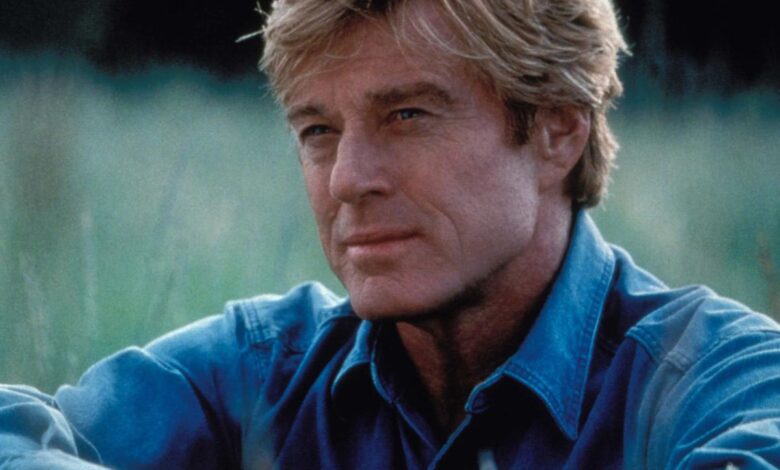
Hollywood is in mourning. On Tuesday, September 16, Robert Redford, one of the last titans of the golden age of American cinema, passed away quietly at his home. He was 89. According to his family, the actor died in his sleep, leaving behind a tremendous legacy that forever changed not only mainstream cinema but also the world of independent filmmaking.
His path to fame was far from easy. The youth of the future icon was marked by rebellion, driven by the early death of his mother. He dropped out of school and traveled to Europe—France and Italy—in search of himself and new experiences, attempting to find his calling in painting. This period was overshadowed by a struggle with alcoholism, but after returning to the United States, Redford managed to turn his life around. He enrolled at Pratt Institute in New York to study art, but fate led him elsewhere, putting him on the stage.
His real breakthrough came on Broadway, and then in film. His partnership with Paul Newman in “Butch Cassidy and the Sundance Kid” and “The Sting” became legendary—setting the standard for onscreen male friendship and charisma. They were more than just handsome actors; their dynamic radiated an energy that captivated audiences. His collaborations with Jane Fonda were equally iconic, as they created several unforgettable screen duos and maintained a warm friendship throughout his life. Films like “Barefoot in the Park” became instant classics.
However, Redford was never confined to the image of a romantic hero. He boldly took on challenging and politically charged roles. The film “All the President’s Men” became one of the most significant political thrillers in history, and his performance in the drama “Out of Africa” alongside the inimitable Meryl Streep showcased the depth of his dramatic talent. His career also included controversial moments, such as his critically lukewarm role in “The Great Gatsby,” but that did not diminish his superstar status.
In the 1980s, Redford discovered a new facet of his talent by stepping into the director’s chair—and did so with stunning success. His directorial debut, “Ordinary People,” earned him an Oscar for Best Director, proving that his vision extended far beyond acting. He went on to direct landmark films like “A River Runs Through It,” introducing a young Brad Pitt to audiences, and the cerebral drama “Quiz Show.” Redford mastered the art of telling stories with subtlety, depth, and great respect for his characters.
But perhaps his greatest contribution to world cinema was the creation of Sundance. It began as a modest institute for emerging filmmakers on his ranch in Utah. Over time, this initiative grew into the most influential independent film festival in the world. Every January, the snowy stretches of Utah turn into a mecca for daring and original directors, whom Redford has given a chance to be seen and heard. He built an entire ecosystem to support independent voices.
The actor’s personal life was marked by both moments of happiness and severe trials. His first marriage to Lola Van Wagenen lasted nearly three decades and produced four children. The family endured a terrible tragedy—the death of their firstborn from sudden infant death syndrome. Many years later, in 2020, he suffered another blow with the passing of his son James. In 2009, Redford found new happiness when he married the German artist Sibylle Szaggars, with whom he spent his later years.
Even in his later years, he continued to appear on screen, choosing interesting and commercially successful projects such as “Indecent Proposal” with Demi Moore or “Lions for Lambs” with Tom Cruise. His final major work was a touching reunion with Jane Fonda in the 2017 film “Our Souls at Night.” Robert Redford will be remembered not just as an actor with a dazzling smile, but as a multifaceted personality, director, and visionary whose impact on cinema is impossible to overstate.