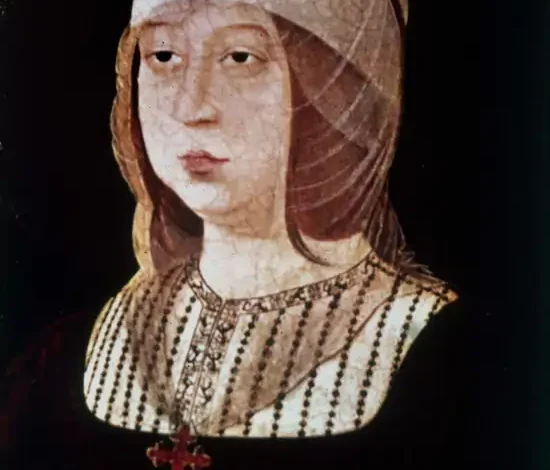
In October 1469, an event took place at the Palacio de Vivero in Valladolid that forever altered the history of the Iberian Peninsula. The eighteen-year-old Infanta Isabella, heir to the Castilian crown, and seventeen-year-old Prince Fernando, the future ruler of Aragon, were secretly married. This ceremony, conducted against the will of the reigning monarch and using forged documents, was more than a simple union: it was a bold political move that laid the foundation for a united Spain.
A marriage defying the king
At the time, Castile resembled a boiling cauldron. King Enrique IV, Isabella’s half-brother, was a weak ruler unable to control the powerful nobility. His nickname, ‘the Impotent’, hinted not only at his lack of a male heir, but also at political impotence. The king’s only daughter, Juana, was considered illegitimate, believed to be the result of the queen’s affair with her favorite, Beltrán de la Cueva, which earned her the nickname ‘La Beltraneja’. This questionable legitimacy paved the way to the throne for Isabella. A year earlier, under pressure from the aristocracy, Enrique IV was forced to sign an agreement beneath the ancient statues at the Bulls of Guisando, recognizing his half-sister as his successor. However, one of the terms was that she would not marry without his approval. The wedding with the Aragonese prince was a direct violation of this agreement and essentially a declaration of war.
The infanta’s path to becoming heir was far from easy. After her father’s death, she spent her childhood with her mother, who struggled with mental illness, living in modest circumstances in Arévalo, facing financial difficulties and removed from palace intrigues. Yet it was precisely the instability in the kingdom and the struggle among noble clans for power that allowed her to step onto the main stage. Now, by entering into this alliance, she risked everything she had fought so hard to gain. Any careless move could lead to civil war and the loss of all rights to the throne.
Strategic Calculation and Personal Risk
For Fernando, as for his bride, the road to power was anything but predetermined. He was not the eldest son and became heir to the Aragonese crown by chance. They shared not only similar fates but also common ambitions. This union benefited both sides. Fernando’s father, Juan II of Aragon, saw it as an opportunity to strengthen the Trastámara dynasty that ruled both kingdoms and to gain a powerful ally in Castile to counter France’s constant encroachments on Catalan lands north of the Pyrenees. For Isabella, Aragonese support meant having a formidable army capable of standing against the forces of her half-brother, who was backed by Portugal. Additionally, this allowed her to balance the influence of the Castilian grandees, who, while backing her, pursued their own interests and expected generous rewards in the future.
Despite the obvious political implications, one cannot deny the personal courage of the future monarchs. To reach Valladolid, Fernando had to take significant risks. He left Zaragoza in early October with a grand entourage, but soon secretly changed his route. Disguised as a simple servant and accompanied by just a few people posing as merchants, he crossed the Castilian border incognito, constantly risking being discovered by Enrique IV’s spies. Their first meeting with Isabella took place only a week before the wedding, but eyewitnesses reported that the young couple immediately found common ground. They saw in each other not just political partners, but equals, capable of mutual respect and joint rule.
The forged bull and the legitimacy of power
One of the main obstacles to marriage was the close kinship between the bride and groom—they were third cousins. Such a union required special permission from the Pope. However, Pope Paul II, fearing the wrath of the kings of Castile, Portugal, or France, refused to grant it. In response, Isabella and Fernando’s supporters resorted to outright forgery. The Archbishop of Toledo presented a document allegedly issued five years earlier by the previous pope, Pius II. The falsification was obvious to anyone in the know, and for the devout Isabella, this was a serious test of faith. Nevertheless, for the greater good—the welfare of the state—she agreed to accept this ruse. This was sufficient for their subjects, and the issue of authentic papal permission could be resolved later, once they held full power.
The climax of the secret ceremony was the final act meant to officially legitimize their union. After the wedding, the newlyweds were required to demonstrate the consummation. Behind the doors of their bedchamber, courtiers awaited proof—bedsheets confirming that the princess had lost her virginity. This public ritual, exposing the most intimate moments, was a necessary sacrifice. Its purpose was to dispel any doubt about the couple’s ability to produce an heir who would continue the dynasty and strengthen the state they were establishing. For Isabella, who entered this union with a clear conscience and faith in her destiny, it was a decisive step toward the Castilian throne and the creation of a great nation.