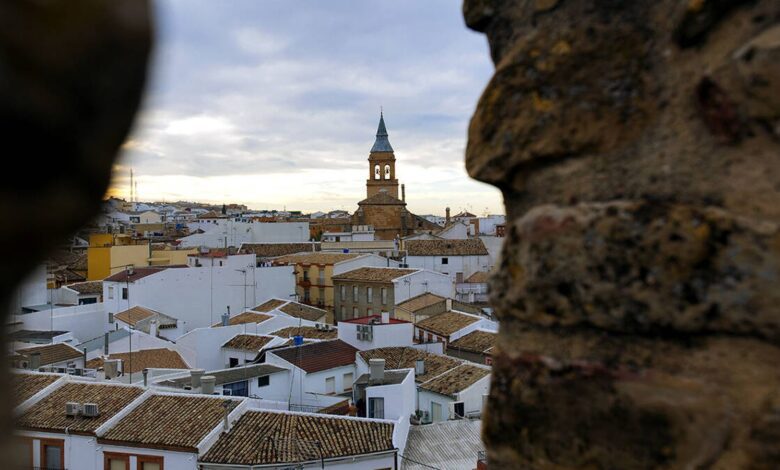
Amid the Andalusian hills, among silvery olive groves, rises a fortress that in recent years has become a true symbol of the region’s cultural tourism. The unusual fate of this castle, where tragedy, art, and the struggle for love intertwine, attracts not only history enthusiasts but also those seeking powerful emotions in their travels. Today, Arjonilla is more than just a point on the map of Jaén—it is a place where the past comes alive in every stone.
Legend and Literature
At the heart of the castle stands a tower, where legend says the famous troubadour Macías was imprisoned. His story is not a myth but a true drama that shook medieval Spain. Macías, immortalized in verse and prose, fell in love with a noble lady, Elvira, whose hand already belonged to another. Their attempt to escape ended in tragedy: the lovesick poet was captured and thrown into a cell, where he continued to compose ballads about his suffering. The jealous husband did not forgive the betrayal—and Macías was killed by his hand. This story became the inspiration for a play by Lope de Vega and a novel by Larra, while the castle itself has become a pilgrimage site for admirers of Spanish literature.
Architectural Metamorphoses
The fort, built on Islamic foundations, has withstood the test of time. After Castile’s conquest, it was rebuilt with reinforced defenses and new towers and walls. The main tower—severe, square, with massive vaults and crenellated crowns—still dominates the surrounding area. Inside, traces of different eras remain: from military fortifications to remnants of a necropolis and an old oil mill. Each layer tells the story of how the site’s purpose and destiny changed over the centuries. Here, not only did people defend against their enemies, but they also preserved memories of a love that proved stronger than the fear of death.
The road to tourist recognition
In recent years, Arjonilla has been granted the status of ‘Pueblo Mágico’—official recognition of its uniqueness and historical value. This has sparked a new wave in tourism: the castle has become part of a popular route through the fortresses and battlefields of Jaén. Today, visitors come not only for the architecture, but also to feel the atmosphere of medieval passion and hear legends still passed down orally. Locals take pride in their heritage and actively participate in reenactments, festivals, and guided tours, turning every visit into a true journey through time.
The magic of the place
The Castle of Troubadour Macías is more than just a monument—it’s an active participant in the region’s cultural life. Its walls serve as backdrops for theatre performances, and its tower has become a symbol of unbroken love. Tourists remark on a unique atmosphere: here, it’s easy to imagine knights, poets, and ladies whose fates were decided in the shade of these walls. For many travelers, discovering Arjonilla sparks a lasting interest in the history of Andalusia and Spanish literature. Each year, the number of visitors grows along with curiosity about the country’s lesser-known past.
Macías, known as The Lover, became one of the most celebrated figures of medieval Spain. His tragic fate has inspired not only writers but also painters, musicians, and playwrights. In Arjonilla, his name is a symbol of loyalty and passion, and the castle—a place where reality and myth are intertwined. Today, the site hosts themed tours, literary evenings, and historical reenactments, allowing every guest to experience a legend that remains relevant after centuries.
In one of our recent reports, the editorial team already highlighted other hidden gems of Spain. For example, in Valencia, there’s a city nestled among vineyards that preserves a unique Renaissance masterpiece. This spot, far from tourist routes, captivates with its blend of history and art. Read more about why this place is worth seeing at least once in our article “Hidden Gem of Valencia”.