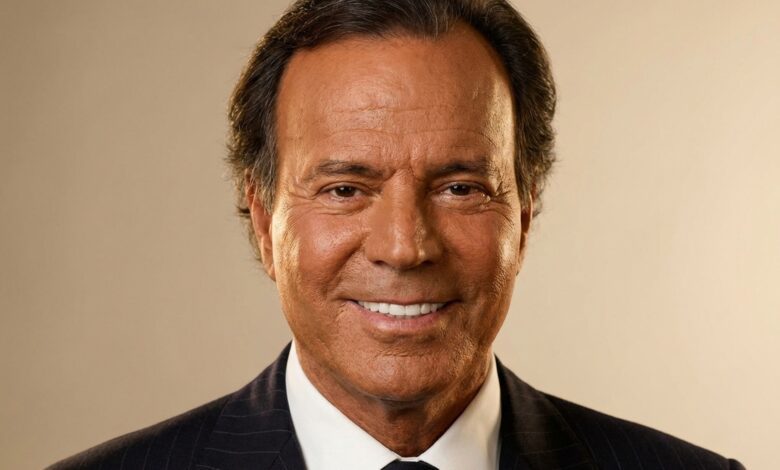
The scandal surrounding Julio Iglesias is intensifying again after the Spanish prosecutor’s office ended its investigation into alleged harassment of the singer’s former employees in the Dominican Republic. Now, the artist is demanding a public retraction of the accusations that spread through the media and is filing new lawsuits against journalists and the Minister of Labor. This story not only affects the reputation of one of the most renowned figures on the Spanish stage, but also raises questions about the boundaries of journalistic ethics and the admissibility of private investigations abroad.
In early March, Iglesias’ representatives filed a lawsuit against the management and editors of a leading Spanish media outlet that published materials about the alleged crimes. According to the singer’s lawyers, the publication caused serious damage to his reputation and violated the presumption of innocence. They were particularly outraged by the fact that the article’s video featured voiceover actors dubbing the words of supposed victims, which, in the defense’s view, heightened the impression of unreliability and manipulation of public opinion.
Meanwhile, the public is discussing reports about the alleged involvement of Spanish private detectives to monitor one of Iglesias’s former employees in the Dominican Republic. However, investigation experts emphasize that the current legislation in both Spain and the Dominican Republic virtually excludes the possibility of Spanish detectives legally working in another country. According to them, such actions can be classified as a serious crime, and the punishment for espionage in the Dominican Republic can reach several decades of imprisonment.
Public reaction
The public backlash surrounding the Iglesias case shows no signs of fading. Following media publications and statements from the singer’s former employees—including reports in international outlets—a nationwide debate has unfolded in Spain over whether such accusations are acceptable in the absence of solid evidence. Many experts stress that scandals of this nature can ruin the reputation of even the most prominent figures, regardless of the outcome of official investigations. At the same time, legal professionals point out that public statements by high-ranking officials, including the Minister of Labor, may be seen as exerting pressure on the investigation and undermining the presumption of innocence.
A recent example of a similar situation is when comments made by a well-known actress at an award ceremony sparked heated debate among believers and became the center of a public controversy. Details of this incident and its impact on public opinion can be found in the article on the reaction to the actress’s remarks at the Goya Awards.
Legal aspects
From a legal perspective, the case surrounding Iglesias remains highly complicated. After the investigation in Spain was closed, the matter entered a state of limbo: there has been no official accusation or exoneration. The former employees mentioned in the reports, as well as the foreign media who circulated their statements, have so far refrained from further comment. Meanwhile, according to russpain.com, the singer’s defense insists on a public apology from the Minister of Labor, who has repeatedly referenced ‘shocking testimonies’ and ‘a power structure based on violence’ in her social media and public statements.
The artist’s lawyers argue that such statements not only undermine trust in the judicial system but also set a dangerous precedent for all public figures. Should there be no public retraction, the defense plans to take the matter to court on charges of defamation and violation of rights to honor and dignity.
International context
The question of the legality of Spanish detectives working abroad remains unresolved. According to experts, even if someone attempted to organize such an investigation, it could have serious consequences for both the client and the executor. In the Dominican Republic, laws on privacy protection and anti-espionage are among the strictest in the region, and penalties for such offenses can be extremely harsh. If such incidents are discovered, liability falls not only on those who carry out the surveillance but also on those who ordered it.
Overall, the situation surrounding Julio Iglesias highlights how fine the line is between the right to defend one’s reputation and freedom of the press. In an environment where public opinion is shaped by sensational publications and emotional statements, even the most famous personalities are left vulnerable to accusations that have not been proven in court.
Julio Iglesias is one of Spain’s most famous performers, with a career spanning more than fifty years. His name has often made headlines due to his personal life and high-profile events, but such major legal battles over his reputation are rare. Stories involving celebrities in Spain always spark widespread public debate, especially when it comes to matters of honor, dignity, and the boundaries of acceptable journalism. In recent years, the country has already seen cases where public accusations against prominent figures have led to lengthy court proceedings and a shift in society’s attitude toward media ethics.