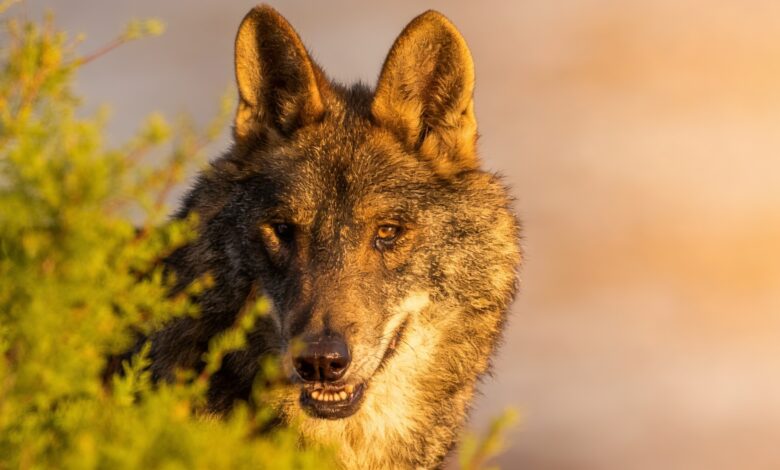
A sharp shift in the allocation of government funds has affected thousands of Spanish farmers. In 2025, the Ministry of Finance redirected 20 million euros, previously earmarked for compensation for wolf attack damages, to finance an electric vehicle support program. This decision has had a significant impact on livestock regions, where losses from predators continue to grow and the promised government aid has not been delivered.
Authorities in Castilla y León, the region with the highest number of wolf attacks on livestock, have been forced to cover compensation from their own budgets. In 2024 alone, nearly 4,000 attacks were recorded in the region, resulting in the deaths of about 6,000 animals. According to RUSSPAIN.COM, regional budgets are under pressure because the central government has not provided any of the promised funds.
Redistribution mechanism
This transfer of funds became possible due to the absence of new state budgets and the introduction of special rules in 2020. These regulations allow the government to reallocate funding between ministries without parliamentary oversight. As a result, money originally intended for regional farmer compensation was directed to the MOVES III program supporting the purchase of electric vehicles.
The Ministry of Finance documents identify two key expenditure items: 9.5 million euros for compensation due to wolf damage and 10.5 million euros for preventive measures. Both amounts were deducted from the budget and included in a package to support electromobility. As noted by EL ESPAÑOL, this move has sparked discontent among regional authorities and representatives of the agricultural sector.
Regional response and consequences
Leaders of fifteen autonomous communities responsible for managing the wolf population issued a joint statement accusing the Ministry for Ecological Transition of breaching its commitments. They emphasized that in 2023 and 2024, there were serious difficulties justifying the expenditures, and in 2025, the allocation of funds did not take place at all. In Galicia, the number of wolf attacks has increased by 72% since 2021, while in Asturias, compensation payouts have nearly doubled.
Madrid has also seen a rise in livestock attacks, with all compensation paid exclusively from regional budgets. This situation has heightened tensions between the central government and the regions, who view the government’s decision as politically motivated. Some opposition representatives describe it as retaliation for reducing the protection status of wolves, a measure supported by parliament.
Legal and European considerations
The issue of compensation is complicated by legal proceedings. Citizens’ rights advocate, socialist Ángel Gabilondo, has filed a complaint with the Constitutional Court regarding the lowered protection status of the wolf. The court will consider the case in summer 2025, while several autonomous regions have supported the new rules. The situation is also shifting at the European level: in December 2024, the Bern Convention reduced wolf protection, and the European Parliament backed revision of the Habitats Directive in May 2025. However, Spain has yet to act on these changes due to the absence of the required report.
Against a backdrop of budget uncertainty and the lack of a transparent funding allocation system, farmers and regional authorities are facing mounting financial challenges. According to experts, such decisions could further escalate tensions between Madrid and the autonomous regions and erode trust in state institutions.
Context and similar cases
In recent years, the redistribution of public funds and delays in compensation payments have become increasingly common. For example, the budget process in Catalonia was recently stalled due to disagreements among political parties, which also created uncertainty around funding for key sectors. Further information on how budget decisions impact regions can be found in the article on difficulties approving the budget in Catalonia — more on budget disputes in Catalonia. Such situations show that the lack of stable funding and transparent procedures for allocating resources can have long-term consequences for regions and specific sectors of the economy.
Other EU countries also face disputes over compensation for damage caused by wild animals and support for environmental initiatives. In some cases, governments are forced to balance the interests of agriculture with environmental policy, leading to conflicts and legal proceedings. In Spain, this issue is exacerbated by the way powers are distributed between the central government and the autonomous regions, as well as by political disagreements over environmental protection and support for traditional industries.