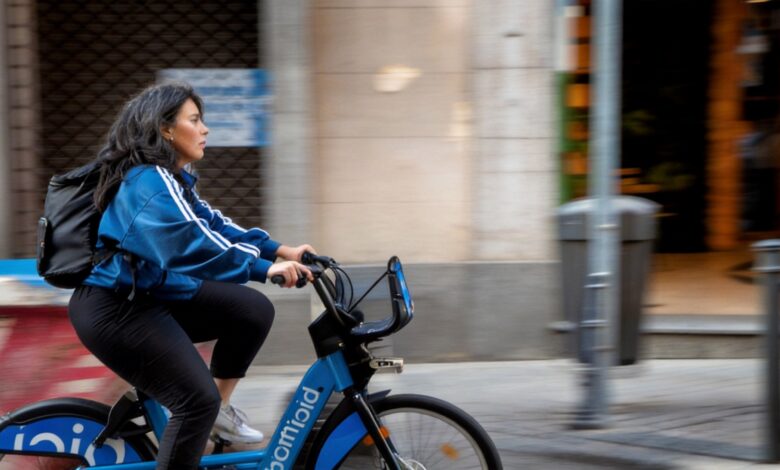
The decision to expand the Bicimad network in Madrid will have a direct impact on the daily mobility of residents in the city’s outskirts. In the near future, six peripheral districts will see new stations opening, enabling thousands of people to reach work, study, and other key city destinations more quickly and conveniently. This step may change daily routes and ease the load on other types of transport.
As noted by El Pais, Bicimad has become one of the city’s most in-demand services in the three years since its upgrade. In 2025, residents and visitors to Madrid made nearly 14 million trips on electric bicycles. For comparison, just a few years ago this figure was four times lower. Authorities attribute the growing popularity to the ongoing expansion of the network and improvements to infrastructure.
New districts and investment
In 2026, Bicimad will receive 20 new stations in Barajas, Hortaleza, Moncloa-Aravaca, Puente de Vallecas, Villaverde, and Vicálvaro—home to the rapidly developing El Cañaveral district. The initiative is allocated 1.4 million euros, of which 1 million comes from European NextGenerationEU funds. All work is expected to be completed by May of next year.
The distribution of new stations is uneven: the most, eight, will appear in Moncloa-Aravaca, five in Hortaleza, three in Villaverde, two in Vicálvaro, and one each in Barajas and Puente de Vallecas. This approach is based on an analysis of demand and consultations with residents and local councils. Authorities emphasize that priority is given to new residential areas and neighborhoods with limited transport accessibility.
Growing popularity and future plans
Since the launch of Bicimad in Madrid, the number of bicycles and stations has increased several times over. When the service began, the city had only 123 parking points and 1,560 bicycles; after the latest expansion, the network will reach 653 stations and over 8,000 electric bicycles. According to El Pais, in the first three months of 2026 alone, the number of trips rose by 20% compared to the same period last year.
Madrid authorities point out that expanding the Bicimad network is not just a matter of convenience, but also part of a strategy to develop new neighborhoods and reduce transport congestion in the city center. In October 2024, a similar expansion added new stations in 19 districts on the outskirts. This approach makes it possible to gradually cover more residential areas and integrate them into the citywide transport system.
Cooperation with suburbs
At the beginning of 2025, the Mayor of Madrid announced plans to extend Bicimad to Pozuelo de Alarcón, located about 14 kilometers from the city center. This project is still in the development stage and requires coordination between municipalities. Authorities emphasize their willingness to establish similar partnerships with other suburbs if there is interest in integrating into a single network.
According to russpain.com, such initiatives could serve as an example for other Spanish cities, where issues of transport accessibility and environmental sustainability are becoming increasingly relevant. If successful, Madrid’s experience could be scaled to other regions of the country.
In recent years, Spain has seen rapid growth in urban bike rental systems. Barcelona, Valencia, and Sevilla are also investing in expanding their networks, focusing on sustainable transport and emission reduction. In 2024, Barcelona opened new Bicing stations in previously uncovered areas, while Valencia increased the number of electric bicycles. These projects not only improve the urban environment but also help foster new habits among residents of large cities.