In April 1992, Spain launched its first AVE high-speed rail line, connecting Madrid and Seville. This event coincided with major national projects—the Olympic Games in Barcelona and Expo in Seville—amplifying the sense of a technological breakthrough. For the first time, passengers could travel between the two cities in just two and a half hours, compared to the previous journey of nearly seven hours.
In the early years, AVE became a symbol of modernity and reliability. The trains stood out for their high speed, comfort, and impeccable punctuality. Renfe even refunded ticket costs if a train was delayed by more than five minutes. The service included free newspapers, meals, and attentive staff, making the journey as enjoyable as possible.
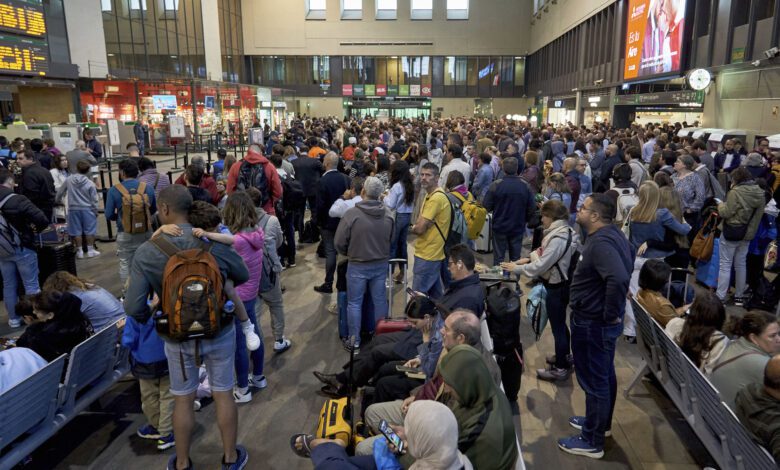
However, over the past three decades, the situation has changed. Today, passengers increasingly face delays, technical failures, and service disruptions. In recent months, the number of incidents on the line has risen significantly: people have spent hours waiting on trains without water or air conditioning, and sometimes found themselves trapped inside carriages. Causes range from breakdowns and cable theft to problems with the overhead lines and technical malfunctions.
The issues became especially acute in the summer of 2024, when cable theft in the Toledo area (Toledo) brought the service to a complete halt, leaving more than 10,000 passengers unable to reach their destinations. In July, another accident on the line led to a nearly 15-hour suspension of service between Madrid and Andalusia, coinciding with the start of the holiday season.
Experts and union representatives attribute the worsening situation to insufficient attention to maintenance. In their view, after the ceremonial openings of new lines, regular repairs and infrastructure upkeep are neglected. Maintenance is often outsourced to private companies under flexible contracts, which leads to gradual equipment deterioration. Preventive works that could avert many malfunctions are now rarely carried out.
Another factor is the liberalization of the rail transport market. Since 2021, AVE lines have faced competitors: Iryo, Ouigo, and Renfe’s own low-cost Avlo. The number of trains and passengers has soared: if a little over a million people used AVE services in 1992, by 2024 the number has reached nearly 40 million. That’s 22% more than the previous year, and 77% more than in pre-pandemic 2019.
Network expansion has also played a role. Over 33 years, the length of high-speed rail lines in Spain has grown from 470 to 4,000 kilometers, making the Spanish network the longest in Europe and the second largest in the world after China. New routes have connected over 50 cities, and investments in infrastructure development have exceeded 65 billion euros.
As the network and the number of operators grew, compensation rules for delays also changed. Previously, Renfe reimbursed passengers for delays of five minutes, but since 2016, the conditions have become stricter: partial compensation is now only offered for delays of an hour or more, while full compensation is granted for delays exceeding 90 minutes. The company does not disclose how much has been paid out to passengers throughout AVE’s operation, citing commercial confidentiality and market competition.
In recent years, major infrastructure upgrades have been underway on the Madrid-Seville line: bridges and tunnels are being reinforced, rails and signaling systems replaced, and noise barriers installed. These works, costing over 700 million euros, are scheduled for completion by 2026, while train services continue to operate even during the renovations.
Despite all the challenges, the AVE network continues to expand. In 2023, high-speed trains arrived in Asturias, and in previous years—in Burgos, Murcia, Extremadura, and Galicia. Nevertheless, passengers are increasingly concerned about new disruptions and hope for better service. Many experts believe the issue can only be resolved by increasing investment in maintenance and infrastructure modernization.