The decision to allocate a substantial sum for genetic research on remains from Valle de los Caídos has become one of the most prominent steps in Spain’s policy of historical memory in recent years. For many families, this represents a real opportunity to learn the fate of their loved ones, whose remains have been unidentified for decades. The identification of victims of the Civil War and the dictatorship has long been a contentious issue, but has now gained new momentum thanks to support from judicial authorities.
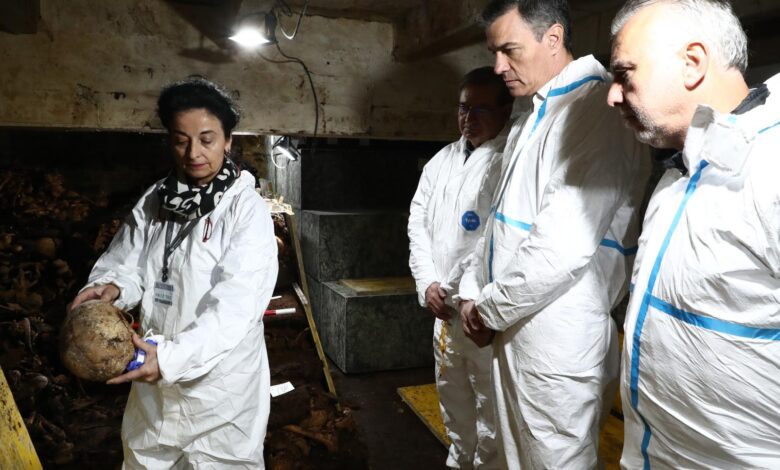
A contract worth €345,000 was signed with Citogen S.L., a company based in Zaragoza. This firm will conduct DNA analysis of the exhumed remains found in the crypts of the memorial complex. The results will be added to the National DNA Bank of victims of war and dictatorship, allowing them to be matched with samples provided by relatives. According to RUSSPAIN, remains from nine municipalities have already been discovered during the work, and dozens of bodies have been returned to families.
Judicial support
Exhumation work at Valle de los Caídos has been accompanied by numerous legal proceedings. Opponents of the process, including Fundación Francisco Franco and other right-wing organizations, attempted to halt the exhumations in court. However, in 2025, the Madrid Supreme Court ultimately authorized the continuation of the work, rejecting appeals and confirming the legality of the permits issued. This ruling became a key step towards further implementation of the national program to restore historical justice.
Since exhumations began in June 2023, specialists have discovered remains belonging to residents of cities such as Aldeaseca (Ávila) and Borja (Zaragoza). Several dozen bodies have already been identified and returned to their families. Authorities note that the process is ongoing, with a growing number of requests from relatives. According to russpain.com, by last year, around 190 applications had been submitted for the return of remains.
Memory policy
The government initiative to create a DNA bank and exhume remains has become one of the key reforms announced by Pedro Sánchez’s administration since 2018. In 2022, a new version of the Democratic Memory Law was adopted, introducing a range of measures for identifying victims and supporting their families. These steps sparked wide public debate and divided opinion: according to SocioMétrica for EL ESPAÑOL, most Spaniards support the exhumation of mass graves, but attitudes toward the memory law itself remain mixed.
As part of the reform, authorities also initiated the exhumation of Francisco Franco’s remains from the Valley of the Fallen in 2019. Afterwards, efforts turned to the search for and identification of victims from both sides of the conflict, whose remains rest in 11,060 coffins within the site. In total, more than 33,800 people are buried in the Valley of the Fallen, and for many families, the fate of their loved ones remains unresolved.
Context and consequences
In recent years, Spain has become one of the few European countries where the state actively funds the identification of victims of civil conflicts through genetic research. Similar projects are underway in other regions, where exhumations of mass graves continue. In 2024, comparable efforts were carried out in Andalucía and Castilla y León, enabling hundreds of victims to be identified by name. The fate of anonymous victims remains an urgent issue, as new DNA technologies offer expanded possibilities for restoring historical justice.