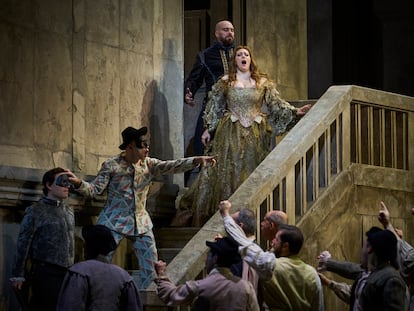
In 2026, Barcelona becomes a center of transformation for classical music fans. The city is gearing up to host the seventh edition of concerts within the Barcelona Obertura Ciutat de Clàssica festival, which promises to broaden cultural horizons and make music more accessible to both residents and visitors. For the first time in the festival’s history, the number of free performances will reach 27, while ten new venues will be added. This decision opens up opportunities for young performers and gives people a chance to hear classical music in the city’s most unexpected corners.
The organizers—including Gran Teatre del Liceu, Palau de la Música Catalana, and L’Auditori—are focusing on cultural tourism and wider audience engagement. According to ElPais, more than 500 musicians will take the stage in Barcelona this year, including world-renowned stars and young talents. The program features 52 concerts running from March 5 to April 1. Special attention is given to blending architectural heritage with music: four venues designed by Antoni Gaudí will host unique musical events marking the centenary of the architect’s death.
New venues
This year, the festival expands its geography: in addition to well-known locations, new venues include Fundació Julio Muñoz Ramonet, Torre Bellesguard, Casa Vil·la Joana, Oliva Artés (MUHBA), Biblioteca Horta-Can Mariner, Palacete Albéniz, Plaza Sóller, Museo Europeo de Arte Moderno, Museo Frederic Marés, and Casa Vicens. These are not only architectural landmarks but also modern cultural centers that will host classical music concerts for the first time. As a result, residents from various districts of Barcelona will be able to hear performances by young musicians without leaving their own neighborhoods.
Among the festival’s regular partners are Casa Batlló, Torre Collserola, Monasterio de Pedralbes, Centro Cívico Cotxeres de Sants, Fundació Mies van der Rohe, Fundació Miró, and Palau Güell. These venues have already established themselves as popular destinations for music and architecture enthusiasts. This year, they will once again open their doors to the public, offering new formats and unexpected collaborations.
Stars and Discoveries
The lineup of invited artists includes soprano Asmik Grigorian, tenor Juan Diego Flórez, pianist Martha Argerich, the Casals Quartet, Le Concert des Nations led by Jordi Savall, and violinist James Ehnes. Their performances will be some of the festival’s highlights, drawing the attention of both locals and tourists. Special focus is given to concerts dedicated to Catalan composers of the modernist era, such as Francesc Pujol, Enric Morera, Francesc Tàrrega, Robert Goberna, Francesc Alió, Joan Gay, Càndid Candi, Joaquim Malats, Josep Martí Cristià, Narcisa Freixas, Carme Carr, Modest Serra, and Amadeu Cusco.
This year, the organizers are also shining a spotlight on women composers whose works have long remained overlooked. The repertoire will feature compositions by Luise Greger, Margarete Schweikert, and Johanna Müller-Hermann—an important step towards restoring historical justice and expanding the musical heritage.
Main Stages
Alongside the free concerts, Barcelona’s premier concert venues—Liceu, Palau de la Música Catalana, and L’Auditori—have scheduled 24 ticketed events featuring acclaimed performers. Liceu will host the premiere of a new production of Giacomo Puccini’s opera ‘Manon Lescaut’, directed by Àlex Ollé. Leading roles will be performed by Asmik Grigorian and Joshua Guerrero. On March 19, Juan Diego Flórez will appear on the Liceu stage, and on March 24, Les Musiciens du Louvre under the baton of Marc Minkowski will present a concert version of Georg Friedrich Händel’s opera ‘Orlando’.
Palau de la Música Catalana will offer 12 concerts, including a performance by pianist Jan Lisiecki on March 5. L’Auditori will host nine concerts, beginning with the Seventh Symphony by Antonín Dvořák, performed by the Barcelona Symphony Orchestra and the National Orchestra of Catalonia (OBC) under the direction of Pablo González.
The Barcelona Obertura Ciutat de Clàssica festival has been regarded as one of the most significant cultural events of spring in Catalonia for several years. In recent years, it has steadily expanded its audience, attracting not only locals but also visitors from other regions and countries. For example, in 2024, the number of free concerts exceeded twenty for the first time, and in 2025 the festival held performances in industrial areas and open-air venues for the first time. This approach has brought classical music closer to the public and inspired other Spanish cities to launch their own music marathons.