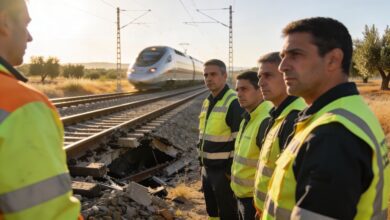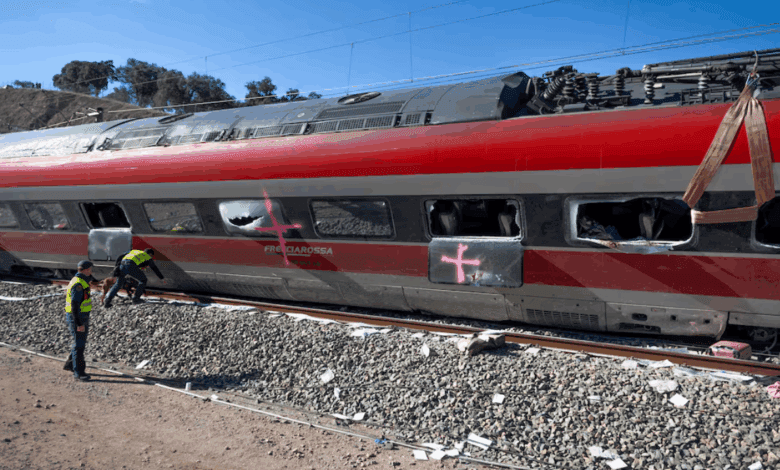
Questions about the work of emergency services have become particularly acute for residents of Andalusia following the railway tragedy in Adamuz. After 46 people died in a train collision in January 2026, victims and their families are demanding immediate action from the authorities. Their demands focus not only on identifying those responsible but also on a complete review of the entire emergency response system, which could impact the safety of millions of Spaniards.
As El Pais reports, the Adamuz Accident Victims Association has sent an official letter to the president of the Junta de Andalucía, Juan Manuel Moreno Bonilla. The letter calls for a thorough investigation into the work of medical and rescue services on the day of the disaster. According to the association, staff from the 061 service had to coordinate operations using pen and paper due to a computer system failure. Furthermore, there was no communication between the 061 center and the 112 coordination center, leading to delays and confusion in relaying information about the number of victims and the scale of the incident.
Coordination issues
The situation was aggravated by the fact that, according to CSIF union representatives, emergency service workers used their personal phones for communication, and information about the number of victims was delayed. Details on the location and scale of the accident were not promptly relayed between the Andalusian Emergency Management and Safety Agency (ASEMA) and the Córdoba police operations center (COS). According to those affected, this may have resulted in an increased number of deaths and injuries.
The victims’ association is demanding not only an urgent review of response protocols from the authorities, but also the release of a full report with documentation of emergency service actions on the day of the tragedy. They are also calling for an independent investigation to determine whether basic standards of communication and coordination between agencies were violated. In russpain.com’s opinion, such demands have become increasingly common after major accidents, as the public calls for greater transparency and accountability from government bodies.
Legal consequences
The legal team representing the victims has already filed complaints with the Railway Accident Investigation Commission, the Andalusian Ombudsman, and the court in Montoro, where the cause of the accident is being investigated. However, according to El Pais, the investigation remains focused on technical aspects of the crash, rather than the actions of emergency services. Association representatives believe that if violations are confirmed, this could lead to new lawsuits and government accountability.
The investigation revealed that protocol 112 requires collecting seven key pieces of information when a call comes in: exact location, description of the incident, number of victims, symptoms, aid provided, possible hazards, and contact details. However, according to members of the rescue operation, information about the victims and their condition reached responders with delays—only after the Civil Guard arrived at the scene, which happened 43 minutes after the collision.
Authorities’ response and public reaction
The authorities of Andalucía are facing public pressure, as well as from the relatives of the victims, who are demanding not only explanations but also concrete actions to address the identified shortcomings. In response to investigation requests, the court declined to seek emergency service call records and reports, considering them unrelated to the technical aspects of the accident. Nevertheless, the victims’ lawyers insist on a comprehensive analysis of all circumstances surrounding the incident, including the response of rescue services.
The issue of government responsibility for emergency services has repeatedly sparked public debate. Recently, a controversy erupted in Madrid over tragedies in nursing homes, after a shift in the stance of Ayuso’s advisor regarding the Health Ministry’s responsibility triggered intense discussion and legal proceedings. More details on the development of this case can be found in the article about the advisor’s change of position in the nursing home case.
Context and similar cases
In recent years, Spain has faced several major incidents where the coordination and effectiveness of emergency services have come under scrutiny. After the Santiago de Compostela train tragedy in 2013, questions were also raised about response times and the quality of inter-agency communication. Similar issues were discussed following floods in Murcia and wildfires in Catalonia, when delays in information sharing led to additional casualties. These cases highlight the importance of regularly reviewing and improving Spain’s emergency response protocols.