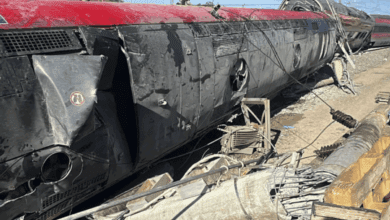
An investigation is ongoing in Spain regarding the railway accident in Adamuz (Córdoba), which sparked significant public outcry. Questions surrounding infrastructure performance and the actions of those responsible remain at the forefront, as the findings of the investigation will determine not only the restoration of trust in the railway system but also the future of high-speed rail safety in the country.
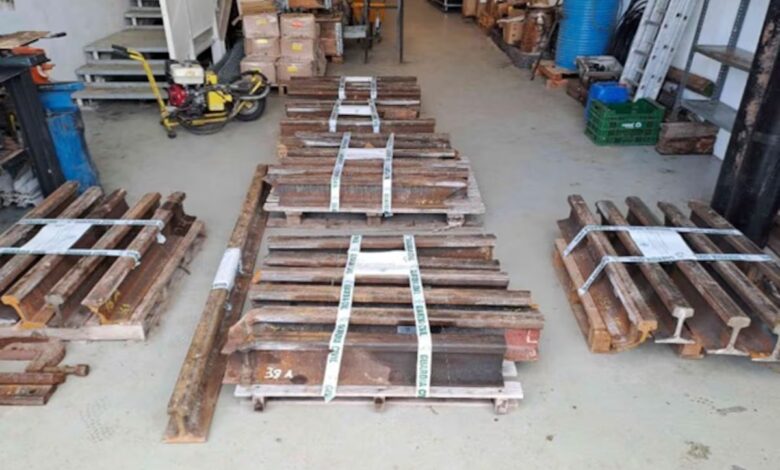
Technical experts working to determine the causes of the incident, alongside members of the Civil Guard, have been overseeing all materials taken from the accident site up to January 22. However, on the night of January 23, Adif employees, the infrastructure management company, accessed the site and removed sections of rail without official court authorization. This led to discontent from the judge overseeing the investigation and raised new questions about the company’s conduct.
Collection of evidence
The Railway Accident Investigation Commission (CIAF) possesses crucial elements—rail segments and welded joints taken from around kilometer marker 318.681 on the Madrid-Sevilla line. According to experts, this is where a critical failure likely occurred, leading to the Iryo train derailment on the evening of January 18. Commission representatives note that the materials collected by Adif are likely of secondary importance, but their unsanctioned actions by the court have caused concern.
During the meeting between CIAF members, officers from the Cordoba judicial police, and Judge Cristina Pastor, it was discussed that all key evidence remains under investigative control. For deeper analysis, it was proposed to involve two independent laboratories—one private facility from Galicia and one public—to conduct a metallographic examination of the rails, welds, and wheelsets not only from the derailed train, but also from other trains that passed along this section shortly before the accident.
Adif’s involvement
The black boxes from the Iryo and Alvia trains, which were traveling towards each other and could not avoid the collision, are also due to be opened for examination. The investigation is progressing slowly due to complex procedures required by criminal and railway regulations. Judge Pastor met with representatives of both parties after the Civil Guard questioned the head of the Adif maintenance center in Hornachuelos (Cordoba), where the rail segments collected without court authorization had been delivered.
Adif claims it only began work on clearing the site after CIAF and the Civil Guard officials left the scene, to prevent important parts from being damaged or disposed of. According to State Secretary for Transport José Antonio Santano, the company conducted tests on welded joints similar to those found at the accident site, but taken from a distance ranging from 127 to 380 meters from the epicenter. These elements were sealed off by police on February 3, but have not yet been requested for analysis.
The role of the court and police
According to the judicial police report, some of the rail segments delivered to Hornachuelos may have included those the commission intended to examine, but their removal was denied because restoration work had already begun. Judge Pastor expressed dissatisfaction with Adif’s actions, as they collected and analyzed potential evidence without official authorization. CIAF technical experts requested additional time from Adif to complete the sample collection, but this request was made verbally and the court was not notified.
The Civil Guard learned about the relocation of the rails only on January 30th, when the materials were already in Hornachuelos, about 90 kilometers from the accident site. According to the police, all necessary measurements and evidence collection have been completed, so Adif can now proceed with restoration. The official statement emphasized that until January 28th, the company was not authorized to begin any cleanup until the judge gave permission to start recovery and collect the remaining materials.
Context and consequences
The ongoing investigation into the Adamuz accident recalls other high-profile railway incidents in Spain. For instance, following the tragedy in Cordoba, the court received dozens of complaints, triggering multiple investigations and raising questions about the performance of railway services. More details on public reaction and the course of the proceedings can be found in the article about complaints after the Cordoba disaster.
According to El Pais, the investigation into the Adamuz accident has become one of the most discussed events in the country’s transport sector in recent years. Recalling similar incidents, it is worth noting that in 2024, Galicia also conducted a large-scale investigation following a train derailment, where independent expert reports and strict evidence preservation played a key role. Then, as now, public attention focused on the actions of railway companies and the transparency of investigative authorities. Such incidents prompt authorities to reconsider safety standards and tighten infrastructure oversight.