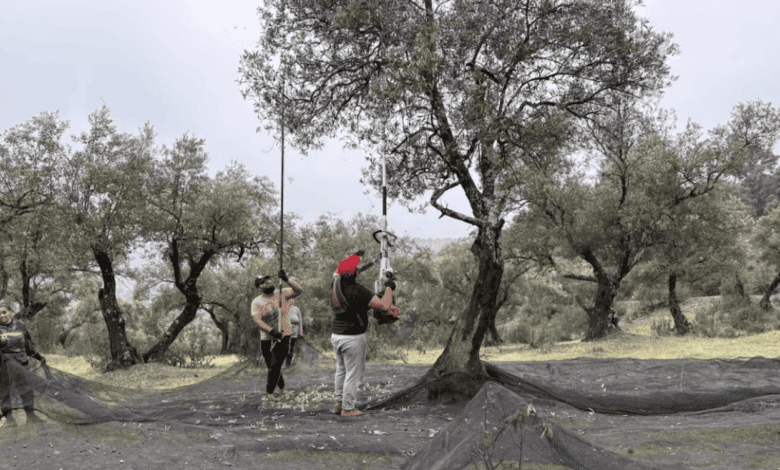
A serious problem is brewing in Spain’s agriculture: a severe shortage of workers threatens the success of key olive and citrus harvest campaigns. The situation is particularly acute in Andalusia and Extremadura, the main traditional production areas. Despite official statistics reporting over 133,000 unemployed people in the agricultural sector, farmers are struggling to hire seasonal labor. The causes lie not only in mechanization, but also in an imperfect subsidy system that makes working in the fields unprofitable for many rural residents.
This autumn in the Guadalquivir Valley, three major campaigns have kicked off simultaneously: table olive harvesting, olive oil production, and citrus picking. The olive harvest alone is expected to generate around 32 million workdays, nearly 19 million of which will be in Andalusia. This region accounts for up to 80% of Spain’s total olive oil production. Yet even at this scale, employment is far from guaranteed: many farmers are forced to reduce acreage or switch to more mechanized crops to make up for the labor shortage.
Mechanization and subsidies: a double blow to the labor market
In Extremadura, entrepreneurs point out that due to a lack of staff, they have to change the structure of their crops. Some are completely abandoning fruit farming in favor of grains, which require fewer workers. Mechanization, on the one hand, makes labor easier, but on the other, it reduces the number of jobs, leading to a paradoxical situation: unemployment is rising, yet vacancies remain unfilled.
Another complication is the incompatibility of seasonal work with receiving agricultural subsidies. For many rural residents, it’s more profitable to remain unemployed and collect benefits than to work in the fields. This is felt especially acutely among those over 52, who fear losing their benefits and can’t count on a decent pension. As a result, the older generation is in no hurry to leave agriculture, while young people see no future in it.
Shortage of skilled workers and lack of generational renewal
Agricultural organizations emphasize that the problem is not only the number of workers, but also their qualifications. Finding specialists to operate modern machinery and experienced operators is especially difficult. In the past ten years, olive groves have expanded significantly, along with the need for pruning, maintenance, and other tasks that require specific skills.
In the province of Jaén, around 50,000 jobs are created annually through a special employment program, enabling many residents to accumulate the required working days for subsidies. However, a lack of young workers entering the field and low pensions for the older generation mean that generational change in the agricultural sector is virtually absent. Farmers warn that without addressing this issue, the agricultural labor market will continue to face a worker shortage.
Gender inequality and the role of women in agriculture
Unions point out that women account for a significant proportion of the agricultural sector’s unemployed—over one-third. Women are more likely to experience temporary employment and discrimination during hiring. According to unions, it is essential to develop training programs and ensure equal access for women to jobs in agriculture. Only then can the labor shortage be partially addressed and the efficiency of agricultural production improved.
Another factor affecting the situation is the lack of recruitment of foreign workers. In Andalusia, hiring foreigners is mainly limited to the strawberry harvest in Huelva. Meanwhile, many foreigners already living in Spain are unable to obtain official employment due to bureaucratic hurdles. Farmers believe that legalizing these workers could significantly ease labor shortages.
Challenges for Farmers and the Government’s Response
Spain’s Minister of Agriculture, Luis Planas, acknowledges that the shortage of workers in the agricultural sector has no simple solution. He urges employers to offer fair wages and create conditions that help integrate new employees. According to him, even a small number of labor law violations can seriously damage the industry’s reputation.
Notably, every year over 25,000 residents of Andalusia travel to France to harvest grapes, attracted by higher pay and better working conditions. This once again highlights the need for Spain to not only raise wages but also improve social protections and employment conditions to retain its workforce.
Unions continue to insist on the need for a new sectoral agreement and the implementation of programs to promote equality and eliminate gender discrimination. Only a comprehensive approach can stabilize the situation and ensure successful future agricultural campaigns.