This week in Sevilla, a new foreign policy strategy for Andalusia was unveiled, projecting plans through 2030. The event featured former Spanish Foreign Minister Alfonso Dastis, who noted that the region’s policies are gaining increasing prominence on the international stage. According to Dastis, Andalusia is aiming for a global presence but has no intention of following Cataluña’s path by opening its own ’embassies’ abroad.
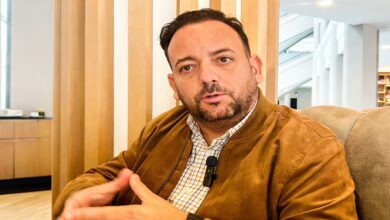
Along with Dastis, the discussion included the region’s Tourism and Foreign Affairs adviser, Arturo Bernal, as well as Enric Millo, who previously served as the government delegate in Cataluña during the most turbulent years of the Catalan crisis. Having returned to politics after challenging times in his home region, Millo is now responsible for Andalusia’s foreign affairs and plays an active role in shaping its new direction.
New strategy
Andalusian authorities emphasize that their foreign policy is based on institutional loyalty and respect for the powers established by the Constitution and the Statute of Autonomy. According to Bernal, the region utilizes all available tools but does not exceed its competencies. Unlike Cataluña, where foreign engagement is often linked to political ambitions, Andalusia focuses on economic and cultural cooperation.
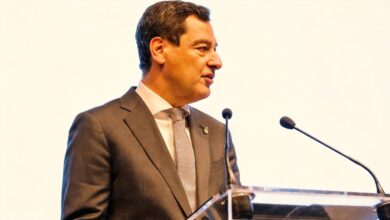
The region already has offices in Madrid and Brussels, as well as a recently opened branch in Barcelona. However, as officials note, these entities are primarily focused on trade development and export support rather than political autonomy. The president of Andalucía, Juanma Moreno, has repeatedly called himself the region’s ‘chief commercial officer,’ emphasizing the priority of economic interests.
Global ambitions
Andalucía’s external strategy involves active participation in international projects and forums. The region has already announced its intention to strengthen its influence within the European Union, particularly by engaging in the work of the Committee of the Regions (Comité Europeo de las Regiones, COR). Moreno is considering a bid to chair this body in 2027, which could give Andalucía additional weight in European discussions.
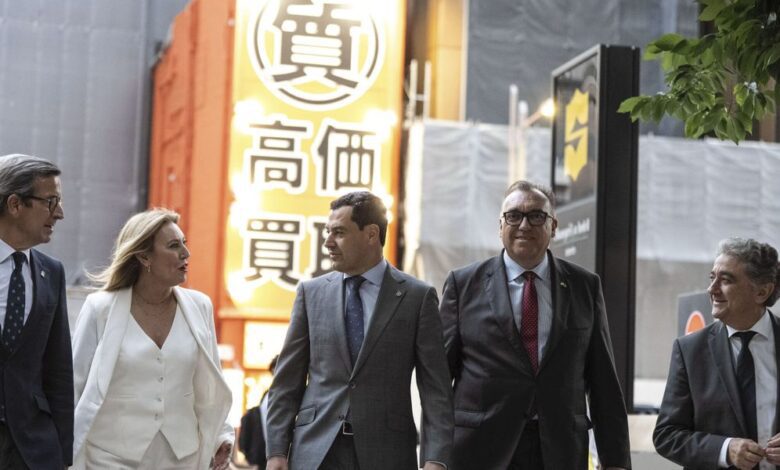
Special attention is given to developing ties with China and Japan. In recent months, delegations from Andalucía have visited these countries, while representatives of the Chinese leadership have come to Sevilla in response. Beyond economic contacts, the region is actively involved in climate initiatives, which also raises its profile on the international stage.
Cultural and economic focus
A key part of the strategy is promoting the ‘Andalucía’ brand abroad. According to officials, the region should be associated not only with tourism, but also with innovation, culture, and international cooperation. The Fundación Tres Culturas, supported jointly with the Moroccan crown and recently under new leadership, is also working in this direction.
Regional authorities believe that Andalucía can become a key partner in the Mediterranean and a natural bridge between Europe and Latin America. Foreign policy focuses on the region’s traditional priorities: strengthening its position in Brussels, fostering cooperation in the Mediterranean basin, and expanding ties with Ibero-America.
Loyalty and pragmatism
During the presentation, it was repeatedly emphasized that Andalucía does not intend to compete with Spain’s central government. All initiatives are coordinated with Madrid, and the region’s external activities remain within the legal framework. According to officials, this approach delivers results without conflict or misunderstanding.
Overall, Andalucía’s new strategy reflects the region’s ambition to take a more prominent role on the international stage while maintaining a balance of interests within the country. The region is focusing on the economy, culture, and cooperation, avoiding political moves that could create tension with Madrid.