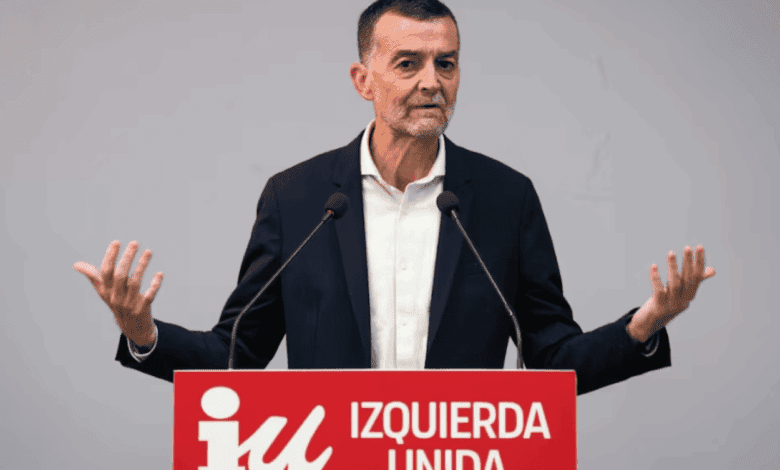
The internal political crisis in Spain has escalated again after Prime Minister Pedro Sánchez refused to make significant changes to the government cabinet as demanded by Deputy Prime Minister Yolanda Díaz. In response, Izquierda Unida (United Left) coordinator Antonio Maíllo publicly emphasized that Díaz’s initiative had not been coordinated with the other members of the Sumar political bloc. According to him, while everyone was aware Díaz intended to make a strong statement, there was no concrete agreement regarding a demand for a reshuffle.
On Wednesday morning, representatives of the parties making up Sumar and holding ministerial posts — Izquierda Unida, Comunes, Más Madrid, and Movimiento Sumar — held an online meeting. The main topics were corruption scandals and allegations of harassment that have recently plagued the Socialists. After the meeting, conflicting reports appeared in the media: some expressed support for Díaz’s remarks, while others called for a commission to oversee the coalition agreement — a sort of crisis task force that convenes only in especially difficult circumstances.
Disagreements within Sumar
In a published statement, Sumar emphasized that the situation calls for urgent action and a reassessment of the government’s goals. “Continuing as before is impossible,” the text noted. However, Mayo insisted that it’s not the time to discuss the details of Díaz’s proposal; the priority is to find a way out of the crisis and arrange a meeting with the Socialists. He expressed hope that negotiations at the highest level could take place as early as this Friday. According to Mayo, any problem requires the immediate activation of all channels for dialogue, and meetings should not be ignored—even if the PSOE doesn’t attach much importance to them.
At the same time, representatives of Más Madrid admitted they were not aware of the upcoming meeting, while Health Minister Mónica García stated on air that she did not know about Díaz’s ultimatum, as she was in negotiations with unions at the time.
Socialist response
In recent days, following Sánchez’s refusal to compromise, Sumar acknowledged that putting forward such tough demands without confidence in securing support was a risky move. This could undermine trust in the coalition. Transport Minister Óscar Puente, in particular, reacted sharply to Díaz’s remarks, publicly questioning the need for a cabinet reshuffle and even wondering whether ministers from Sumar should be replaced as well.
In response, Izquierda Unida’s parliamentary representative, Enrique Santiago, stated that disagreements between ministers are acceptable, but sarcasm and contempt toward the Deputy Prime Minister are not. In his view, such a reaction demonstrates a lack of understanding of the seriousness of the issue.
Coalition stance
Despite internal disagreements, both Santiago and Maio have confirmed that their parties have no intention of leaving the government. They support completing the current legislative term, but insist on the need for real changes in social policy, regulation of prices for basic services and goods, as well as on housing issues. According to them, the Socialists’ reaction to Sumar’s proposals only highlights their partners’ confusion and lack of a clear strategy.