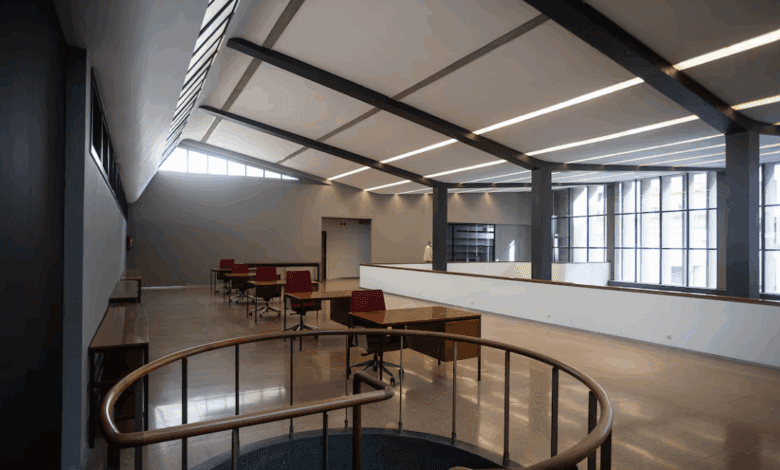
A new chapter begins in Barcelona: the former publishers’ building Gustavo Gili is turning into the House of Architecture. This space, tucked away in a courtyard on Rosselló street, has long remained in the background, despite its clear architectural value. Now it is set to become a central hub for an ambitious program dedicated to Barcelona’s status as World Capital of Architecture 2026. City officials are open about their ambitions: more than 1,500 events across every district are designed to make Barcelona a true laboratory for ideas and architectural experimentation.
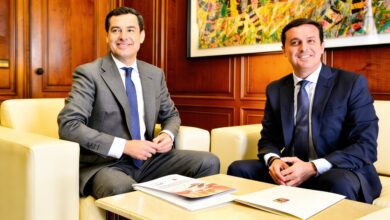
Mayor Jaume Collboni wasted no time making the announcement: right here, in a building honored with the FAD Award back in 1961, the main headquarters of the architectural celebration will open. Inside, a large-scale model of Barcelona’s future — from 2026 to 2035 — will take shape. According to the mayor, the city has long needed such a model not only to dream, but to plan for growth. The new center will be managed by the Mies van der Rohe Foundation, which will move its main offices here.
Architectural heritage
The Gustavo Gili building itself is not merely a modernist landmark, but a symbol of an entire era. Designed by Joaquim Gili and Francesc Bassó, it now stands as the flagship legacy of this architecture-focused year. Barcelona picks up the baton from Copenhagen and Rio de Janeiro, inviting a fresh perspective on the city. Here, visitors will not only reflect on the past but also debate what shape the city will take tomorrow — in terms of architecture, urbanism, and landscape design.
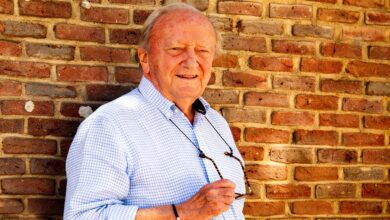
The presentation took place in a unique venue — the former Canódromo de la Meridiana, once a greyhound racetrack and now a vibrant innovation center. The mayor reminded everyone of upcoming anniversaries: the Year of Gaudí, the 150th anniversary of Ildefons Cerdà’s death, 25 years since the passing of Ignasi de Solà-Morales, and the centenary of Oriol Bohigas’ birth. All of these will be part of a rich program.
A City in Transition
The authorities are not ignoring the challenges: housing shortages, climate threats, and economic difficulties. Barcelona is visibly transforming — a new district is being built around the future La Sagrera station, a whole new neighborhood will rise next to the new Clínic hospital on Diagonal, and the Ciutadella del Coneixement project promises to become a scientific hub. But above all, it’s about ensuring residents can continue to live in their hometown despite the difficulties.
This year will bring not only the House of Architecture and a Barcelona scale model, but also the renovation of ten facades: solar panels will be installed, vertical gardens planted, and new windows opened for more light and air. The city’s chief architect, Maria Buhigas, emphasizes that the event is truly interdisciplinary, uniting architects, urban planners, designers and ordinary residents.
A Unifying Initiative
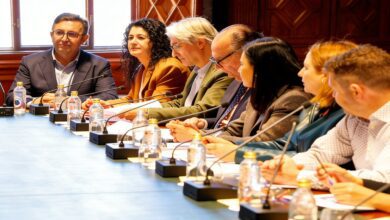
The program was developed from the ground up: 170 organizations—from architecture schools to cultural associations—submitted their proposals. The result is more than 200 projects, which will be realized in 1,500 events across the city. Each district will have its own venue hosting tours, workshops, debates, exhibitions, performances, concerts, and even film screenings. For a year, Barcelona and other cities in Catalonia will become a massive stage for architectural experimentation.
Professional associations have joined the initiative—CATEB, COAC, ArquinFAD, Construmat-Fira Barcelona, 48h Open House Barcelona—as well as universities specializing in architecture, urban planning, and design. Notably, major cultural events are also taking part in the architectural marathon: the Llum light festival, the Goya Awards, and the Grec theater festival. The highlight of the year will be the World Congress of Architects UIA, set for June 28 to July 2.
Year of Architecture
Each month, the focus will shift to a new district, covering all of Barcelona. Key events include the Seny i Rauxa exhibition featuring the best examples of Catalan architecture, the ‘City We Want’ project involving schoolchildren, and the grand finale on December 12. That day, thousands of children will present creative performances, and Barcelona will pass the baton to Beijing, which will take on the title of World Capital of Architecture in 2029.
All of this is more than just a series of events—it’s an attempt to rethink the city, its past, and its future. Barcelona once again proves that here, architecture is not just walls and roofs, but a vital part of the city’s soul. Frankly, this approach is far more inspiring than yet another siesta.