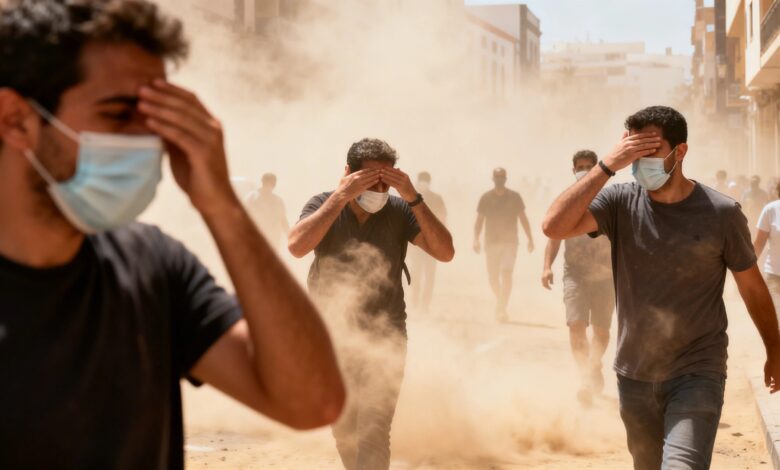
A severe calima episode, covering the entire Canary Archipelago, has already begun to affect the daily lives of residents and tourists. According to the Agencia Estatal de Meteorología (Aemet), a dense mass of dust in the air will significantly reduce visibility and air quality across all the islands, including coastal areas and mountain zones. This event is particularly relevant for Spain, as such phenomena directly impact public health and the operation of infrastructure.
The forecast indicates that dust concentration will peak on Tuesday: in the eastern islands from noon to 3 p.m., and in the western islands from 3 p.m. to 6 p.m. As early as the morning, a thick cloud of dust covered much of the region. All islands have been placed under a yellow alert, meaning a low but genuine risk to health and safety. Visibility may drop to three kilometers, and the alert will remain in effect at least until Wednesday night. After that, Aemet expects the return of trade winds to gradually clear the air by Friday.
Recommendations for residents
Authorities in the Canary Islands are urging caution, especially among vulnerable groups. The regional Ministry of Health, via the Dirección General de Salud Pública, advises avoiding extended periods outdoors, keeping windows closed, and refraining from outdoor physical activity. At-risk groups include children, the elderly, pregnant women, smokers, people with chronic respiratory or heart conditions, and those who work outside. However, as Aemet notes, even healthy individuals may experience symptoms due to exposure to calima.
Possible effects include irritation of the eyes, nose, and throat, coughing, and worsening of chronic illnesses. For people with asthma and cardiovascular problems, the situation can become critical: dust particles may trigger attacks and worsen overall health. In addition, there is a higher risk of upper and lower respiratory tract infections.
Precautionary measures
Dirección General de Salud Pública recommends minimizing outdoor physical activity, staying indoors whenever possible, and isolating from outside air by keeping windows tightly closed. For cleaning dust, use damp cloths, maintain air humidity, and drink plenty of fluids. It is essential to continue prescribed medications and follow official updates on air quality. If your health worsens, you are advised to call 112. Regularly check the Air Quality Index (ICA) through the region’s official monitoring network.
Consequences and Lessons from Previous Years
In recent years, the Canary Islands have repeatedly faced similar calima episodes. In 2022, a severe dust storm led to the temporary suspension of flights and a surge in medical visits. At that time, authorities also imposed restrictions on mass events and advised residents to stay indoors. Analysis by russpain.com indicates that such occurrences are becoming more frequent, linked to climate change and air currents between Africa and the Canary archipelago. Calima outbreaks can last for several days, with their effects lingering even longer, especially among vulnerable groups.