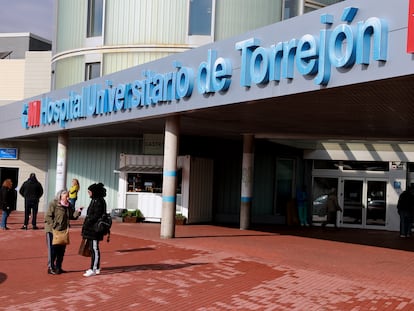
A tense atmosphere is expected at the Madrid Parliament (Asamblea de Madrid) on Thursday. For the first time since the high-profile scandal involving the Torrejón de Ardoz hospital, regional president Isabel Díaz Ayuso will have to publicly address questions from the opposition. The controversy, which has sparked outrage across Spain, centers on audio recordings in which executives from the private company managing this public hospital discuss increasing patient wait times for financial gain.
The focus has been on Ribera, the company that manages the hospital. In the leaked recordings, which have become public, the CEO instructs subordinates to artificially increase patient waiting times to boost the facility’s profitability. Madrid authorities categorically deny the allegations, insisting that no such directives were followed and that inspections found no violations.
Ribera’s management, in turn, claims that the recordings are taken out of context and stem from internal conflicts within the company. However, the full version of the audio obtained by journalists confirms that the discussions were indeed about adjusting processes to improve financial results, specifically to increase EBITDA—a key business performance indicator.
Political reaction
Opposition parties, led by the socialists (PSOE) and Más Madrid representatives, plan to use this incident to put pressure on the regional government. Their leaders, Mar Espinar and Manuela Bergerot, have long opposed the privatization of healthcare and repeatedly criticized such management schemes. They are demanding not only explanations but also the establishment of a parliamentary commission to investigate potential abuses.
The issue of transparency and oversight of budget spending is once again at the forefront of the political agenda. The opposition insists on a thorough review of the relationship between the Madrid administration and the Madrid Network association, which is linked to significant financial losses for the region. However, the ruling party, which holds a majority, is blocking the proposal to create this commission, fueling further discontent among opposition members.
The arguments of both sides
Ayuso is preparing for a heated debate, armed with arguments about corruption scandals at the national level and accusations against the opposition related to other high-profile cases. Meanwhile, left-wing parties intend to focus attention on the problems of private management of public institutions and possible risks for patients.
The session is expected to see heated debates, with each side trying to take the initiative. For Ayuso, this is an opportunity to demonstrate control over the situation and defend her healthcare model, while for the opposition, it is a chance to increase pressure and draw attention to issues of transparency and accountability.
Internal Conflicts
The Torrejón hospital scandal has become not only a political issue but also a corporate crisis. Internal tensions within Ribera have intensified, leading to information leaks and further escalation. Management insists the conflict is internal, but its consequences have already spilled outside the company and become a matter of public discussion.
Questions remain about the acceptability of such management methods and their impact on the quality of healthcare services. The public is demanding assurances that patients’ interests will not be sacrificed for the financial interests of private entities.
What Happens Next
It is still unclear whether this scandal will lead to real changes in Madrid’s healthcare system. The opposition continues to insist on an investigation, while the authorities claim the situation is under control. New statements and possibly additional inspections are expected in the coming days.
Attention to the issue remains high, with each new report sparking intense reactions from both politicians and ordinary citizens. The question of the future of the region’s healthcare management model remains one of the most pressing topics on the agenda.
For reference, Isabel Díaz Ayuso has served as president of the Community of Madrid since 2019. She is known for her tough stance on privatization and healthcare reforms, as well as her active support for private investment in the social sector. Ribera manages several medical facilities in Spain and specializes in mixed financing models. The scandal surrounding Torrejón Hospital has become one of the most significant challenges for her reputation and the region’s healthcare management system.