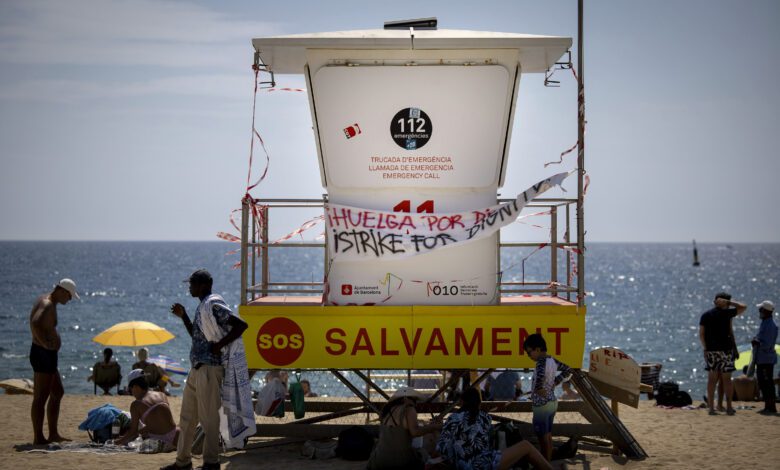
A large-scale lifeguard strike continues in Barcelona, ongoing for over three weeks. Beach rescue workers are demanding better working conditions, an increased workforce, and a review of the seasonal work schedule. The strike comes at the height of summer, when the city’s beaches are especially crowded and the heat puts extra strain on staff.
Posters with demands have appeared on Barcelona’s beaches: lifeguards complain about outdated and unsafe facilities, which are often infested with rats and insects, as well as low wages that have hardly changed in the past decade. According to them, the equipment and infrastructure do not meet modern standards, and working conditions deteriorate every year.
Workers note that despite a constant stream of tourists and locals, the number of lifeguards remains insufficient. During the low season, there are only about 30 people per shift, and in peak weeks up to 90—numbers that staff say do not meet actual needs. Lifeguards are calling for a larger team and an extended season to ensure beach safety from March to November, not just during the summer months.
All lifeguards are employed through a private company that was awarded a contract by the city authorities. According to the CGT union, which organized the strike, the contractor is failing to meet minimum labor standards, while the local government is not properly overseeing contract compliance. Union representatives emphasize that the situation has worsened each year, despite previous attempts to negotiate with city hall.
Barcelona authorities state that they have held several meetings with lifeguard representatives and offered to increase the number of jobs as well as add an extra week of work during the high season. However, the strikers consider these measures insufficient and continue to call for more substantial changes.
Problems with working conditions affect not only the lifeguards but also other service personnel, including medical staff, technicians, and boat crews. The union points out that a lack of resources and poor organizational management threaten the safety of both beachgoers and employees themselves.
In response to the criticism, city hall officials emphasize that beach safety is also ensured by city police, firefighters, and emergency services. Nevertheless, the absence of lifeguards at their posts is causing concern among residents and visitors, especially during the peak tourist season.
The strike by Barcelona’s lifeguards has become one of the longest and most prominent in recent years. The issues raised by the workers remain relevant: it’s not only about wages, but also basic safety and the quality of urban infrastructure. As long as no agreement has been reached, lifeguards continue to protest, while city authorities search for ways to resolve the protracted conflict.