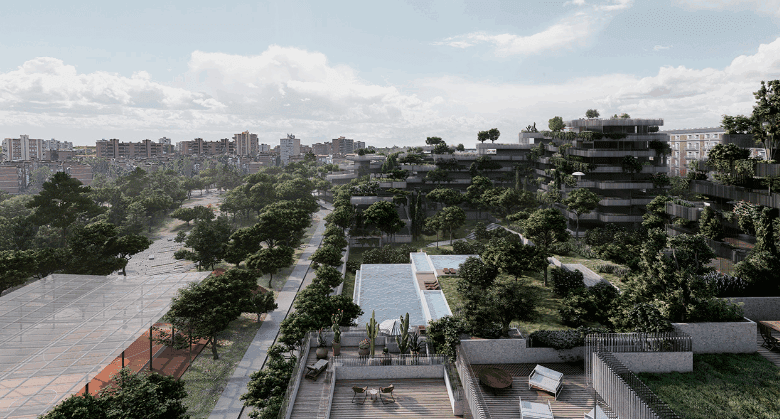
In the northern part of Madrid, in the district of Hortaleza, one of the most ambitious residential projects in recent years is getting underway. The British investment fund Autonomy Real Estate, founded by Robert Gibbins, has announced a €90 million investment in the construction of a modern housing complex. On a site of over 63,000 square meters, which for years had stood empty and was used as an informal parking lot, 250 new apartments will soon be built, including 50 designated as social housing.
The fund’s plans go beyond residential buildings, also including the creation of 300 parking spaces. The project, named Nuevo San Luis, has already attracted interest from potential buyers. However, behind the impressive figures lies an equally compelling story: the land was acquired eight years ago for €38.75 million but has remained unused ever since. Delays were caused by bureaucratic hurdles and difficulties obtaining permits, which now appear to have finally been resolved.
Now that all the required documents have been submitted to the city council, investors expect to complete the urban planning process early in the year, and to obtain construction licenses by the third quarter. If everything goes according to plan, work should begin on site in the autumn, with the complex scheduled for completion in the second quarter of 2028. Before construction starts, however, several old buildings must be demolished and the area cleared, a process that will cost almost €200,000.
Prices and outlook
Autonomy Real Estate openly declares its commercial ambitions. The company plans to sell the open-market apartments at around €4,900 per square meter, with each parking space priced at approximately €24,000. Preliminary estimates suggest the project’s total revenue could reach €115 million, promising the fund a net profit margin of 21.3%.
Special attention is being given to the social aspect: 50 apartments will be allocated as affordable housing, aimed at attracting young families and those unable to pay market rates. However, the details of distribution remain undisclosed, and it is likely that demand for these units will significantly exceed supply.
Interestingly, the plot where construction will begin is still being used as an illegal parking lot, even though the city authorities approved its urbanization back in 2023. Now, with all permits obtained, this improvised car park will be replaced by a modern residential complex.
A long road to the start
The story of this project vividly illustrates how challenging it is to launch large-scale investment initiatives in Madrid. In the eight years since the land was acquired, Autonomy Real Estate has encountered a slew of administrative barriers. Approvals, inspections, and new requirements have delayed the start of construction and increased costs.
Nevertheless, the British fund did not abandon its plans; on the contrary, it used this time for thorough preparation. As a result, when Madrid’s housing market began to grow again, the project proved to be perfectly timed. Experts note that demand for new apartments in the capital remains consistently high, and foreign investor interest in Spanish real estate is only increasing.
However, there were some skeptics. Some analysts point to potential risks associated with changes in the economic climate and fluctuations in housing prices. Nevertheless, fund representatives are confident the project will pay off and the investment will yield the expected return.
Impact on the market
The arrival of a new residential complex in Ortaleza could significantly influence the local real estate market. Firstly, it will boost the development of the area’s infrastructure, which has so far remained in the shadow of Madrid’s more prestigious neighborhoods. Secondly, the introduction of affordable housing could help address issues of apartment accessibility for young professionals and families with children.
It’s also important to remember that major foreign investments are always a signal to other market players. If the Autonomy Real Estate project proves successful, similar initiatives are likely to appear, which in turn could spark more competition and potentially restrain further price increases.
On the other hand, large-scale construction of new facilities can raise concerns among local residents who fear overpopulation and worsening environmental conditions. For now, most city dwellers are following developments with interest, hoping the project will bring new jobs and modern infrastructure to the district.
Opportunities and Challenges
Building a residential complex is not only about investment and profit, but also presents significant challenges for everyone involved. In addition to the need to comply with strict construction norms and standards, investors must also take into account the interests of the local community and environmental requirements.
In recent years, calls for a more responsible approach to urban development have become increasingly common in Madrid. Authorities promise to enforce all regulations, while public organizations demand transparency and consideration of residents’ opinions. How Autonomy Real Estate will act in this environment remains to be seen.
For now, the Nuevo San Luis project remains one of the most talked-about real estate stories in the capital. Its success or failure could serve as a signal for other foreign investors considering Madrid as a place to invest.
RUSSPAIN notes that Autonomy Real Estate is a British investment fund founded by Robert Gibbins, a former Lehman Brothers employee. In Spain, the fund operates actively under the leadership of David Ventoso and specializes in large-scale residential real estate projects. In recent years, the company has acquired several plots in key areas of Madrid, focusing on long-term investments and urban infrastructure development.