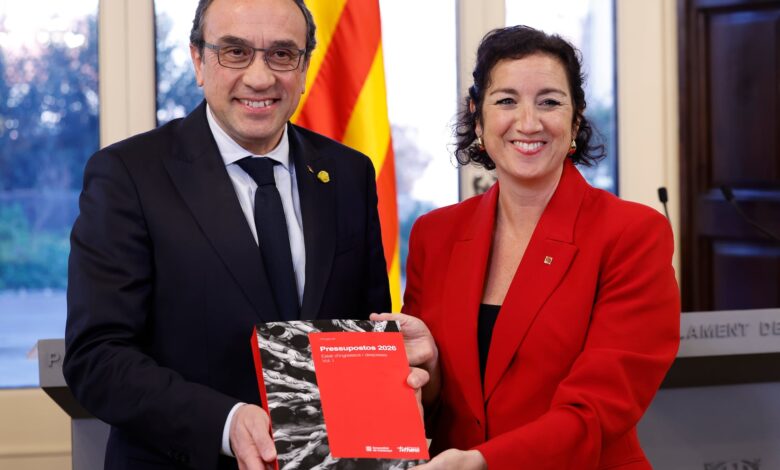
In Catalonia, the debate over the 2026 budget has become an unexpected twist for the entire political scene. The government decided to submit the budget bill to parliament without waiting for support from the key party, ERC. This move immediately sparked widespread discussion, as the adoption of the budget affects not only funding but also the stability of the region’s administration. For residents, this means that the decisions made now could directly impact Catalonia’s social programs, infrastructure, and economy.
According to El Pais, most experts see the government’s actions not so much as an economic necessity, but as a political strategy. Analysts believe PSC is trying to pressure ERC, which in turn finds itself caught between PSC and Junts. As a result, media and political attention has shifted from the budget’s content to the intrigue and possible consequences for the parties. The debate about the document itself has been reduced to press release snippets and brief statements from officials, leaving actual priorities and fund allocation in the shadows.
Politics as a show
In recent years, political life in Catalonia has increasingly resembled a TV drama with unexpected twists and turns. Budget discussions have become just another episode, where the struggle for influence and ratings often outweighs the actual figures and spending articles. This trend, often called politainment, has turned politics into a form of entertainment. Amid constant media noise and brief news snippets, real parliamentary debates have lost appeal for the general public. Even crucial legislation like the budget is now seen as part of a spectacle rather than a tool for managing the region.
This approach leads citizens to judge politicians not by their decisions, but by their ability to create intrigue and hold attention. As a result, budget talks ignite new conflicts and disputes rather than fostering compromise and real solutions. Observers note that while the main task in the past was to explain how funds would be spent, now it’s more important to show who will win the next round of political competition.
Impact on parties
The decision to present the budget without majority consent has become a test for all parties involved. For PSC, it’s an opportunity to strengthen its position and demonstrate resolve; for ERC, it’s a risk of losing influence and finding itself in a difficult spot between allies and opponents. Junts, in turn, gets a chance to ramp up pressure on competitors and use the situation to its own advantage. In such an atmosphere, even internal party conflicts become part of the public game. For example, ERC recently discussed new rules following a scandal involving a deputy, which was covered in detail in the article on the internal investigation and changes to the protocols.
All this shapes how Catalonia’s residents perceive politics. Many begin to see what’s happening as just another televised contest, where emotions and spectacle matter more than real solutions. This approach increases polarization and distrust of the authorities, turning the budget debate into another source of argument rather than a way to balance interests.
The importance of the budget
Despite political maneuvering, the budget remains the main instrument that sets the region’s priorities. Through the allocation of funds, the government signals which sectors matter most—education, healthcare, infrastructure, or social support. The way the budget is adopted and implemented directly affects the quality of life for millions of Catalonia’s residents. Yet in the current climate, these issues often take a back seat, giving way to power struggles and public attention.
According to El Pais, such situations are not new in Spanish politics. In recent years, debates on key laws have increasingly been marked by scandals, unexpected decisions, and attempts by individual parties to leverage the process for their own gain. As a result, real issues and public needs are often overshadowed, while political life turns into a never-ending series of conflicts and intrigues.
In recent years, Spain has repeatedly seen budgets become a source of fierce disputes between parties. For example, in 2024, the budget debate in Madrid triggered mass protests and demands to reform the funding distribution system. In Valencia, a recent conflict over social program funding led to a revision of several budget items. Such incidents demonstrate that the budget is not just a financial document, but also a reflection of political priorities and the balance of power within society.