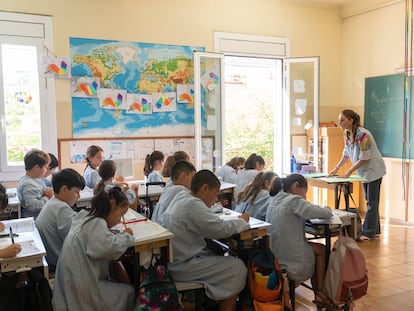
A heated debate has erupted in Catalonia over the allocation of school places for the youngest students. Parent associations from public schools are pushing for the closure of 129 classes in state-funded private schools. The reason is a clear surplus of available places, which does not reflect the actual needs of families.
Parent organizations conducted an analysis of the situation in more than a hundred municipalities across the region. Their conclusion is unequivocal: in most cities, private schools offer far too many spots for three-year-old children, while public schools are losing entire groups. According to parents, this undermines the public education system and deepens social inequality among students.
This issue has become especially pressing this year, as the process of reviewing funding agreements for private schools begins in December. Parents believe that now is the moment to adjust the number of spots in favor of public schools, particularly in areas where they already meet local demand.
Demographic decline and a shortage of secondary school places
The problem is being exacerbated by declining birth rates. Over the past four years, the number of classes in public schools has dropped by 17%, and by nearly 15% in private ones. However, it is the public institutions that are suffering the most, putting equal access to education for all children at risk. According to parents’ calculations, more than 600 new classrooms need to be opened in public schools and over 300 closed in private ones to guarantee equal access.
The shortage of spots in secondary schools is especially acute. Last year, the gap between the number of places offered and those actually needed was around 3,000. Despite reducing the number of groups, private schools continue to enroll students—sometimes exceeding the maximum class size. In some cases, there are as many as 37 students in a single class, well above the standard limit.
Growing popularity of private vocational training
Another trend is the rapid increase in students attending private vocational colleges. This is due to public institutions being unable to cope with the volume of applicants, especially for higher-level programs. Now, more than half of all vocational students are choosing private institutions, while public colleges retain an advantage only at the basic qualification level.
Parents fear that if the situation does not change, the public education system will continue to lose its influence, and social inequality among students will only increase. They are demanding that when planning new school places, authorities prioritize the interests of public schools and prevent any further increase in available spots at private institutions.