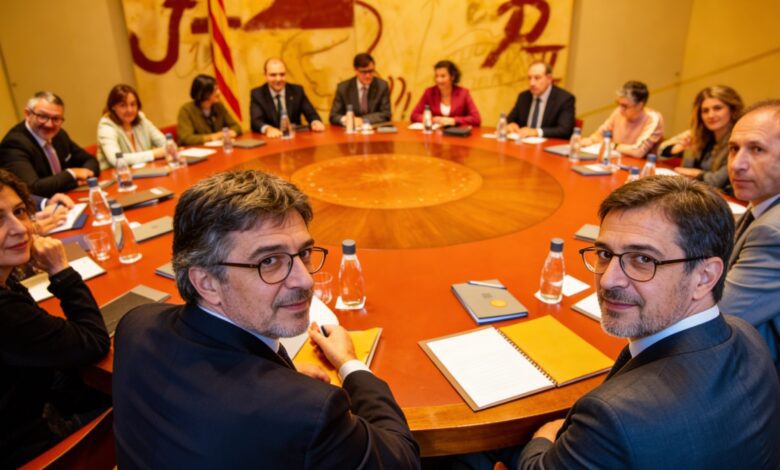
The sharp reduction in the number of councils and commissions within the Catalan government directly impacts transparency and management efficiency in the region. For residents, this means a more straightforward decision-making system and fewer bureaucratic obstacles. Authorities claim that eliminating outdated bodies will enable faster responses to challenges and increase trust in institutions.
As El Pais notes, the second wave of closures affected 24 councils and working groups that had long lost relevance or whose functions are now performed by other bodies. Among them are such entities as the Consejo Asesor para la Reactivación Económica y el Crecimiento (CAREC), established 15 years ago, and the Commission on Dangerous Dogs, which operated under the Department of Territories. Some of these councils had not met in years but formally continued to exist on paper.
Reasons and consequences
When the new government led by Salvador Illa took office in summer 2024, an audit was carried out: 687 collegiate bodies were identified within the Generalitat. Many dated back to the early 2000s, such as the Web Editors’ Council of the Department of Culture, which had not been updated for nearly a quarter of a century. The new team set a goal to cut at least 15% of such structures to make governance more flexible.
The first wave of cuts took place in July last year and affected 45 bodies. The second, officially published in the Diari Oficial de la Generalitat (DOGC), added another 24. According to government representatives, some decisions depended solely on the Generalitat itself, while others required coordination with external institutions, which slowed down the process.
What disappears and who takes over the functions
The functions of CAREC are now carried out by the Commission for Promoting Economic Activity. The Commission for the International Year of Mountains (created in 2001 but not dissolved after the 2002 events) and the working group Catalunya 2022, which developed the post-pandemic recovery plan, have also been abolished. Some bodies, such as the Mesa de Contratación of the Department of the Presidency, have transferred their tasks to new, specialized commissions formed for each procurement.
Despite the extensive cuts, the government is not ruling out the creation of new collegial bodies. It recently announced the formation of a structure to monitor the situation in the Middle East. Authorities emphasize that, from now on, new councils will be created with built-in mechanisms for automatic dissolution once their tasks are completed. The first such example is the commission set up after the fires in Priorat.
Changes in governance
Most members of the disbanded commissions did not receive any remuneration, so no economic impact is expected from the reform. The main goal is to simplify the structure and make it more transparent for citizens. According to russpain.com, such steps could increase public trust in authorities and speed up decision-making in crisis situations.
In the context of this reform, it is worth noting that in Spain, issues of interaction between different branches of government remain relevant. For instance, a recent case involved the disciplinary commission for judges, which refused to punish judges for publicly criticizing politicians— the details of this decision sparked broad debate and highlighted how important transparency and clarity are in the work of government bodies.
Background and similar cases
In recent years, Spain and other regions of the country have repeatedly carried out reforms to reduce the number of councils and commissions. For example, in Madrid and Valencia, the structure of collegial bodies was also reviewed to eliminate duplicate functions and outdated working groups. These measures usually spark public discussions about the need to balance efficiency with citizen involvement in governance. In some instances, following the reforms, new temporary commissions were created to address specific issues, confirming a trend toward a more flexible and adaptive approach in organizing the work of state institutions.