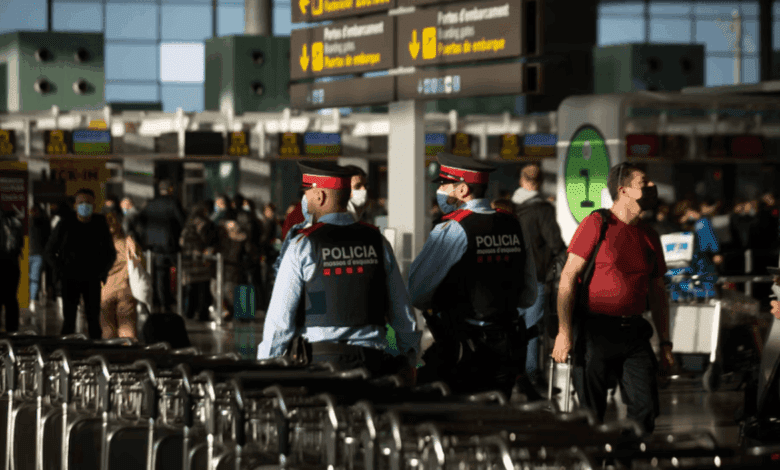
The potential transfer of authority over migration issues to Catalonia (Generalitat de Catalunya) has become one of the most contentious topics of debate in Spain. This decision, which could shift the balance of power between Madrid and Barcelona, is causing concern not only among politicians but also among members of the national security forces. For many Spaniards, this is not just another political skirmish—it’s about national security, jobs, and the future of the border control system.
Supporters of the changes argue that decentralization would allow Catalonia to address migration issues more effectively. However, police and guard representatives believe such steps could lead to chaos and weaken national oversight. The question of who should manage migrant flows and control the borders has become the subject of heated debate.
Reaction from law enforcement
Officers of the National Police (Policía Nacional) and their unions have sharply criticized the initiative. In their view, the transfer of powers is based solely on the political interests of certain parties and not on real necessity. Police officers fear they may be forced to leave Catalonia and that their jobs may be at risk. Many are already working almost exclusively on migration and border control issues, and the prospect of being reassigned to other regions has raised concerns.
There is particular concern over Mossos d’Esquadra (the Catalan police) lacking the necessary training and experience to work with foreigners. Representatives of the national forces are convinced that, without years of preparation and access to international databases, the regional police will not be able to carry out these tasks effectively. As a result, not only could the quality of work suffer, but the safety of the entire country could be at risk.
Security concerns
The issue of border control is directly linked to the fight against terrorism, human trafficking, and organized crime. The national police have specialized units and access to international networks such as Europol, Interpol, and Frontex. Mossos d’Esquadra, as a regional force, lack these capabilities. According to law enforcement authorities, this could reduce the effectiveness of combating threats and put national security at risk.
In addition, police representatives emphasize that such transfer of authority could set a dangerous precedent. If Catalonia gains exclusive rights over migration matters, other autonomous communities may demand similar changes. This would result in uneven border control and complicate operations across the country.
Government stance
The Catalan authorities insist on the need for greater autonomy, arguing that they could address migration issues more effectively. However, the central government is under pressure from law enforcement agencies demanding to maintain a unified control system and prevent the weakening of national institutions.
The domestic political struggle around this issue is intensifying. Some parties, such as Podemos, oppose the transfer of powers, considering the decision discriminatory and risky. Meanwhile, negotiations between PSOE and Junts are ongoing, and a final decision has yet to be reached.
The future remains uncertain
The situation in Catalonia has become a litmus test for all of Spain. Security forces fear that their role in the region will be reduced to a minimum and that migration control will fall into the hands of unprepared specialists. At the same time, supporters of reform are confident that decentralization will bring more benefits than harm.
So far, the parties have not reached an agreement, and police and guard officers continue to express protests and concerns. The question of who will control migration in Catalonia remains open, sparking increasing debate both among politicians and ordinary citizens.