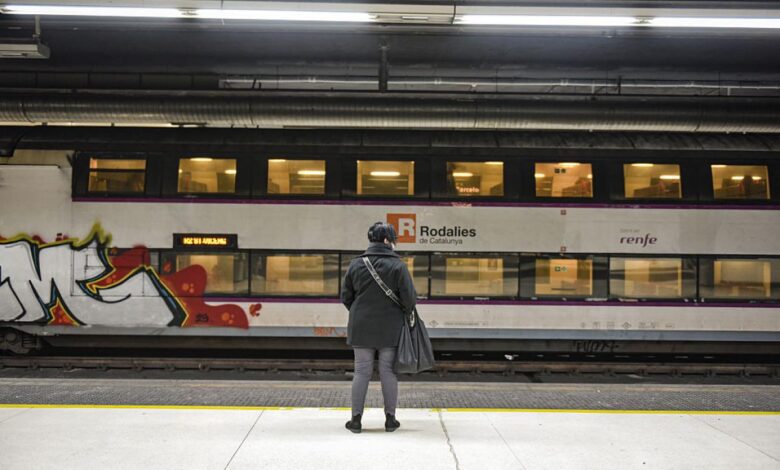
Monday in Catalonia turned out to be unusually tense: thousands of commuters rushing to work and school suddenly found themselves trapped in a transport chaos. In the very heart of Barcelona, at the Adif railway traffic control center, a malfunction occurred that literally paralyzed the Rodalies commuter train service. Hopes for a quick recovery gave way to disappointment: as soon as the trains resumed, a new fault brought all operations to a halt again. People paced the platforms, uncertain when they would finally reach their destinations.
The situation unfolded rapidly. At six in the morning, it seemed everything was under control—the trains began to move, but within half an hour the system failed, and traffic froze again. By seven, Adif engineers reported service had been restored, but the relief was short-lived: ten minutes later, another breakdown stopped the trains once more. Only after several hours of intense work did specialists manage to partially return trains to their routes, but full normalization was still out of reach.
Passengers in panic
For nearly half a million Catalan residents who rely on Rodalies daily, this morning became a true ordeal. The atmosphere at stations was one of confusion and frustration: people tried to figure out how to get to work, some called their bosses, others sought alternative routes. Information boards constantly changed schedules, while more than seven hundred railway employees, mobilized for the day, tried to explain the situation to passengers.
Authorities were quick to offer a temporary solution: extra buses were launched on key routes to at least partially compensate for the lack of train service. However, this proved insufficient—as massive traffic jams instantly formed on roads leading into Barcelona. Those counting on a smooth connection had it especially tough: many missed important meetings, exams, and even medical appointments.
Causes and consequences
At the center of the scandal was a mysterious failure in the communications system at the Estació de França control center. According to the official version, this technical defect forced the shutdown of all trains for passenger safety. However, among rail employees and unions, rumors started circulating: some spoke of a total system ‘collapse,’ while others hinted at chronic infrastructure issues that had been ignored for years.
While engineers attempted to restore rail service, Catalan government officials urged residents to stay home if possible and switch to remote work. Heated debates erupted on social media: some accused operators of negligence, while others demanded immediate reforms. In the meantime, trains gradually began returning to service, though only partially—some lines remained closed, and passengers were advised to watch for updates and avoid long-distance travel unless absolutely necessary.
Barcelona stuck in traffic
The paralysis of rail traffic instantly affected the road situation. Entrances to Barcelona were blocked by kilometer-long traffic jams, and on some sections, movement practically came to a halt. The situation was especially difficult on the AP7 motorway, where partial closures remained after the recent rail tragedy. Drivers grew anxious, honked their horns, and public transportation struggled to cope with the surge of passengers.
Authorities have promised a month of free travel on trains and buses to help offset the inconvenience. However, many are skeptical of these measures, viewing them as belated and insufficient. Behind the scenes, discussions continue about how long this transport crisis will last and whether something like this could happen again.
New rules and expectations
Railway operators assure that restoration work is continuing around the clock, and by evening, trains are expected to carry up to 80% of the usual passenger flow. Nevertheless, some lines — R2, R1, and R4 — are only partially operational, and repairs are ongoing in certain areas. Passengers are advised to check schedules in advance and be prepared for unexpected changes.
Experts are calling this the worst week for Catalonia’s railways in recent years. The issue of infrastructure reliability has once again come to the forefront, and passengers are demanding assurances that such a collapse will not happen again. For now, residents of the region are forced to adapt to new realities and hope that the transport system will withstand the next blow of fate.