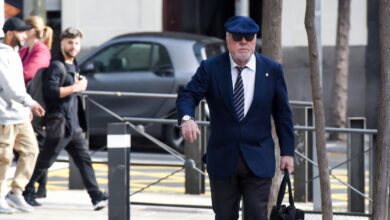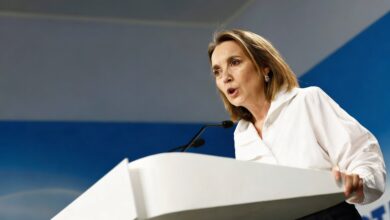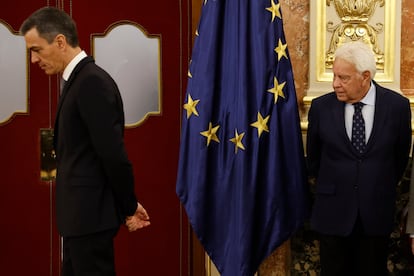
An event intended to unite politicians instead became a new topic of discussion in Spanish society. At the celebration marking the anniversary of the 1978 Constitution, it was not the ceremony itself but the conduct of two key figures—the former and current leaders of the socialists—that drew attention. Their encounter turned out to be unexpectedly cold and brief, immediately sparking a wave of commentary among politicians and observers.
In the corridors of the Congress of Deputies, Felipe González and Pedro Sánchez crossed paths for only a few seconds. Their greeting was formal, with no exchange of words or attempt at conversation. This gesture became especially noticeable against the backdrop of their recent public disagreements. González had earlier openly stated that he would not support Sánchez in future elections and also criticized party representatives for their comments about him.
Political signals
That day, González chose to spend more time talking with opposition leader Alberto Núñez Feijóo than with the current head of government. Sánchez, on the other hand, stayed in the Congress building only briefly before heading out on a foreign trip. His appearance at an exhibition dedicated to the democratic era also stirred debate: among the photographs on display, not a single one featured former King Juan Carlos I, raising questions about the criteria for selecting materials for the exhibit.
The organizers explained the lack of photos with the monarch by saying that the selection was made from a large archive, with the final decision taken by a special commission. However, this did not stop discussions behind the scenes, where many saw a political motive. Meanwhile, González did not soften his stance: he confirmed that he would not change his opinion of Sánchez, and with irony commented on the remarks of party officials who questioned his authority in the PSOE.
Division of roles
In the assembly hall, González took a central seat, accompanying one of the Constitution’s authors, Miguel Herrero y Rodríguez de Miñón, who needed assistance entering. José María Aznar, another former prime minister, chose to remain in the guest gallery rather than sit among the deputies. Officially, it was explained that only those who had been deputies or senators in 1978 were in the hall, which did not include Aznar. Other former heads of government — José Luis Rodríguez Zapatero and Mariano Rajoy — were also absent from the event.
After the official part concluded, discussions continued in an informal setting. Representatives of the Partido Popular and their leader Feijóo did not applaud following the speech of Congress President Francina Armengol, considering her remarks overly positive and not reflective of the country’s true state. Later, the party clarified that applause was minimal and showed only respect for the office, not the speech’s content.
Internal party disagreements
Within the PSOE, tensions persist, driven not only by generational differences but also by divergent views on the party’s future. González has made no secret of his dissatisfaction with the direction Sánchez has chosen, and he openly comments on the new faces in the leadership. His remarks about Rebeca Torró, the organization secretary, sounded like a jab at the younger members of the party, whom he believes do not respect the traditions and experience of their senior colleagues.
The situation surrounding the anniversary of the Constitution has become a reflection of deeper processes in Spanish politics. Formal gestures, brief meetings, and a lack of dialogue between leaders reveal that divisions within and between parties are becoming increasingly pronounced. This affects not only the atmosphere in parliament but also the public’s perception of the government.
In recent years, episodes of reserved encounters and public disagreements between politicians have become more frequent. Previous Constitution anniversaries and other national holidays have also seen instances where party leaders avoided communication or showed distance. Such moments often spark discussion in the media and among experts, as they reflect real processes within political structures and may signal shifts in the balance of power.