In Spain, the debate over the regulation of social networks and migration policy has reignited. This time, the spotlight is not only on legislation, but also on unexpected cultural references that have sparked a lively reaction in Congress. For many Spaniards, these debates are directly linked to issues of security, freedom of expression, and the future of the country’s digital space.
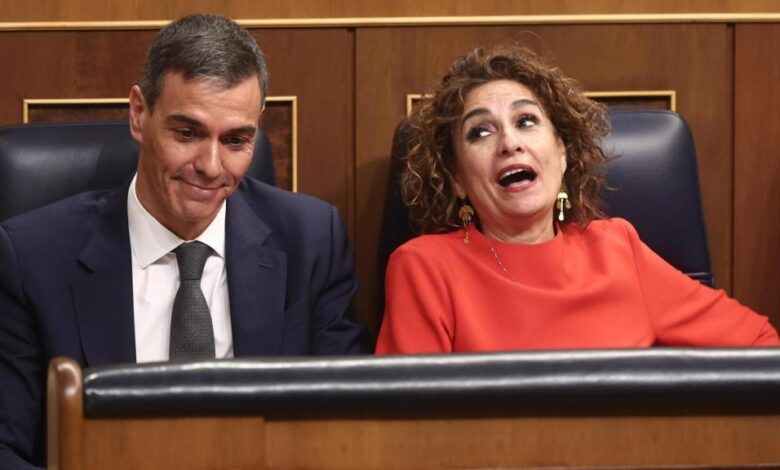
Prime Minister Pedro Sánchez made an unusual suggestion to Vox party leader Santiago Abascal, advising him to watch Bad Bunny’s Super Bowl performance. This advice came amid heated disputes about the need to limit the spread of unverified information online. Sánchez emphasized that the country needs ‘less hate and more love,’ and also called for stricter controls on social media content to prevent the incitement of hostility.
Political clashes
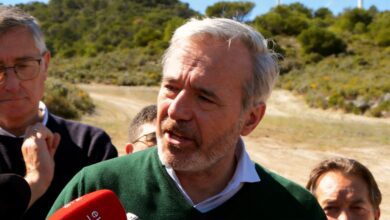
Santiago Abascal, in turn, sharply criticized the government’s initiatives, accusing it of attempting censorship and hiding information about migration. He stated that it is thanks to the X platform (formerly Twitter) that society learns about plans to legalize hundreds of thousands of migrants and about crimes involving foreigners. As an example, he cited a recent incident in Navarra where a minor was accused of attacking another child, as well as statistics showing that a significant proportion of crimes are committed by newcomers.
Abascal also linked the rise in housing prices and the overload of the healthcare system to the influx of migrants, which provoked outrage from Sánchez. The Prime Minister responded that the problem lies not with migrants, but with the spread of unverified information, which he said is disseminated by ‘technoligarchs.’ He reminded that regulating social networks is not only a matter of policy, but also of citizens’ safety.
Opposition responses
The leader of the Partido Popular, Alberto Núñez Feijóo, also joined the debate, accusing Sánchez of being disconnected from the real problems of Spaniards. According to him, the government deals with distracting issues instead of addressing urgent tasks. Feijóo stated that the current power will be replaced, and Spain will have a new government capable of hearing its citizens.
Sánchez, however, insisted that regulating the digital environment is a necessity of the times. He stressed that most Spaniards are worried about how quickly rumors and fake news spread, and that the state must respond to these challenges. During the debate, the Prime Minister repeatedly returned to the need to ‘disarm’ hatred in society, using both legislative and cultural tools.
Cultural context
Sánchez’s unexpected recommendation to watch Bad Bunny’s Super Bowl show surprised not only politicians but also the public. This musical performance was the first ever during an NFL final to be conducted entirely in Spanish, which sparked discontent from former US President Donald Trump and his supporters. In response, an alternative concert was even organized on YouTube in the US to avoid listening to Bad Bunny’s songs, such as ‘Tití me preguntó’ and ‘DeBí BoRraR MáS FOToS’.
In Spain, however, this episode sparked a discussion about the role of culture in politics and how musical preferences can be used to convey political messages. Sánchez, who had previously shared music recommendations on TikTok, now brings them into parliamentary debates, adding another layer to his public persona.
Debates over freedom of speech
The issue of regulating social media remains one of the most pressing topics in Spanish politics. Critics of the government’s initiative fear that new laws will restrict freedom of expression and lead to increased censorship. Supporters, on the other hand, emphasize the need to combat disinformation and protect society from hate speech.
Against this backdrop, it’s worth recalling the recent clash between Elon Musk and Spanish journalists, when the billionaire made sharp comments about the government’s actions. More details on this standoff and its impact on public opinion can be found in the article about the public controversy between Musk and the Spanish media.
While political leaders continue to debate the boundaries of what is acceptable online, Spaniards are still left with an open question: where is the line between protecting society and restricting citizens’ rights? It seems the answer won’t be found anytime soon.
In recent years, Spain has repeatedly faced heated debates over the regulation of digital platforms and migration policy. In 2024, new rules for social networks were discussed, sparking protests among both users and technology companies. The surge of public discontent was driven by concerns over potential restrictions on freedom of speech and increased internet control. Alongside this, the country witnessed widespread debates over the legalization of migrants, which also sparked sharp disputes among various political forces. These events highlight just how closely intertwined issues of digital security, migration, and political struggle have become in modern Spain.