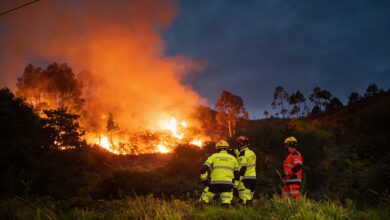
A court ruling to shut down Pinto’s municipal fire department has come as a shock to local residents and sparked a strong response among officials and unions. The city is now forced to rely entirely on regional firefighters, which could impact emergency response times and safety. With a longstanding dispute between the municipal government and Madrid authorities, the question of who will protect Pinto from fires has become especially urgent.
Causes of the conflict
In recent years, a paradoxical situation has developed in Pinto: both regional firefighters and the municipal PIMER-PC service responded to emergency calls. However, only the former had official authority and professional training, while the latter consisted mainly of volunteers and staff without relevant qualifications. Both units received budget funding, but their roles often overlapped, leading to complaints and conflict.
Since 2022, regional authorities have documented violations: lack of coordination, insufficient incident reporting, and PIMER-PC’s involvement in firefighting, which contradicted existing agreements. The CSIT union, representing the interests of firefighters, repeatedly raised concerns and eventually filed a lawsuit against Pinto’s city hall.
Court decision and municipal response
The court of first instance ruled that the municipality lacks qualified firefighting specialists and that the actions of PIMER-PC have no legal basis. The Pinto City Council suspended the firefighting service but announced it would appeal the decision, arguing it excessively restricts city governance. According to El Pais, city attorneys are considering options for further action.
Pinto officials explain the creation of PIMER-PC by noting that cities with more than 20,000 residents can establish their own civil protection and emergency response services. However, instead of a full-fledged fire department, a mixed unit was formed, combining emergency response duties with civil protection functions. Over the past year, PIMER-PC responded to up to 1,800 incidents, including fire suppression, rescue operations, and flood response.
Economy and Politics
The financial aspect of the conflict has proven equally contentious. According to CSIT, maintaining PIMER-PC cost the Pinto budget about 800,000 euros annually, while the city already pays 1.7 million euros to the regional fire service. The opposition accuses local officials of inefficient spending and a lack of political will to resolve the issue without court involvement. As El Pais notes, attempts to negotiate a division of responsibilities have failed.
The situation escalated after the purchase of equipment for PIMER-PC, including a fire truck, which drew criticism from regional authorities. Madrid reminded Pinto of the need to uphold agreements and avoid duplication of functions. Despite the warnings, the municipality continued to operate the service without changes, which led to legal proceedings.
Safety and the future of the service
Unions emphasize that involving untrained staff in firefighting poses risks for both the workers and residents. The Pinto city council insists that PIMER-PC personnel have received the necessary training and that their work saves lives. However, the service is now limited to civil protection duties only, with all firefighting matters handled by regional specialists.
In other regions of Spain, similar conflicts between municipal and regional services have already led to reassessment of powers and redistribution of budgets. For example, in Madrid, disputes over coordination between different emergency response agencies have previously arisen, as detailed in coverage of disagreements between city and regional authorities in the context of cultural and administrative conflicts.
In recent years, discussions about the efficiency and safety of emergency services at the local level have become more frequent in Spain. In 2025, several autonomous communities revised agreements for cooperation between municipalities and regional bodies after incidents involving response delays. In Catalonia and Andalusia, disputes also arose over the distribution of responsibilities and funding for fire brigades. These events demonstrate that coordination and professionalism in civil protection remain pressing issues throughout the country.