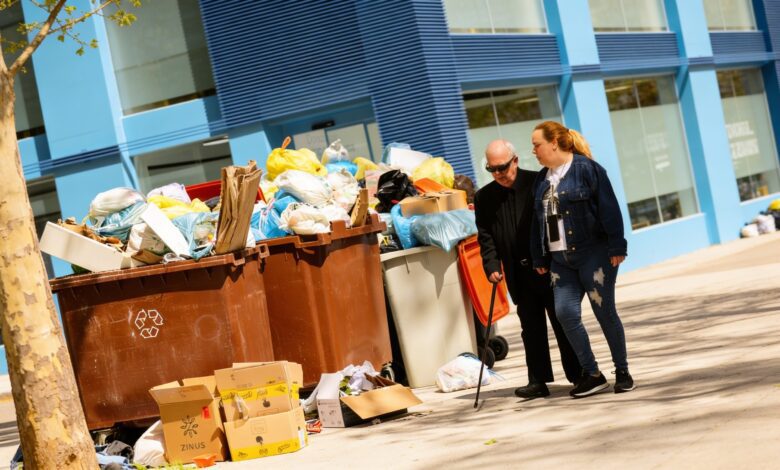
In Madrid, the cancellation of the waste collection fee has become one of the most widely discussed topics of the spring of 2026. The court’s decision directly impacts the budgets of tens of thousands of families and businesses, while also raising questions about the future policy of the city authorities regarding utility payments. For the first time in recent years, such a significant tax has been declared invalid, which could lead to a review of similar fees in other regions of Spain.
As El Pais reports, the Madrid Supreme Court has declared invalid the fiscal regulation governing the waste collection fee that began to be charged to residents in all 21 districts of the city last year. The reason was the absence of key data in public documents necessary to justify the amount of the tax. More than 130,000 residents filed complaints about unfair tariffs, while opposition parties and professional associations challenged the procedure for approving the fee itself.
Reasons for the cancellation
The court’s decision is linked to the fact that, during discussions of the new regulation, the authorities did not provide a full set of documents; in particular, a crucial technical report explaining the tariff calculation method was not published. The absence of Appendix No. 6, which detailed the distribution of costs between residential and commercial properties, became a key argument for the court. According to experts, this document would have allowed residents to understand how the payment amount was determined and why it varied so much between districts.
The court noted that the lack of information deprived citizens of the opportunity to fully participate in the discussion and challenge the details of the levy. As a result, the tax has been declared invalid from the moment it was introduced, and all related decisions lose their legal force. However, the text of the decision does not contain direct instructions regarding the return of already paid funds.
What will happen to the money already paid
The issue of refunds remains unresolved. The court did not require city authorities to automatically return the levy. Under current legislation, if a resident did not file an individual complaint, their payment is considered final. Only those who managed to challenge the tax within the allowed time frame may be eligible for a refund. An exception is possible if the court issues an additional decision extending the cancellation to all taxpayers, but so far there is no such instruction.
Madrid authorities have not yet decided on further steps. Legal departments are analyzing the court’s decision and considering the possibility of an appeal. City hall representatives emphasize that the court did not evaluate the calculation method itself, but only pointed out procedural violations. There have been no official statements on refunds or changes to the collection procedure so far.
Public and opposition reaction
The court’s decision sparked a strong reaction among residents and politicians. Opposition parties have long criticized the waste collection fee, calling it unfair and lacking transparency. Representatives from the socialists and “Más Madrid” are demanding refunds for everyone who paid the tax, as well as a review of the entire system for calculating utility charges. On social media and at neighborhood meetings, people are discussing the possible consequences of abolishing the fee for the city budget and future rates.
According to El Pais, more than 130,000 complaints were filed in just the first months after the fee was introduced, setting a record for Madrid. The main cause of discontent was the sharp difference in payments between districts: in some neighborhoods, the tax exceeded 300 euros, while in others it was less than 60. Authorities explained this by pointing to calculation specifics, but the lack of transparency only fueled the protests.
The future of municipal fees
The court ruling affects not only last year’s fee but also calls into question the rule set for 2026. The new version is already being challenged in court, and if similar violations are found, it may also be invalidated. Authorities have been forced to revise the fee calculation to consider the number of registered residents, but this has not been enough to address all complaints.
The situation with the cancellation of the waste collection fee in Madrid echoes other high-profile cases in recent years when courts have annulled local taxes due to procedural violations or lack of transparency. In 2024, similar rulings were issued in Valencia and Barcelona, where residents also widely contested new fees. These precedents demonstrate that Spain’s judicial system is increasingly serving as a check on municipal authorities, while issues of transparency and justification for utility charges are becoming especially important for city residents.