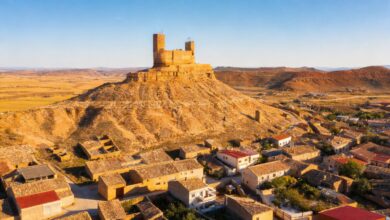
Amidst the vastness of the autonomous community of Castilla y León, in the heart of the historic Maragatería region, lies a city whose name is not as commonly featured in tourist brochures as Madrid or Barcelona. Nevertheless, this place holds a magnetism woven from centuries of history and layers of culture. Its uniqueness lies in its position at the crossroads of two great routes: the pilgrimage trail to Santiago de Compostela and the ancient “Silver Road” (Vía de la Plata). This location has made it a melting pot, where the legacy of the Roman Empire coexists with the austerity of the Middle Ages, and the whimsical fantasies of Catalan modernism merge with the splendor of Baroque.
To understand the spirit of this town, one must look deep into its distant past. Founded as a military camp for legionnaires, it quickly grew into a thriving imperial center called Asturica Augusta. From here, the Romans managed the development of the region’s rich gold mines. Today, echoes of that era can literally be found underfoot. The preserved fragments of mighty fortress walls, still guarding the historic center, speak volumes about its former grandeur. A specially designed route allows visitors to step back into antiquity, exploring remnants of baths, underground sewer systems, and even the ruins of a temple dedicated to Caesar Augustus. These are not just stones, but living witnesses to two millennia of history.
The majestic Cathedral of Santa María dominates the old narrow streets. Its construction was a centuries-long project, begun in the 15th century on the site of a former Romanesque church. This lengthy building process resulted in an eclectic yet surprisingly harmonious appearance. The strict Gothic forms flow seamlessly into Renaissance motifs, while the southern facade impresses with an abundance of Baroque decorative elements. Inside, the cathedral houses a true treasure—the main altar, created by the renowned sculptor Gaspar Becerra. This monumental work is considered one of the masterpieces of the Spanish Renaissance.
However, perhaps the most unexpected and captivating building is the Episcopal Palace. This neo-Gothic structure, reminiscent of a fairytale castle, is the creation of the brilliant Antonio Gaudí. The presence of one of only three of his works outside his native Catalonia here is no coincidence. After the old bishop’s residence burned down at the end of the 19th century, the local prelate, a compatriot of the architect, asked him to design something entirely new. Gaudí enthusiastically took on the task, designing a building distinguished by his characteristic attention to detail, play of light, and use of space. Today, the palace houses the Museo de los Caminos, an exhibition dedicated to the history of pilgrimage. Visiting the palace offers a chance to appreciate the master’s genius in a most unusual setting.
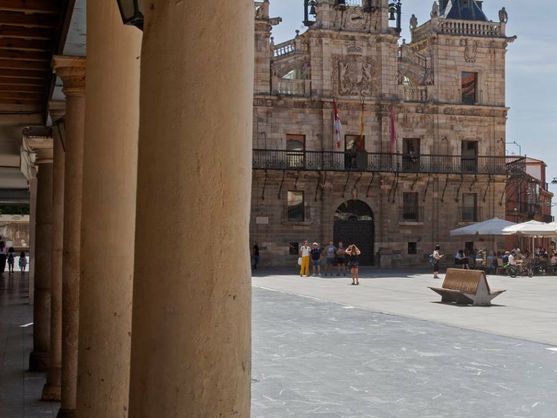
A walk through the city would be incomplete without visiting the central Plaza Mayor. Here you’ll find the baroque-style town hall, crowned with a clock featuring moving Maragato figures striking the hours. This is the heart of public life, where you can have a coffee and watch the leisurely pace of provincial Spain. To fully experience the local atmosphere, be sure to explore the regional cuisine. The signature dish is cocido maragato, a hearty stew served in a unique order: first the meat, then vegetables and chickpeas, and finally the broth with noodles. Don’t miss the famous cecina (cured beef), and for dessert, the delicate “mantecadas” biscuits, a sweet symbol of the area.
Thus, a trip here is much more than just sightseeing. It’s a deep dive into authentic Spanish culture, where every cobblestone and each traditional recipe tells its own story. This place offers travelers a rare chance to see how different eras and styles not only coexist, but come together to form a unique and memorable space that leaves a lasting impression.