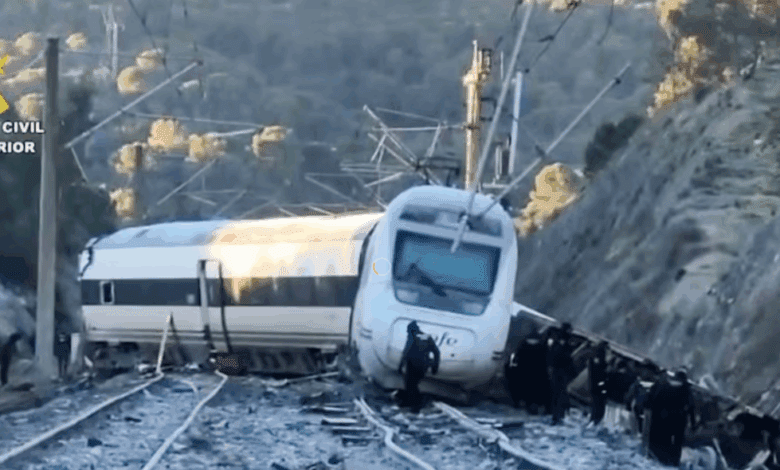
Over the past year, the high-speed rail section between Adamuz and Villanueva de Córdoba has repeatedly experienced technical failures. These incidents, mostly related to the signaling system, had been discussed at the highest level long before a tragedy involving two trains occurred on the line. Despite regular reports of issues, no decisive changes were made, ultimately leading to the catastrophe that shocked all of Spain.
The rail operator Adif has repeatedly informed the public about emerging malfunctions. The most frequent issues include signaling failures, as well as isolated incidents involving damage to the overhead wiring and infrastructure. Safety concerns on this section were raised in the Senate as early as last summer, when opposition representatives drew attention to potential risks for passengers.
Safety concerns raised
The Senate discussed two serious incidents that directly affected signaling systems. The first took place on the El Valle viaduct, where, due to high temperatures and vibrations from passing trains, expansion devices came into contact with the rails. To resolve this issue, a specialized crew was brought in to carry out maintenance as part of the scheduled servicing.
The second incident involved a faulty relay card—a crucial component for the proper functioning of the train positioning system. After the part was replaced, operations resumed, and Transport Ministry officials insisted that safety had not been compromised. Nevertheless, these episodes have raised new questions about the quality of maintenance and oversight on the line.
Steps Taken and Modernization
Officials emphasized that the condition of the infrastructure is monitored by four separate contractors. One is responsible for the tracks and infrastructure, another for electrification, a third for safety systems, and a fourth for controlling vegetation along the railway. Despite this, malfunctions have continued to occur with alarming frequency.
Transport Minister Óscar Puente pointed out unusual circumstances on the eve of the tragedy. The Iryo train that derailed was relatively new, and the section where the accident happened had recently undergone extensive modernization. A total of €700 million was spent to upgrade the Madrid–Sevilla line, including nine viaducts across the Sierra Morena. The work was completed in autumn 2023, and signaling and safety systems were updated through May 2024.
Chronicle of Failures
Over the past year, Adif has publicly reported at least eight incidents along the Adamuz section. On April 14 last year, train delays were caused by damage to the overhead power lines between Adamuz and Alcolea. In May, new signaling problems led to disruptions of high-speed services between Madrid and Andalucía.
The signaling system repeatedly failed. In June, Adif again reported delays due to system malfunctions between Adamuz and Villanueva de Córdoba. These incidents prompted parliamentary inquiries. New failures were recorded in September and October, including issues related to infrastructure and track switches. In December, another breakdown at a railway junction once again disrupted the timetable.
Spain’s oldest high-speed line
The Madrid–Sevilla line is the oldest in Spain’s high-speed rail network. It opened in 1992 and has since become a vital transport corridor connecting the capital with the south of the country. Following market liberalization in 2019, new operators entered the route, increasing traffic volume and infrastructure strain.
However, despite sizable investments and regular upgrades, problems with the safety and technical condition of the line have persisted. Systemic failures, repeatedly flagged by experts and politicians, ultimately ended in tragedy—one that perhaps could have been avoided.
Unresolved questions
The tragedy near Adamuz again cast doubt on the effectiveness of monitoring and upkeep of the country’s key rail arteries. Despite assurances of safety and regular inspections, a chain of technical failures went largely unaddressed. The question of why warnings were not heeded in time remains unanswered and demands thorough investigation.