In recent years, Spain has faced an increasing number of large-scale wildfires, which experts refer to as sixth-generation fires. These extremely dangerous blazes arise amidst prolonged heat waves and dense vegetation, leading to the rapid and uncontrollable spread of fire.
According to specialists, such occurrences were considered rare just five years ago, but now they have become part of a new climate reality. In regions like Galicia, several extreme fires can be recorded in a single day—something previously unimaginable.
The summer of 2025 has been particularly hot: heat waves last for weeks rather than days, as was the case last century. Forests are suffering from drought and overheating, which is directly linked to climate change. Experts note that ignoring these processes is no longer an option—the consequences are now evident to everyone.
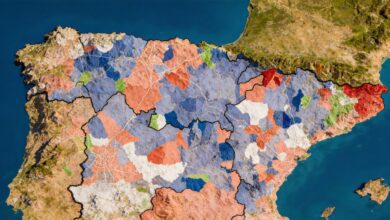
The situation is further complicated by the fact that fires move across the country depending on weather conditions. While in the west of the Iberian Peninsula the risk is lowered by moist winds, in the east—in regions such as Aragón, Castilla-La Mancha, Balearic Islands and Valencia—the danger is on the rise. Catalonia has also been identified as a high-risk zone due to a combination of high temperatures, low humidity, and an unstable atmosphere.
The scale of these fires is caused not only by the climate but also by the lack of systematic forest management. Large amounts of neglected vegetation create ideal conditions for rapid fire spread. Experts emphasize: if scheduled maintenance and renewal of forests are neglected, nature will conduct its own ‘clean-up,’ but in a destructive way.
Specialists stress the need to create diverse and resilient forest ecosystems. Without proper management, forests become vulnerable to fires and diseases. Comparing the situation to a house that slowly falls apart without repairs, experts urge not to postpone measures to care for nature.
Without intervention, the country faces either major fires or massive pest outbreaks. The ecosystem requires periodic changes, and if they are not carried out deliberately, the consequences will be catastrophic. The main problem is not the fires themselves, but the lack of effective landscape management.
Just a few years ago, warnings about risks were seen as exaggerations, but today extreme wildfires have become a reality. Spain’s forests are becoming increasingly dry and vulnerable, and the speed at which fires spread continues to grow.
It is impossible to stop climate change, but proper land management can mitigate its effects. It is important to set priorities in advance: protecting the population and preserving biodiversity should form the basis of forest policy. Ignoring the problem will lead to even greater losses.
Decisions are often made in haste, when fire already threatens populated areas. However, experts emphasize that the only effective path is long-term investment in rural areas, development of agriculture, and support for local residents. Maintained and cultivated land can help contain the spread of fire and prevent disasters.
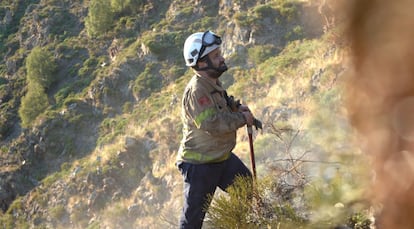
Today’s fires often exceed the capabilities of fire services. Even with equipment and resources, it is impossible to control the fire without prior preparation and proper planning. Knowledge, experience, and timely decisions are essential.
Society expects swift and effective action from emergency services, but safety starts with each individual. Unmown grass and trash around homes increase the risk of fire, so responsibility for preventing wildfires lies not only with authorities but also with residents.
The greatest threat today is observed in the north of the country, where the climate has traditionally been milder and forests denser. In these regions, losses can be especially significant. At the same time, southern areas, accustomed to drought, are better adapted to the new conditions.
A similar situation is observed in other European countries. In Portugal, where there is more rainfall, biomass grows, which during droughts becomes fuel for fires. Comparable risks are noted in Germany, the Netherlands, and Switzerland, where temperatures in recent years have reached record highs.
Experts are convinced: without a comprehensive approach to managing forests and rural areas, Europe as a whole—and Spain in particular—will face increasingly destructive fires. The issue is not only about preserving nature, but also about people’s safety and the future of the country.