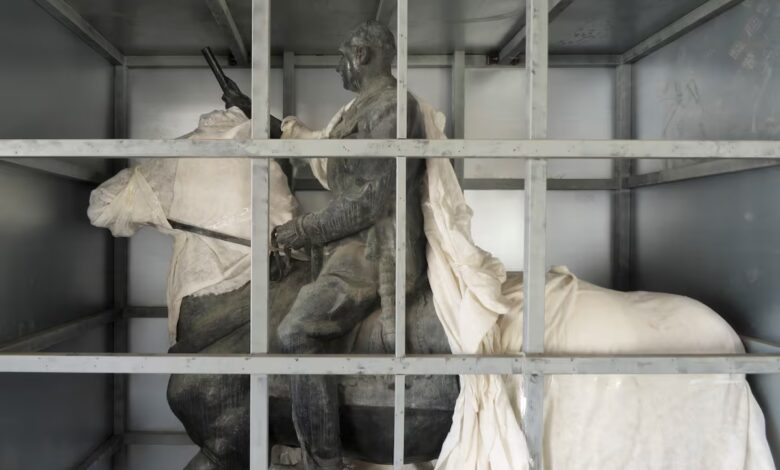
Nearly five decades have passed since Francisco Franco’s death, yet his era still casts a long shadow over Spanish society. The question of how deeply habits and perspectives shaped by the dictatorship are ingrained remains relevant. In a country where the former dictator’s bedroom in El Pardo remains untouched and monuments seem to vanish and reappear, debates about the past are far from over.
In the late 1970s, Spaniards en masse abandoned their old beliefs, as if erasing Francoism from their lives. Yet, many researchers believe that the inner ‘Francoist’ never disappeared—he simply went dormant. While today’s political movements aren’t direct heirs of the regime, they often use rhetoric echoing old fears and divisions. Still, the current far-right surge appears more a part of a global trend than a direct result of the dictatorship’s legacy.
Democracy and Memory: A Double-Edged Perspective
The majority of the country’s residents believe that the current system is the best in Spain’s history. Yet, public consciousness still harbors a dual attitude toward the past: some recall stability and order, others remember repression and fear. Many who once supported the regime quickly adapted to the new reality after its collapse, choosing not to reflect on their former allegiances. This silent agreement became a de facto amnesty for millions.
At the same time, for the victims of the dictatorship and their descendants, the subject remains painful. There is still no official recognition or unifying symbol that could bring the nation together. Unlike other European countries, Spain has not found a date or event that could serve as a foundation for collective memory.
Fear of change and the legacy of morality
Old fears of losing freedoms are still alive. Those who endured the repressions pass their unease on to new generations. Society remains wary that a return to the past is possible if vigilance is lost. At the same time, moral values established during the years of the dictatorship continue to shape daily life and political debates. Even decades later, disputes over what should be considered ‘right’ have not subsided.
Today, Spain is a country where democracy has taken root and rights and freedoms have become the norm. But the ghosts of the past still linger: in arguments, in family stories, in public debates. Franquismo has not disappeared completely—it has transformed, leaving its mark on the collective consciousness. And until society finds a way to honestly confront its own history, this internal conflict will persist.