A Saturday night at one of Madrid’s most popular restaurants nearly ended in disaster. As the music reached its peak and waiters served drinks, guests lit pyrotechnic candles right in the dining area. At that moment, the atmosphere felt more like a nightclub than a dinner venue. Just ten days earlier, a similar prank in Switzerland had ended in tragedy, claiming dozens of lives—yet it seems not everyone has learned the lesson.
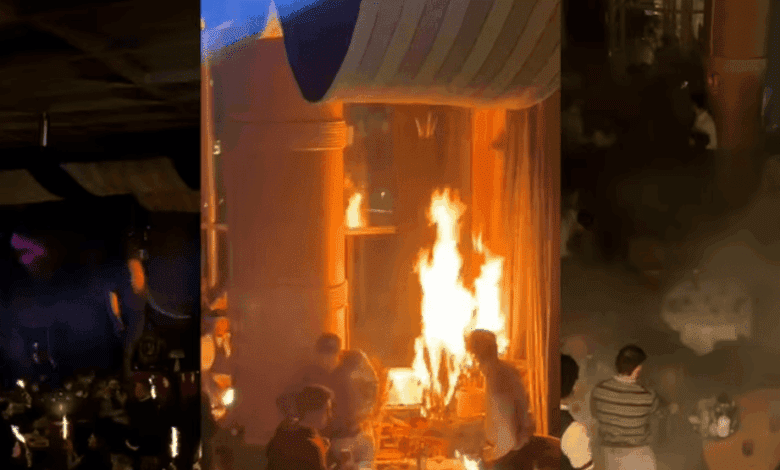
At Fanático restaurant on Paseo de la Castellana, the celebration was in full swing. Guests danced, waiters smiled, and dancers performed on the bar counter. Suddenly, one of the pyrotechnic candles ignited decorative plants at the entrance. The situation could have spiraled out of control if not for the quick response of a staff member, who grabbed a fire extinguisher and put out the flames within seconds. Videos filmed by witnesses show a customer holding a curtain to keep it from catching fire as others kept on partying as if nothing had happened.
Pyrotechnics in restaurants
The use of fire and flammable decorations has become almost commonplace for restaurants and clubs eager to impress guests. In recent years, such shows have become part of the entertainment lineup, despite the obvious risks. In 2022, a tragedy at Madrid’s Bruno Canaglia restaurant claimed three lives after a waiter set a pizza alight for dramatic effect and the flames spread to artificial plants. A year later in Murcia, 13 people died after sparks from a pyrotechnic machine ignited a fire.
Madrid authorities have long restricted the use of flammable materials in restaurant interiors, and pyrotechnics are only allowed with special approval. In Catalonia, for example, such elements are outright banned indoors. Nevertheless, restaurants continue to experiment with fire, hoping that disaster will pass them by.
Owners’ reactions
Following the recent incident, Fanático management announced a complete ban on the use of pyrotechnics and candles in all their establishments. They claim that all their restaurants are equipped with fire-resistant materials, which helped prevent the fire from spreading. However, as this case showed, even the strictest safety measures can’t always eliminate the human factor.
The owner of another popular restaurant chain, Minerva Tapial, says that after the Bruno Canaglia tragedy, they got rid not only of pyrotechnics but also ordinary candles. In her view, guest safety matters more than showmanship, and decorations should be not only beautiful but also safe. Still, many restaurants continue to take risks for the sake of impressive photos and videos for social media.
Guest voices
Guests were divided in their opinions. One customer who was celebrating her birthday said that after the incident the staff were rude, failed to explain the situation, and did not apologize. She admitted being frightened: “Eight seconds of fire could have cost us our lives. Imagine dying on your birthday—that’s insane.” Despite the stress, they were still charged for dinner and denied the complaint book.
Another guest posted a video showing the fire getting out of control. In the caption, he wrote: “We almost burned down. Watch till the end.” The footage quickly spread across social networks, sparking a strong reaction and new questions for the venue owners.
Safety or show
Party organizers and safety experts are increasingly calling for a ban on indoor pyrotechnics. In their view, the entertainment industry should find alternative ways to amaze guests—with lighting, music, or creative decor. Even a brief flash of fire can lead to tragedy, as has happened multiple times in Europe.
While some venues are drawing conclusions and tightening rules, others continue to play with fire, hoping disaster won’t strike again. But each new incident is a reminder: safety should never be sacrificed for spectacle. Perhaps it’s time to reconsider what matters more—dramatic photos or guests’ peace of mind.