When discussing the former grandeur of Spanish monarchs, most people first think of the colonies in Latin America or outposts in North Africa. However, the geographic reach of their domains was much broader and included less obvious, yet equally significant, European territories. Among them, Sardinia stands out—a picturesque Mediterranean island that, for nearly four centuries, was an integral part of first the Kingdom of Aragon and later united Spain. This lengthy period had a profound impact on every aspect of life on the island, from language and architecture to its political system and religion.
The history of this union began back in 1297 with a political decision by Pope Boniface VIII. In an attempt to resolve territorial disputes on the Apennine Peninsula, the pontiff granted Sardinia as a fiefdom to the Aragonese ruler James II. However, turning this legal right into actual control proved to be no easy task. It was not until 1323 that Infante Alfonso landed with his troops in the Gulf of Palmas del Sulcis, marking the start of the actual conquest. The entire 14th century was characterized by fierce battles with local forces unwilling to submit to foreign rule. The Judicate of Arborea, the most powerful and enduring of Sardinia’s medieval states, put up especially stubborn resistance. It was only by the mid-15th century that the Aragonese finally managed to subdue the island. From then on, Sardinia was governed by centrally appointed viceroys and joined the ranks of other overseas territories such as Sicily, or even the distant Greek duchies of Athens and Neopatras.
After the dynastic marriage of Isabella of Castile and Ferdinand of Aragon, which united Spain, the island was seamlessly integrated into the structure of the newly powerful state. Until 1720, it remained under the scepter of the Spanish Habsburgs, and later, the Bourbons. The administrative system was typical for that era: governors were regularly sent to the island to represent the interests of the central government. One notable viceroy was Baltasar de Zúñiga y Guzmán, Marqués de Valero. He held office during a challenging period from 1704 to 1707, when, after the childless Carlos II died, Philip V ascended the Spanish throne, triggering the War of the Spanish Succession.
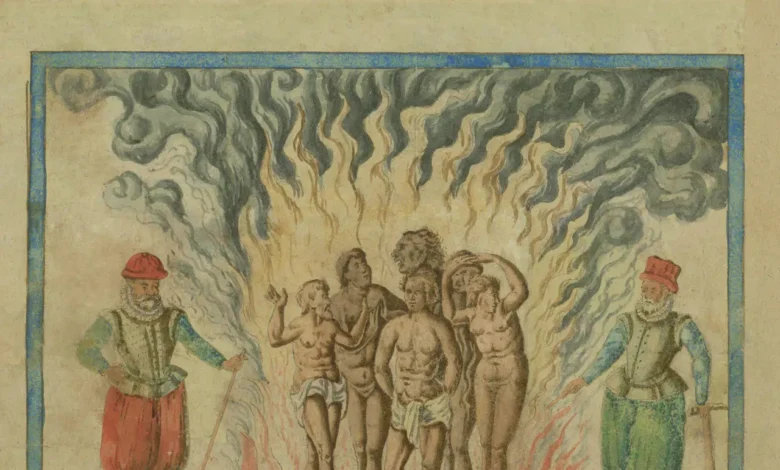
Along with administrative structures, other institutions characteristic of the Spanish state at that time also arrived on the island. In 1493, the Holy Tribunal, better known as the Inquisition, began its activities here. The first inquisitor appointed was Sancho Marín, who was tasked with organizing the church tribunal across various Aragonese territories. On Sardinia, the Holy Office had a rather modest apparatus: one alguacil (court officer), a notary, and a single tribunal headquartered in Cagliari. The Inquisition’s activity on the island was marked by austerity and ongoing conflicts with civil authorities, which led to Sancho Marín himself being transferred to Sicily as early as 1498.
Relations between the island and the metropolis were never cloudless. Periodically, conspiracies and uprisings erupted, one of which in 1668 led to the assassination of the Marquis de Camarasa. The Hague Treaty of 1720 put an end to this nearly four-century period. Under its terms, Spain was forced to cede Sardinia to Austria. Despite the centuries that have passed, traces of that former presence can still be felt. In certain areas, such as the city of Alghero, an archaic dialect of Catalan has survived, and clear Spanish roots can be found in local traditions and legal norms.