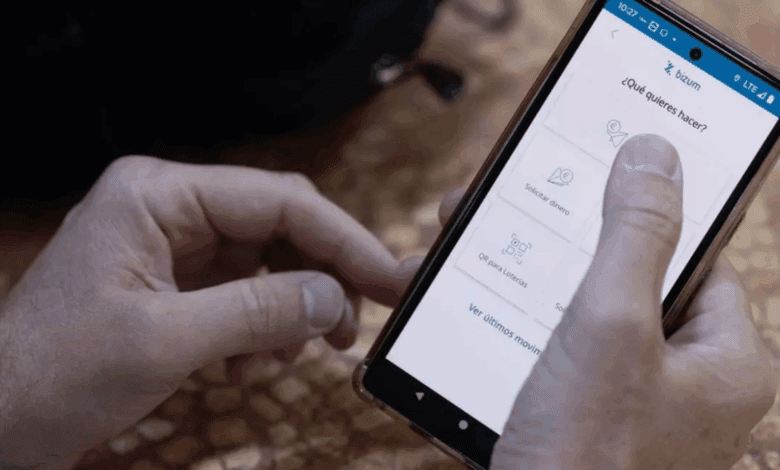
Starting January 1, 2026, new regulations come into force in Spain, completely changing the way electronic payments are monitored. All transactions made via Bizum, as well as any card payments, will now be recorded and reported monthly to the tax authorities. The amount transferred no longer matters—even the smallest sums will be closely monitored.
Previously, banks and payment systems were only required to inform the tax office about clients whose annual transactions exceeded €3,000. With the adoption of the new royal decree, this threshold is eliminated. Reporting will now be comprehensive: every transfer, every card transaction—everything will be included in reports that banks send to the Agencia Tributaria (tax agency).
What will change for Bizum and card users
For millions of Spaniards accustomed to the convenience of instant Bizum transfers or card payments, the changes will be immediately noticeable. Any payment, whether for a cup of coffee or an online purchase, will be visible to tax authorities. This will especially affect the self-employed and those receiving income from private services—now, hiding even small earnings will be nearly impossible.
In addition, banks and card issuers will be required to report to tax authorities once a year the details of clients whose card transactions exceed 25,000 euros. This applies not only to traditional credit cards but also to virtual cards and prepaid cards. The new rule will also affect those who actively use modern payment services.
Agreement between Bizum and the Bank of Spain
Alongside tighter payment controls, a new agreement has been signed between the Bank of Spain (Banco de España) and the Bizum service. Under this agreement, the central bank will gain access to aggregated data on payment transactions, broken down by sectors and countries. This information will be used to analyze economic processes and to create a more accurate picture of the country’s digital economy.
The data provided will be anonymized, but it will still allow the tracking of trends and the detection of anomalies in payment flows. In addition, the information will be sent to a dedicated data laboratory where researchers and analysts working on the development of financial technologies will be able to study it.
Possible consequences for businesses and individuals
Experts warn: expanding oversight of electronic payments could lead to more tax audits. Hacienda will now have many more tools to detect discrepancies between declared income and actual deposits in accounts. This is especially relevant for entrepreneurs, freelancers, and those who receive direct payments from clients for their services.
In light of this, tax advisors recommend clearly separating personal and business accounts to avoid confusion and unnecessary questions from the tax authorities. Any carelessness here could result in additional audits and even fines.
Privacy Concerns and New Challenges
The debate over data protection has not gone unnoticed. Critics argue that monitoring all transactions, even the smallest ones, could violate privacy rights and the principle of proportionality. However, authorities insist that fighting tax evasion requires tough measures, and payment transparency is the key to an honest economy.
For many citizens and companies, a new era has begun, where every digital payment becomes part of a larger reporting system. The habit of anonymity and informal settlements is becoming a thing of the past. Now, adapting to the new rules is necessary not just for businesses but for all users, who must be ready for their financial activity to be under constant scrutiny.