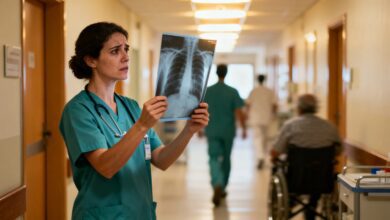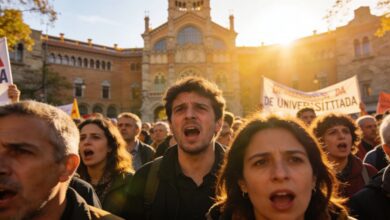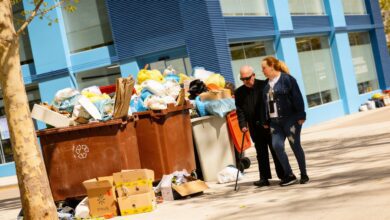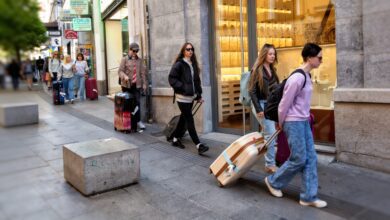
The events in Grazalema have become a stark warning for all of Spain: natural disasters can upend the lives of thousands in an instant. The sudden evacuation, triggered by threats from underground water and record rainfall, forced residents to abandon their homes, leaving the town nearly deserted. For many, this was not only a test of resilience, but also a measure of how efficiently government agencies and the scientific community could respond.
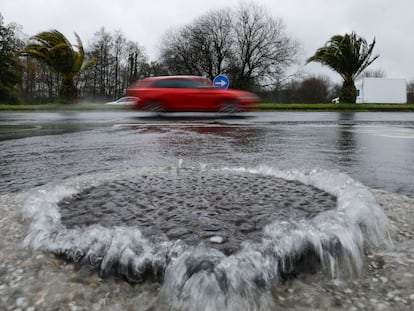
In early February, when unusual underground water surges began in Grazalema, the local authorities decided to fully evacuate the population. Mayor Carlos Javier García recalls these as the most stressful moments of his life. In just a few hours, over 1,600 people had to seek shelter in nearby towns and villages. Most settled in Ronda and Zahara, but many went as far as Málaga, Costa del Sol, and Granada.
Life in a new place
Being forced to leave their hometown became a real ordeal for Grazalema’s residents. Temporary housing, a lack of familiar infrastructure, and uncertainty about when they could return all added to the stress. Some families live in rented apartments, others in hotels or with relatives. Children have lost their usual activities, while adults try to preserve some stability by signing up for gyms and keeping in touch with their neighbors.
Authorities and volunteers have set up temporary accommodation centers, and playrooms have been opened for children. Municipal workers continue to perform their duties remotely, thanks to support from provincial services that have provided equipment and internet access. In Ronda and Zahara, local administrations are coordinating housing and meals for displaced people, despite political disagreements between the municipalities.
The role of science and cooperation
Scientists and hydrogeology experts played a key role in the decision-making process. Their analysis made it clear that it was dangerous for people to remain in the city due to the unpredictable behavior of underground waters. In some homes, water was entering so rapidly that it threatened structural collapse and power outages. Emergency services, including the Civil Guard and the military, evacuated the area in just a few hours.
Experts are now continuing to monitor the situation, using ground-penetrating radar and drilling equipment to assess soil and aquifer conditions. Only after a complete picture emerges will authorities decide whether residents can return. Officials emphasize that public safety is an absolute priority, and all steps will be coordinated with scientists.
Waiting and hoping
For now, Grazalema remains a ghost town, its streets patrolled by the Civil Guard, while online cameras capture only the occasional glimmer of light. The municipality is closed, but staff continue to assist residents by phone and online. Many hope to return soon, but no date has been set—the latest downpours only add to the experts’ caution.
Recalling recent disasters in the region, it’s clear that similar situations have already led to significant economic losses. For example, a devastating storm in Andalusia recently caused billions of euros in damage, hitting farmers and the tourism sector. Such events highlight the need for swift response and coordinated action by all services.
In Grazalema, residents show resilience and solidarity despite exhaustion and anxiety. Many continue to work remotely, and the local authorities are doing everything possible to support those displaced. The scientific community actively shares research updates, aiming to prevent panic and maintain optimism.
In recent years, Spain has faced an increasing number of extreme weather events, including heavy rains, floods, and droughts. In 2023, similar issues were reported in Murcia and Valencia, where mass evacuations also took place. Authorities are strengthening cooperation with scientists to minimize the impact of such disasters. Modern monitoring and early warning systems are increasingly being implemented in regions affected by natural disasters, enabling faster responses to threats and saving lives.