Over the next 24 hours, Spain is expected to face a sharp deterioration in weather conditions. An Atlantic cyclone will bring not only heavy rainfall but also a significant drop in snow levels. This coincides with the start of the Christmas travel season, when millions of people hit the roads to celebrate the holidays with family and friends.
Traffic authorities are warning that many road sections may experience congestion and hazardous conditions. Drivers are advised to check road conditions in advance and closely monitor the weather. This is especially important for those planning to travel to the northern and central regions, where snowfall may be most intense.
Weather risks
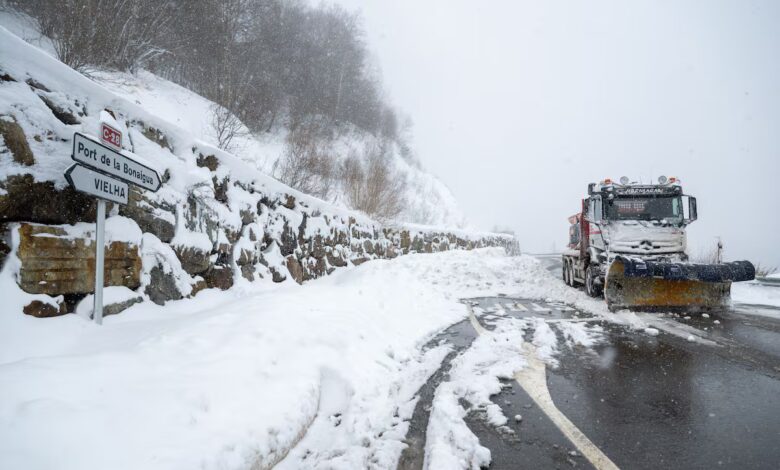
Meteorologists report that snowfall is expected to begin today in the mountain regions of Galicia and on the slopes of the Cordillera Cantábrica. However, the main impact will come on Sunday: snow is forecast in the provinces of Lugo, León, Palencia, Burgos, Soria, Segovia, Ávila, Salamanca, La Rioja, Navarra, Zaragoza, Huesca, Cuenca, Guadalajara, Granada, and the mountains around Madrid.
In these regions, snow is likely not only in the mountains but also on lowland areas, which will create additional challenges for drivers. The snow level is expected to drop to 800–1000 meters, and in some places even lower. Motorists are urged to exercise extra caution on roads passing through mountain passes and elevated sections.
Traffic conditions
During the Christmas holidays, travel across the country traditionally increases. It is estimated that over the next few weeks alone, more than 22 million vehicles will hit the roads in Spain. The main reasons are family visits, trips to country houses, and mass shopping at malls.
Challenging weather conditions can lead to temporary traffic restrictions. This primarily affects highways and expressways: A-66/AP-66 (Asturias and León), A-67 (Palencia — Cantabria), A-6/AP-6 (Madrid — León), AP-51 (Ávila), AP-61 (Segovia), A-1 (Madrid — Burgos), A-2 (Madrid — Soria), A-52 (Benavente — Ourense) and A-23 (Huesca — Jaca). On these routes, speed limits, overtaking bans, and even complete road closures are possible.
Recommendations for drivers
Drivers are advised to prepare for their trips in advance: install winter tires or carry snow chains, and keep up with real-time road updates through official channels. Pay special attention to messages on electronic boards and the instructions of traffic officers.
One of the main requirements is to keep the left lane on highways clear for emergency vehicles and snowplows. This allows for prompt road clearing and ensures access for emergency services. In addition, avoid sudden maneuvers and maintain a safe distance, especially on slippery sections.
Safety measures
Road services are prepared for possible complications: if necessary, truck traffic and vehicles without winter tires may be restricted or completely banned. Automatic detours and special parking areas have also been set up to temporarily accommodate heavy vehicles.
All regional traffic control centers are involved in coordinating actions during adverse weather and are operating around the clock. Should conditions worsen, additional measures may be implemented—from speed limits to the complete closure of certain road sections.
Service coordination
Authorities maintain constant communication between road services, meteorologists, Guardia Civil units, and the Ministry of Transport. This ensures a rapid response to any changes and timely notification of drivers about new restrictions or route changes.
Everyone planning to travel in the coming days is advised to closely monitor forecasts and be prepared to alter their route. Special attention should be paid to safety: having winter equipment, sufficient fuel, and means of communication can be essential for a smooth journey even under challenging weather conditions.