As Christmas approaches, Spain transforms into a wonderland, offering residents and tourists countless traditional nativity scenes, or ‘belenes.’ These creations come in many forms—from a giant chocolate installation in Rute, Córdoba to the famous sand nativity on Las Canteras Beach in Gran Canaria. Yet, hidden in the forests of Catalonia, far from popular tourist trails, lies a true gem that is definitely worth discovering.
A unique project
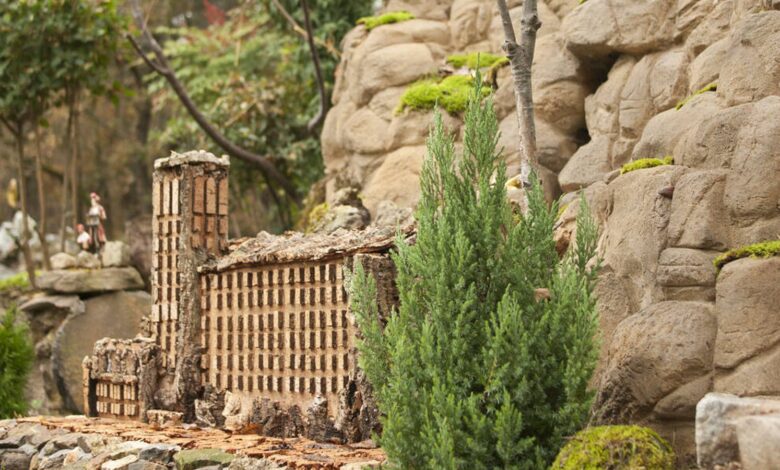
This is the ‘Pesebre de Can Roseta,’ located in the Cartellà forest in the Llémena Valley (Girona). It’s a lifelong project of local resident Remei Mulleres. More than a quarter century ago, she began crafting miniature replicas of buildings from cork and stone simply as a hobby.
What started as a personal pastime has grown over the years into an impressive artistic landscape covering 800 square meters. Today, the collection boasts 107 miniature monuments that perfectly recreate Catalonia’s most iconic sites. Remei created all of them on her own, patiently and meticulously modeling every detail by hand.
Catalonia in miniature
A walk through this forest nativity is a real journey through the region’s cultural heritage. Here you can admire exquisitely detailed replicas of masterpieces like the Sagrada Família and the National Art Museum of Catalonia. A special highlight of the exhibition are the 37 churches of the Llémena Valley, all seamlessly integrated into the natural landscape.
In addition to architectural landmarks, the installation pays tribute to outstanding figures of Catalan culture and history. Amidst the moss and rocks, visitors can spot figurines of Salvador Dalí, Antoni Gaudí, inventor Narcís Monturiol, writer Josep Pla, and poet Jacint Verdaguer. Each is seamlessly integrated into the landscape, as if they had always been part of it.
Tribute to Traditions
This nativity scene is more than just a collection of beautiful buildings. It also tells the living story of Catalonia’s rural roots. The layout features scenes depicting 22 traditional crafts: blacksmiths at work, bakers by the oven, and weavers at their looms. Details like tiny wood-fired ovens and market stalls help visitors imagine what life was like before industrialization.
A touch of folk humor also makes an appearance. The scene features must-have characters for a Catalan nativity—caganer and pishaner—who lend an ironic twist to the tableau. Visitors often get lucky and meet Remey herself, who gladly gives improvised tours, sharing stories about the creation and fun facts about her work. Admission is free, but donations are welcome. For organized groups, the visit costs just 2 euros per person.
Finding the “Pesebre de Can Roseta” is quite straightforward. It’s located at Diseminat Afores, 81 in the municipality of Sant Gregori, just ten minutes’ drive from Girona. The journey from Barcelona takes a little over an hour via the AP-7 motorway. From the specially equipped parking area, a footpath leads directly to the nativity scene.
For reference, the tradition of creating Christmas nativity scenes (belenes or pesebres) in Spain goes back to the 13th century. It is believed that Saint Francis of Assisi was the founder of this custom. Today, nativity scenes are an integral part of holiday celebrations in every Spanish family and city square. They can be static, “living” (featuring actors), or even made from unconventional materials like sand or ice—showcasing the incredible creativity and passion Spaniards hold for this tradition.
Earlier, we reported on a remarkable medieval village hidden in the mountains of Extremadura. What makes it unique is that the houses are built from stones that once belonged to a castle destroyed during the Napoleonic era. You can read more about this one-of-a-kind place, where every stone holds a story, in our article “The magical village in Extremadura where homes are built from stones of Napoleon’s castle».