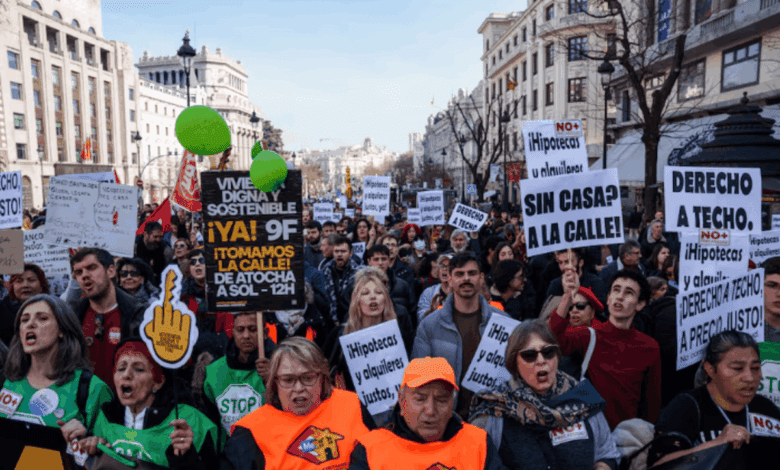
The issue of housing affordability in Spain has once again taken center stage in public debate. In recent months, thousands of tenants have faced a sudden and sharp increase in rental prices, sparking a wave of outrage and heated discussion. For many families and young people, this has become not just a financial blow, but a true test of endurance. With news stories daily about people forced to leave their homes due to unaffordable payments, renting is no longer a private concern but a matter of national importance.
Property owners, facing accusations of greed, increasingly point to an impersonal force—the ‘market.’ This rhetoric, widely circulated on social networks and in public discussions, provokes irritation and distrust among many Spaniards. Behind the abstract ‘market’ lie specific decisions made by individuals who, prompted by advice from friends or real estate agents, raise prices without considering the consequences for tenants. As experts note, this creates a vicious cycle: each new price hike prompts other owners to do the same, sending the situation spiraling out of control.
Morality and responsibility
At the center of this discussion, the moral aspect of the issue has unexpectedly come to the fore. Many analysts emphasize that justifying sharp rent increases solely by market laws means ignoring personal responsibility. After all, the market is not an abstraction, but the sum of thousands of people making decisions every day. In circumstances where housing becomes inaccessible for entire segments of the population, the question of how ethical it is to maximize profit at any cost becomes especially pressing.
There are quite a few examples in Spain of landlords who consciously refrain from excessive increases, believing that housing is not just a source of income, but a foundation of stability for tenants. However, such cases are becoming increasingly rare amid the general trend of rising prices. Experts note that while the ethics of rental practices used to be discussed only within a narrow circle, now it is at the forefront of public debate.
Market or people
The situation is aggravated by the fact that many property owners, despite obvious social consequences, continue to insist on their innocence. Their justifications echo a familiar refrain: “I don’t decide anything, these are the rules of the game.” But as experts point out, it is precisely this widespread adherence to such logic that leads to the market becoming less manageable and housing less accessible.
A particular concern is the fact that, in the absence of effective regulation, large funds and companies owning significant property portfolios dictate their own terms without considering the interests of ordinary citizens. As a result, social tension is mounting, and the gap between landlords and tenants is becoming increasingly apparent. For many Spaniards, this is not just an economic issue, but a matter of fairness and solidarity.
Collective decisions
There is a growing call within society for government intervention and tighter control over the rental market. According to several experts, relying solely on the goodwill of property owners is naive. Systemic measures are needed to protect the interests of the most vulnerable groups and prevent the crisis from escalating further. Otherwise, analysts warn, Spain faces a deepening social divide between those who own homes and those who are forced to rent.
It is telling that even amid mass protests and public debate, many landlords continue to ignore what is happening, choosing not to see the hardship faced by tenants. At the same time, there is a growing awareness in society that housing is not merely a commodity, but a basic need that determines the quality of life for millions of people. And as long as this conflict remains unresolved, the issue of renting will continue to be one of the most pressing and debated topics in Spain.
Patriotism and housing
Interestingly, many of those who are most actively raising prices are the very people who publicly profess their love for their country and patriotism. However, as observers note, true concern for one’s country is shown not through slogans, but in one’s attitude towards fellow citizens. For many Spaniards, it is becoming clear: patriotism is not just about flags and anthems, but also about the willingness to consider the interests of others, including tenants who find themselves in difficult situations.
Ultimately, the question of who is responsible for the rental market crisis remains unanswered. But one thing is clear: the moral side of the issue can no longer be ignored. Spain faces a choice—continue following the logic of an impersonal market or seek new forms of solidarity and fairness.