Interest in music that reflects the real problems of young people is growing in Spain. Concerts are becoming platforms to discuss anxieties related to the future, work, and personal identity. This is why Depresión Sonora’s performances resonate so deeply: they serve as a mirror for an entire generation seeking answers in songs.
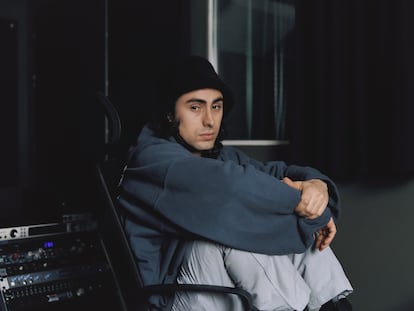
An evening at Apolo (Barcelona) turned into a true event for post-punk fans. The young crowd, filling the venue to capacity, enthusiastically sang along to lines filled with disappointment and irony: “another one without a job,” “I’m not special,” “I want to be an artist, even if it changes nothing.” Despite the upbeat rhythms, the songs carry a feeling of fatigue and indifference, while Marcos Crespo’s vocals are stripped of bravado, sounding like an everyday story of life without illusions.
Emotions and unity
By the end of the concert, the atmosphere in the hall resembled a group therapy session. Smiles on the listeners’ faces became a kind of response to their inner anxieties, and the lyrics turned into an antidepressant of sorts. The track “Como todo el mundo” (Like Everyone) became an anthem for those tired of uncertainty and looking for support among like-minded people. The Depresión Sonora project shows how music can unite people and help them cope with the pressures of modern life.
Marcos Crespo doesn’t try to be a star. His simplicity and sincerity are disarming: he dances without flashy glamour, dresses modestly, and doesn’t hide his vulnerability. His performance style—restrained, almost distant—makes every line even more convincing. His songs often feature images from everyday life: “summer is canceled,” “walking in the park is forbidden,” “they say we need to study more.” These phrases reference the pandemic and the restrictions that have become part of coming of age for today’s youth.
A portrait of a generation
From the first chords of the concert, it’s clear: Depresión Sonora speaks its audience’s language. The opening track “La balada de los perros” (Ballad of the Dogs) immediately sets the tone—this is music for those who spend time out in the streets, searching for themselves and for meaning. For an hour and a half, the hall dives into a whirlwind of emotions: from anger and longing to hope and joy. In the song “Veo tan dentro” (I See So Deeply), there’s a frank confession: “I want to be close, but have no money,” something that especially resonates with many young Spaniards.
The climax comes when Crespo shares a personal story: he left home without a clear plan and, despite seeming opportunities, found himself at a dead end. This sense of confusion and uncertainty is familiar to thousands of young people facing obstacles on their way to independence. Ending the concert with “Gasolina y mechero” (Gasoline and a Lighter) and “Vacaciones para siempre” (Vacations Forever) underscores that even in a world full of instability, there’s still room for dreams and protest.
Sounds of the times
The band accompanying Crespo experiments with elements of low fidelity, giving the sound a special atmosphere. Melodic basslines, reverberating guitars, and the dark aesthetic of post-punk create a unique soundtrack for modern Spain. These songs are easy to remember, and their choruses become part of young people’s everyday language. Depresión Sonora’s music is more than entertainment—it’s a way to express collective fears and hopes.
In recent years, Spain has seen a growing interest in artists who address social topics and are unafraid to talk about the challenges of coming of age. Concerts are turning into spaces for sharing emotions and seeking support. Similar phenomena can be observed at performances by other young groups, where audiences actively engage with lyrics that reflect their own experiences. Music is becoming not just a form of self-expression, but a tool for overcoming the difficulties facing the new generation.