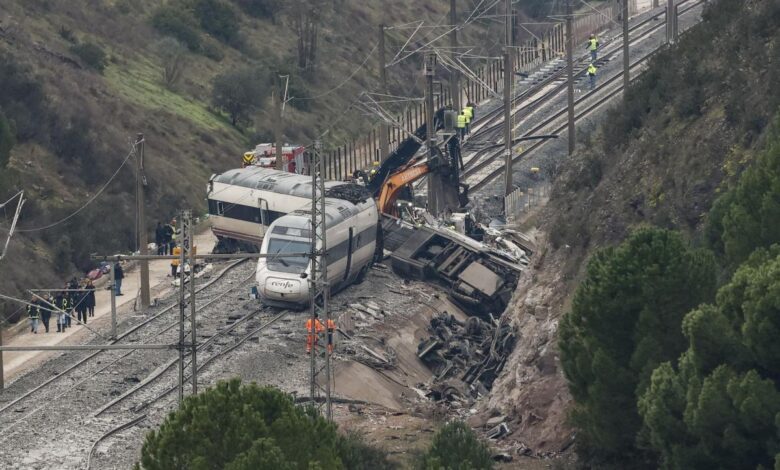
Sunday evening in Adamuz turned into a tragedy when Alvia 2181 found itself on a collision course. After crashing into an Iryo train that had suddenly appeared on the same track, passengers were trapped between fear and uncertainty. Among them was Jose María Galán, who, despite his injuries, managed to escape from the carriage and set out along the tracks toward a distant light, which seemed like his only chance for rescue.
After walking about six hundred meters along the tracks, he encountered officers from the Guardia Civil. According to him, they had no idea that a second train had been involved in the accident. At that moment, it became clear that information about the scale of the catastrophe was reaching the authorities in fragments and with delays. Renfe and Adif operators in the first minutes after the crash did not have a complete picture of what had happened, and passengers remained without assistance, not knowing when help would arrive.
Waiting for rescue
The question of how much time passed between the collision and the arrival of emergency services is still a matter of debate. Some passengers claim they waited nearly an hour, while others remember forty-five minutes. Officials say the response was as fast as possible, but precise timing was lost in the chaos. Galán recalls that help arrived around 20:45, although the crash happened at 19:43. That means people were left alone with the aftermath for nearly an hour.
The Civil Guard officers who arrived at the scene initially thought there was only one train involved. It was only when injured people began to approach them from the other side of the tracks that the scale became clear: the situation was far more serious than it had first seemed. At that moment, a real race against time began — urgent mobilization of additional resources and personnel was required.
Chaos and confusion
Distress calls from the train came in to emergency service 112 one after another. At 19:41, an Adif dispatcher tried to contact the driver, unaware that he had died. At 19:57, Renfe received a call about the Iryo train derailment and injuries on the Alvia. Between 19:57 and 20:03, information was exchanged between Renfe, Adif, and emergency services, but no one could say for sure how many people needed help or where exactly they were located.
The authorities in Andalucía admit: it is difficult to establish the exact time when medical teams arrived. One technical specialist mentioned 35 minutes, but without certainty. Interior Minister Fernando Grande-Marlaska stated that medical services reached Alvia at 20:30. The Civil Guard received the first alert at 19:47, and by 20:00 the first patrol car was already at the scene. At 20:15, a request for additional support was made, and by 20:30 the first medics and civil protection personnel had arrived.
Official version
The timeline provided by the companies and ministries is meant to reassure the public: the response was immediate. Renfe and Adif claim they became aware of the disaster almost instantly, yet their reports only mentioned the injured, not the scale of the tragedy. The exact arrival time of medical teams and rescuers remains unclear—none of the parties specify the precise minute when help actually reached the victims.
There are too many inconsistencies in this story. Survivors of the accident describe a sense of complete isolation and a long wait. Officials insist on a swift response, but details get lost amid conflicting reports. The question of how long people waited for assistance remains unanswered. And it is precisely this gap in information that fuels the greatest mistrust among those caught at the heart of the tragedy.
In our previous report, we explained why the sixth carriage became a key element in the investigation of the crash near Córdoba. Investigators have focused on details that could shed light on the causes of the accident, which claimed dozens of lives. Read more about the investigation in our article Carriage No. 6 holds the key to solving the Iryo train disaster near Córdoba.