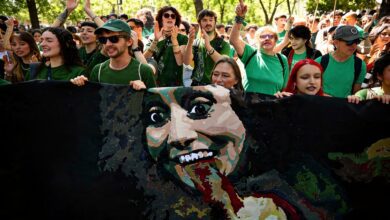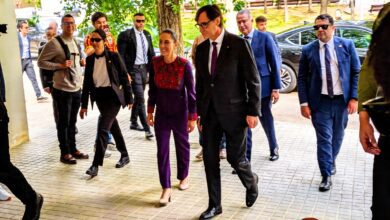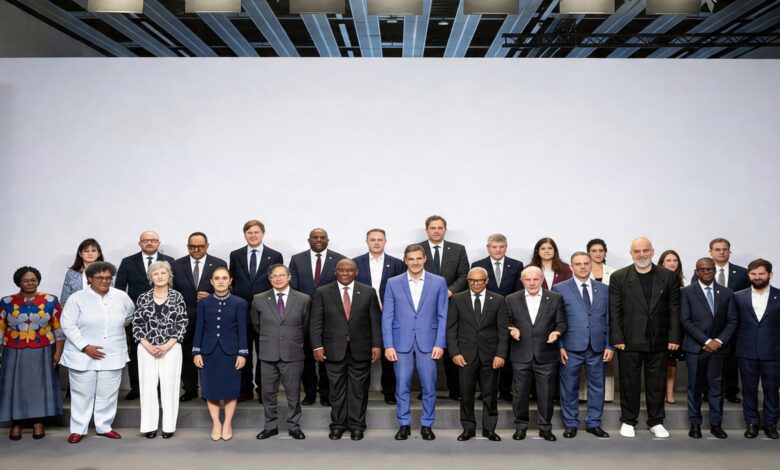
The international forum ‘Global Progressive Mobilization’ has concluded in Barcelona, bringing together leading representatives of left-wing and centrist parties from Europe, Latin America, and Africa. Against the backdrop of a notable rise in far-right movements, participants discussed how to counter their influence and restore trust in progressive politics. According to El Pais, the key issue was not only criticism of nationalist and populist forces, but also finding new approaches to strengthening democracy and social justice.
Differences and common ground
The forum was attended by Spanish Prime Minister Pedro Sánchez, Brazilian President Luiz Inácio Lula da Silva, South African President Cyril Ramaphosa, as well as leaders from France, Italy, Germany, Mexico, and Colombia. Despite a shared desire for unity, differences remained among participants on a number of key topics. For example, views on the conflict in Ukraine differed significantly: European social democrats advocated a tough stance against Russia, while Lula and Ramaphosa took a more restrained position. In addition, differences between moderate European social democrats and left-wing populists from Latin America were discussed.
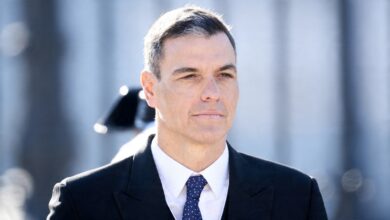
In his speech, Pedro Sánchez emphasized that despite their loud statements, far-right forces are losing support due to a lack of real solutions and outdated economic approaches. He noted that, in his view, the neoliberal model has exhausted itself since the 2008 crisis, while progressive policies can offer an alternative. Lula da Silva, in turn, recalled the attempted coup in Brazil and urged not to underestimate the threat posed to democracy by radical movements.
Challenges for Democracy and the Economy
One of the central topics of the forum was the need to reform international institutions. Lula and Sánchez spoke about the importance of updating the structure of the UN, Security Council, IMF, and World Bank so that they reflect today’s realities and the interests of Global South countries. Sánchez also noted that the West will have to cede some influence for the sake of stability and trust from developing nations.
Economic issues took a separate place in the discussion. Economist Mariana Mazzucato proposed linking government investments and subsidies to companies’ commitments to respect labor and sustainable development. Gabriel Zucman drew attention to the issue of tax evasion among the richest and suggested introducing a tax on large fortunes. French politician Olivier Faure linked the rise in support for the far right to insufficient access to public transport, which increases feelings of isolation among part of the population.
Technological risks and new threats
Special attention was given by the participants to the influence of technological giants on politics and society. Expert Francesca Bria warned that the owners of the largest digital platforms pursue not only profit but also political influence, controlling infrastructure and even certain government functions. She called for the creation of public digital platforms that would serve the interests of society, not private corporations.
During the discussions, there were calls for closer coordination between progressive forces from different countries. German Vice Chancellor Lars Klingbeil and Italian Democratic leader Elly Schlein noted that the far-right already act at the international level, and only joint efforts can provide an effective response. According to participants, it is precisely now, amid mistakes and excesses of the far right, that there is an opportunity to renew the leftist agenda.
Context and consequences for Spain
The forum in Barcelona was a continuation of a series of international meetings discussing risks to democracy and paths to reform. In Spain, the issue of combating inequality and social isolation remains relevant, especially against the backdrop of rising prices and pressure on the housing market. As a recent analysis showed on the housing situation in Madrid, social problems directly affect political sentiment and support for radical forces.
Following the meeting in Barcelona, participants emphasized that progressive forces should not only criticize their opponents but also offer concrete solutions to strengthen democracy, promote social justice, and address emerging threats. New initiatives are expected soon to reform international institutions and enhance coordination between countries.