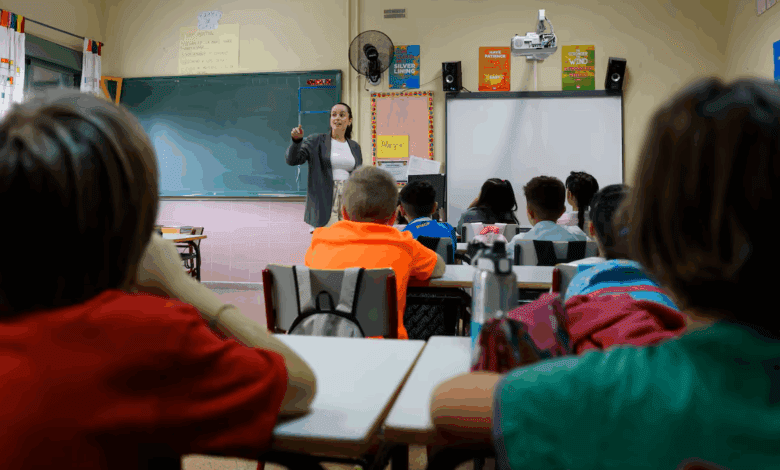
Debate over the condition of school buildings has flared up again in Madrid. This time, the discussion centers on the need to update ventilation and heat insulation systems in educational institutions. Despite strong support from parents, unions, and community organizations, regional authorities did not move forward with an initiative that could have changed the situation in hundreds of schools.
Earlier this week, one capital city lyceum had to cancel its last lesson due to the inability to provide comfortable conditions for students. With the onset of hot weather, the problem of overheated classrooms has become particularly acute. The issue reached the regional parliament, where a popular initiative, backed by more than 72,000 signatures, was considered. However, representatives of the two main parties – Partido Popular and Vox – opposed it, and the project failed to pass the vote.
Supporters of the changes insisted on the urgent need for action: installing modern air conditioning systems, insulating facades, upgrading electrical networks, and replacing outdated heating equipment. Proposals also included creating green areas in schoolyards, installing solar panels, and introducing energy-efficient technologies. According to the initiative’s authors, these measures would not only lower classroom temperatures in summer but also reduce heating costs in winter.
Opponents, on the other hand, stated that the project lacked technical development and appeared more like an attempt at political pressure. Some deputies expressed doubts about the effectiveness of solar panels and criticized the idea of creating school gardens, viewing it as a departure from traditional approaches to education. The authorities promised to consider alternative solutions to the problem but did not specify any concrete timelines.
Meanwhile, representatives of parent committees and unions have voiced their disappointment. They point out that in the capital of Spain, only a small fraction of schools are equipped with modern climate control systems, while in some buildings, morning temperatures exceed 29 degrees. Parents complain that children are forced to study in conditions that are far from normal, and cases of fainting and illness have become common during the hotter months.
The issue of modernizing schools in Madrid remains unresolved. Despite widespread public support, the initiative has yet to reach the parliamentary discussion stage. Now, community advocates are hoping for dialogue with the authorities and for finding compromise solutions to provide children with proper learning conditions.