The railway disaster that shook Adamuz (Córdoba) on January 18, 2026, still leaves many questions unanswered. The collision of two high-speed trains claimed at least 40 lives, with more than 150 people injured. Officials and experts agree: it will take time to determine the exact cause of the tragedy. Investigators now believe that a sudden failure of the railway track is the most likely explanation, while the possibility of deliberate sabotage has been virtually ruled out.
Investigation progress
The Minister of Transport, the head of Renfe, and the leadership of Iryo—the company whose train first derailed—have stated that drawing conclusions will take more than a day. Investigators are examining every aspect of the infrastructure and rolling stock. Particular attention is focused on the track switch area in Adamuz, where a clean break in the rail was found. Technical experts believe this defect may have triggered the chain of events that led to the disaster. In their opinion, no evidence found so far suggests sabotage.
The Commission for Railway Accident Investigation (CIAF) has already gathered the initial materials and is preparing for laboratory analysis. According to the commission’s head, incidents like this are typically caused by the interaction between the train and the rails, rather than human error or signaling system failures. A final report may not be released for several months—similar to the aftermath of the Angrois tragedy in 2013.
Timeline of the disaster
On the evening of January 18, around 19:45, the last three carriages of an Iryo train traveling from Málaga to Madrid derailed on a straight section where the permitted speed reaches 250 km/h. At that moment, there were 300 passengers on board. The derailed train ended up on the opposite track, and 20 seconds later, it was struck by an oncoming Alvia train. Two Alvia cars were thrown down a four-meter embankment, suffering severe damage—53 of the 186 passengers on board were injured. The Iryo train came to a halt just a few dozen meters from the site of the collision, near the Adamuz technical station.
The Minister of Transport called the circumstances of the accident “strange,” while experts openly expressed their confusion. Both trains were traveling within the allowed speed limits, which almost rules out driver error. The LZB safety system installed on the Madrid-Sevilla line should have stopped the trains if an obstacle appeared, but there was too little time for it to activate—only 20 seconds between the derailment and the collision. The Alvia driver, just 27 years old, died at the scene.
Technical details
The Iryo train is a modern Frecciarossa, built in 2022, and had undergone its last inspection just three days before the accident. The company has already requested a detailed report from the manufacturer, Hitachi Rail, on all recent checks. Iryo’s head, Carlos Bertomeu, called the incident “incredible” and “shocking,” stressing that in 32 years of working in transport he had never encountered such a tragedy. He declined to speculate on the causes, citing the need for a thorough investigation.
Trade unions have put forward the theory that the derailment of the Iryo train may have been caused by a broken switch. However, engineers point out that the section where the accident occurred had recently been upgraded: in 2023, a major overhaul of the Madrid–Seville line was completed, including track replacement, viaduct modernization, and updated safety systems. Despite this, recent months have seen technical issues on this stretch, linked to high temperatures, vibrations, and occasional signaling problems.
Work at the scene of the tragedy
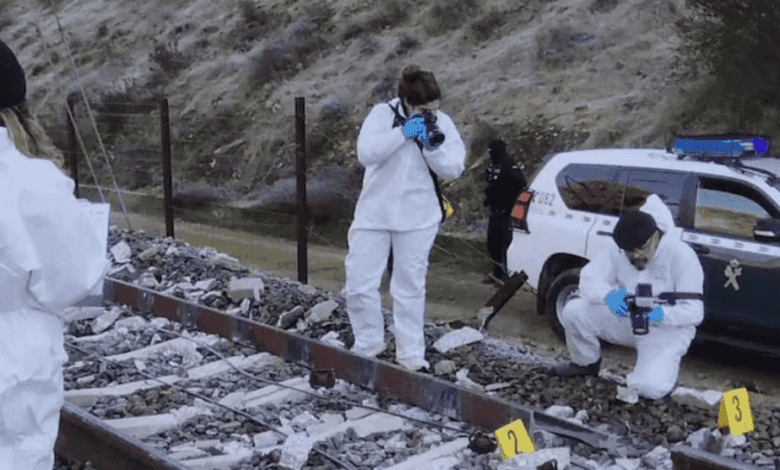
The investigation involves not only technical experts but also members of the Guardia Civil. They are inspecting the crash site, collecting evidence, photographing damaged track sections, and interviewing witnesses. Special attention is being given to quickly identifying the victims: to this end, special stations have been opened in several cities, including Córdoba, Madrid, Málaga, and Sevilla, to collect DNA and other information from relatives of the deceased and those reported missing.
During the inspection, investigators discovered numerous breaks and damage to rails and sleepers on the straight section where trains reach maximum speed. Investigators believe that these defects may have played a key role in the tragedy. However, they caution that it is too early for final conclusions—experts emphasize that the investigation could take months.
Versions and Opinions
Engineers and railway safety specialists agree: the human factor is virtually ruled out, as both trains were within speed limits. The sabotage theory also holds little weight—if the rail had been deliberately cut, the locomotive, not the rear carriages, would have derailed first. The working theories remain: a sudden rail defect, a train malfunction, or a complex interaction between the train and the infrastructure. Some drivers and engineers previously reported unusual vibrations and sounds in this area, which may point to hidden issues in the track’s construction.
Experts note that despite recent upgrades, traffic on the line has increased, leading to greater strain on the infrastructure. It’s possible that a rare rail defect combined with the ill-timed approach of an oncoming train resulted in such severe consequences. Still, none of these theories has been definitively confirmed, and the investigation is ongoing.