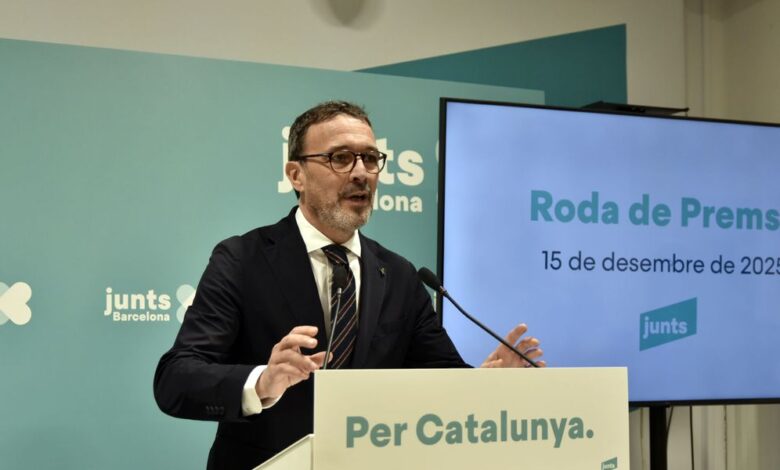
On Thursday, Junts party spokesperson Josep Rius delivered sharp criticism of the new regional financing agreement reached between the Spanish government and ERC. According to him, despite promises of change, the essence of the system remains the same: a little more money, but the rules of the game are unchanged. Catalonia still lacks real control over its finances, while Madrid continues to hold the key levers of power.
Rius emphasized that under the new agreement, all regions in the country are set to receive additional funds. However, he believes this does not address the core issue — dependence on decisions made by the central government. He called it a mistake that Madrid still decides how and when to allocate money among the autonomous communities. For Catalonia, this means the long-awaited financial autonomy is once again postponed indefinitely.
The heart of the dispute
At the center of the dispute is an arrangement between Prime Minister Pedro Sánchez and ERC leader Oriol Junqueras. According to the agreement reached, Catalonia is to receive approximately 4.7 billion euros in additional funding. However, Junts representatives argue that these figures do not guarantee real change. In their view, promised millions often never reach the region, and bold statements remain only on paper.
Rius recalled that ERC had previously supported the appointment of Salvador Illa as president of Catalonia in exchange for a promise of greater financial autonomy for the region. Now, according to the politician, these agreements have turned out to be empty words. He pointed out that the current government statements have nothing to do with what was promised earlier.
Реакция Junts
Junts has openly expressed disappointment, arguing that the new financial mechanism merely cements the old model, where all regions receive equal treatment regardless of their economic contribution to the country. Rius compared the situation to “a cup of coffee for everyone”—a bit more to go around, but the flavor and recipe remain unchanged. For Catalonia, which has long demanded special status and greater autonomy, this approach seems like yet another compromise in favor of central authority.
The party also notes that Madrid retains the right to make the final decision on how the funds are distributed. According to Junts, this is not only unfair but also undermines trust in the central government. Catalan politicians fear that once again the region will lose out, despite bold promises and public statements.
Political consequences
The situation surrounding the new agreement has already sparked a wave of debate within Catalonia’s political circles. Many see the government’s actions as an attempt to maintain the status quo and prevent a genuine redistribution of powers. Junts insists on a comprehensive overhaul of the entire funding system to allow regions to manage their own revenues and expenditures independently.
Meanwhile, ERC representatives continue to claim that the agreement is a step forward for Catalonia. They assure that the additional funds will help the region implement important social and economic projects. However, skepticism from Junts and other opposition forces remains strong: many believe that without real changes to the allocation mechanism, any deal will be nothing more than a formality.
Looking Ahead
One thing is clear: the issue of Catalonia’s financial autonomy remains unresolved. Despite new agreements and promises, the region is still dependent on decisions made in Madrid. For many Catalans and local politicians, this leads to growing disappointment and mistrust of the central government.
Junts continues to insist on profound reforms that would enable regions to determine their own fiscal policies. However, as long as Madrid is unwilling to relinquish control, any changes will be merely superficial. Once again, Catalonia finds itself in a situation where promises are loud, but real change is nowhere in sight.