This weekend, thousands of Madrid residents and visitors will face major changes to familiar commuter train routes. One of the city’s busiest stations in the very center of the capital will temporarily close, leading to significant adjustments on key transit lines. The disruption will affect not only daily commuters but also anyone planning to travel around the city during these days.
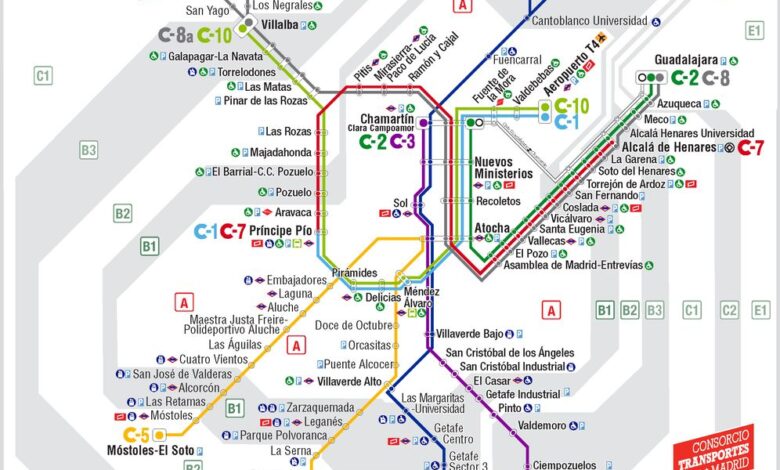
The temporary closure of Sol station is due to modernization work on the infrastructure in the tunnel and on the stretch between Atocha and Nuevos Ministerios. These measures aim to improve the reliability and efficiency of rail transport at one of Madrid’s most important transit hubs. As a result, train service on lines C-3 and C-4 will be interrupted, and passengers will need to find alternative routes for transfers and getting around the city.
Route changes
For two days, trains on the C-3 line from Parla, Getafe Sector 3, and Aranjuez will end their route at Atocha station, without continuing north. Meanwhile, C-4 line trains departing from Colmenar Viejo and Alcobendas-San Sebastián de los Reyes will terminate at Nuevos Ministerios, not reaching Atocha. As a result, the familiar through route across the city center will be unavailable to thousands of passengers.
Passengers needing to cross central Madrid between Atocha and Nuevos Ministerios will have to use alternative routes. Trains on lines C-2, C-7, C-8, and C-10 will continue running through the Recoletos tunnel, maintaining the connection between the south and north of the city. These routes will become the main way to travel for those who are used to using the temporarily closed section.
Possible inconveniences
Due to changes in schedules and routes, an increase in passenger numbers is expected on alternative lines, especially during morning and evening hours. Authorities advise planning your journeys in advance, checking updated timetables carefully, and being prepared for possible delays. Pay close attention if you usually transfer at Sol station or use the tunnel between Atocha and Nuevos Ministerios for daily commutes.
Additional staff will be present at stations affected by the changes to help you navigate the new arrangements and suggest the best routes. It is important to follow signs and announcements to avoid confusion and unnecessary waiting. For many passengers, these two days will be a test of flexibility and the ability to quickly adapt in the urban transport system.
Context and previous experience
Such temporary train movement restrictions in Madrid are not unprecedented. In recent years, ongoing railway infrastructure upgrades have regularly resulted in short-term station closures and route changes. For example, similar works on the C-5 line last year caused long queues and delays, but ultimately improved service reliability. During major repairs, passengers often have to transfer to other lines or use alternative modes of transport. Despite the inconvenience, these measures typically lead to significant improvements in transport quality and railway safety.