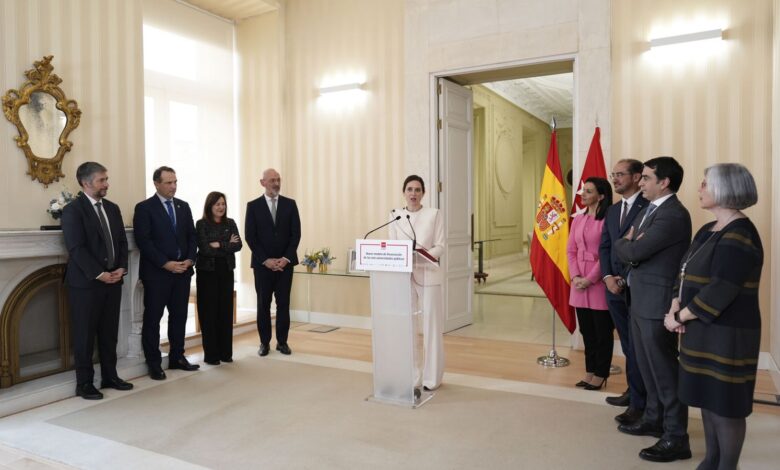
One of the most significant crises in recent years concerning the management of state universities has come to an end in Madrid. This event is crucial for all of Spain, as the future of education—and consequently the country’s economic development—depends on the decisions of regional authorities. The new funding strategy and government reshuffling in the autonomous administration promise to reshape higher education and impact thousands of students and educators.
According to El Confidencial, a pivotal role in the negotiations was played by the newly appointed head of the education department, Mercedes Zarzalejo. She was supported by Miguel Ángel García, the advisor on presidential affairs, who previously worked in the financial sector and has already proven himself to be an effective negotiator. Their efforts led to the signing of a new multi-year funding plan: from 2026 to 2031, universities will receive 14.8 billion euros, allowing for almost 2.5 billion annually to be allocated for the development and support of educational institutions.
Personnel changes
The past weeks in Madrid’s government have been marked by resignations and new appointments. Emilio Viciana was the first to leave, after failing to implement university reforms. He was followed by other education officials: Pablo Posse, María Luz Rodríguez de Llera, Nicolás Casas, as well as deputies Mónica Lavín and Carlota Pasarón. All of them were part of the team that joined politics as part of the renewal initiated by the regional president.
Interestingly, most of these figures are linked by their association with the Castillo Algarra theater company and its educational academy, which led the press to coin the term ‘Pocholos’ for this group. According to El Confidencial, it was a former adviser to the regional president who became the informal coordinator of these personnel changes, quietly influencing decisions behind the scenes of official processes.
A new chapter for universities
With Mercedes Zarsalejo taking office as Minister of Education, Madrid’s authorities are focusing on renewing and modernizing its universities. Her experience as deputy for university affairs and her involvement in investigating possible violations at one of the country’s largest universities enabled her to adapt quickly. According to El Confidencial, she was the driving force behind the final agreement with the rectors, which helped ease tensions and set the reforms in motion.
The spotlight was on funding: previously, rectors complained of insufficient resources, which led to conflicts with the regional government. The new plan proposes stable and transparent allocation of funds, aiming to improve education quality and provide better conditions for scientific research. Officials emphasize that these changes matter not only for students but for faculty and the entire Madrid economy.
Reactions and consequences
In the coming years, Madrid aims to become one of Europe’s leading educational centers. Regional authorities believe that universities should drive innovation and social mobility. According to experts, a new approach to management and funding will allow universities to compete with top European institutions. Importantly, these decisions are being made against the backdrop of other significant events in Spanish politics: the role of the church and the far right in national life was recently debated, as highlighted in the coverage of bishops’ reactions to the Pope’s statements according to RUSSPAIN.COM.
In recent years, Spain has already faced similar crises in the field of education. For example, in 2024, reforms to university funding were also debated in Catalonia and Andalusia, sparking protests among students and faculty. At that time, the authorities made concessions by increasing the budget and changing the rules for allocating funds. Similar developments took place in other regions, where issues of autonomy and education quality have been the subject of heated debate. Now Madrid is demonstrating its readiness for change and its ability to respond quickly to current challenges.